















Wondering how to start writing a novel? Do you want to write a compelling, dramatic story that leaves readers hungry for you to publish your next book, and your next, and
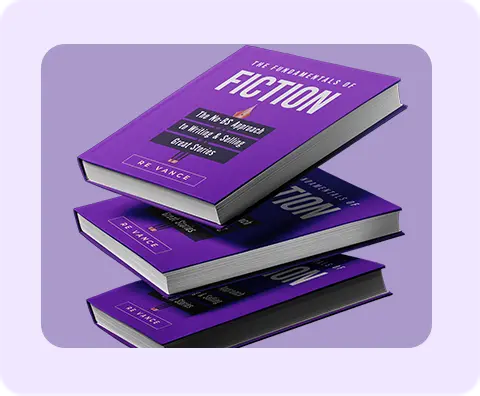
I’ve written over 60 books and I coach fiction authors through the highs and lows of writing. It’s safe to say that over the years, I’ve learned a few things about writing…both what to do, and what not to do. In fact, I share all about this in The Fundamentals of Fiction. But one of the finer points I learned?
With the right understanding of story structure, I believe anyone is capable of writing an amazing story. In this article, we’re uncovering the Story Foundation Trifecta—a method we created that you can use in every novel.
The key to making this process as natural as possible is to start every novel with a good story foundation. I coach a lot of fiction writers and I’ve found that where most new writers struggle is grasping how to start writing a novel.
The primary issue in how to start writing a novel comes down to not understanding how to lay a good story foundation. Writers often miss one or more of the three critical elements that every novel needs to succeed. I don’t want this to be you.
So, I’m going to introduce these foundational elements, what I call The Story Foundation Trifecta. Implementing these elements are vital for how to start writing a novel with a base that can sustain the rest of your story. Let’s talk about it…
Book Outline Generator
Choose your Fiction or Nonfiction book type below to get your free chapter by chapter outline!
Book Outline Generator
Enter your details below and get your pre-formatted outline in your inbox and start writing today!
CONGRATULATIONS
Thanks for submitting! Check your email for your book outline template.
In the meantime, check out our Book Outline Challenge.
How to start writing a novel: what you learn
How do I start writing my first novel?
The first part of learning how to start writing a novel is understanding that as a beginner, you can only make progress. There’s really nowhere else for you to go but up.
The tricky thing, however, is knowing how to get started. After all, that step is the most important, but also the most difficult. You’ve never done this before and it’s a major task to learn how to write a book.
As a fiction coach, I teach these steps all the time. Today, it’s time to teach you how to start writing a novel. So let’s break it down, beginning with The Story Foundation Trifecta.
The Story Foundation Trifecta
How to start writing a novel in a way that will cary you through to the final page starts with The Story Foundation Trifecta. I’ve used this method to teach our Fundamentals of Fiction & Story students how to write compelling novels that bring in raving, 5-star reviewing fans.
The Story Foundation Trifecta a combination of three things:
- An interesting premise
- A sympathetic hero
- A clear & compelling “A-Story”
The Story Foundation Trifecta holds the most critical pieces to any successful story. As long as you have these three things in place, your story is bound to be engaging. Use this method to learn how to start writing a novel well.
Step 1: An interesting premise
Your premise is the foundation of your plot. It’s pivotal in grasping how to start writing a novel in the right part of the story. Your premise is the collection of situations or presuppositions that make up your story world.
That sounds complicated, so let’s put it in simpler terms: Your premise consists of two to three seemingly unconnected ideas that have been meshed together to make something truly unique.
If you analyze really popular stories like The Hunger Games and The Matrix, you’ll realize they have great premises…and that’s a big part of the reason why they were so successful.
So how do you come up with an awesome premise of your own? One common method is to use the “what if” technique. Here’s how that might look using The Hunger Games as an example. What if, sometime in the future, there is a society that demands children must fight to the death once a year?
Immediately, the premise opens up a hundred other questions that your story may or may not answer.
- What happened to create this world and contest?
- Why children?
- What happens to the victors?
Your story may not answer all of these questions, and certainly Suzanne Collins, the author of The Hunger Games, doesn’t answer all of them. See how that works? You take a few different ideas and combine them. See how they might fit together.
In this case, the premise is using the familiar idea of a gladiator story…but it’s mish-mashing that concept by having the gladiators be children.
Then when you throw in a couple of extra elements, like:
- Setting the story in the future
- Including a love-triangle with the main character
- Having a power struggle behind the scenes only the audience knows about
You end up with a really great premise for a story all by using a few “what if” tips for plotting your novel. Here’s another example. The Matrix: What if reality isn’t what we think it is, and in fact we’re all connected to computers as human batteries for the robot world?
Here we’re taking the idea “reality isn’t what you think it is” and mashing it together with “we’re human batteries connected to computers.” These are cool ideas on their own. But when you put them together, they become something really fascinating. With a premise like this, is it any wonder why The Matrix was so successful?
Here’s one more example, from my series of books, GoneGod World: What if all the gods are gone, and when they leave they force all their denizens to go to earth?
I combined the ideas of “divine creatures” and “refugees” to create a unique story premise out of two familiar ideas. In this story, every sort of magical creature you can think of, dragons, faeries, etc., is forced to become a refugee on earth.
As you can imagine, this opens up all kinds of possibilities for interesting storylines and conflicts. Step 1 of the Story Foundation Trifecta is create an interesting premise. Now it’s your turn.
Exercise: Take a look at your favorite stories and identify their premise. Turn those premises into “what if” statements.
Bonus: Among the premises that you have identified, see if you can alter them slightly to turn them into something completely unique.
Challenge: Create three to five premise statements of your own, statements that ultimately create a world you’d love to write in. This is all part of how to start writing a novel.
Step 2: A sympathetic hero
Step 2 focuses on your plot. It’s a big-picture statement of what happens in your story so you can learn how to start writing a novel that resonates. Remember, stories don’t just happen by themselves. They happen to characters. To people. To human beings. (And sometimes, to elves and aliens.)
At the heart of every story is a hero who strives to meet an important goal. The more your audience can understand and identify with that hero, the more likely they are to become engrossed by your story.
Now when you’re creating your hero, the three most important things to figure out are your
- Key traits
- Outer journey
- Inner journey
“Key traits” refer to your character’s distinguishing features. Is your hero:
- Brave?
- Intelligent?
- Beautiful?
- Charming?
- Underhanded?
- Strong as an ox?
Your character’s journey refers to the challenges they will be forced to overcome throughout the story. And we break that journey up into inner and outer journeys. A few examples for how to start writing a novel with a great hero’s journey…
The Hunger Games: Katniss’s outer journey is to survive the games. Her inner journey is to mature as an individual, to let other people in, and to learn to accept help from others.
The Matrix: Neo’s outer journey is to defeat Agent Smith and the robot forces enslaving humanity inside the Matrix. His inner journey is to believe in himself and accept that he’s the only one capable of saving the human race. Make sense? Great.
Exercise: Now go figure out who your hero is, give them a few key traits.
Bonus: Most importantly, decide on their inner and outer journey.
Challenge: Once you settle on an inner and outer journey, try mish-mashing different traits with these journeys to see how they may further develop your character.
Step 3: A clear and compelling “A-Story”
Once you know your story’s premise and have identified your hero, your next step is to use those two elements to create your “A-Story.”
Loosely defined, your A-Story is the main storyline in your novel. It’s the one story we need to see resolved in order for us to put down your book and feel satisfied at the end.
Your book can have multiple storylines but your A-Story is the main story and the big problem that gets resolved at the end.
This A-Story helps you learn how to start writing a novel but also how to finish it in a way that satisfies your readers. In most cases, your A-Story is going to be the same as your hero’s outer journey. In The Hunger Games, for example, the A-Story is Katniss’ trial to survive the games.
But your A-Story can also tie into your hero’s inner journey. In The Matrix, the A-Story deals in part with Neo’s struggle to believe in himself and become “the one.”
Here are some common A-stories for different genres to think about as you learn how to start writing a novel:
- Sci-fi: Repel the alien invasion
- Action: Get revenge on the bad guys
- Romance: Finally succumb to the love of your life
It’s important to know your A-Story. This is the storyline that you need to focus on, to keep coming back to. This is the major conflict of your story, so don’t lose sight of it.
Exercise: Identify two or three unique A-Stories that fit could each premise. Spend a few minutes contemplating how the premise and the A-Story work together.
Bonus: Could you alter one of the premises to fit with your own unique A-Story?
Challenge: Now that you have defined your premise in step one, identify two to three A-Stories that could work within that premise statement.
How do you start a novel with no experience?
Learning how to start writing a novel for the first time means plunging into the learning curve. You’ve already studied The Story Foundation Trifecta. You have your premise and A-Story. To further help you, I’m breaking the learning curve down into even more micro, actionable steps.
Choose a book idea to write about
If you’re ready to learn how to start writing a novel, chances are have many great book ideas. But how do you choose which to write and which to save for later? Any and all of your book ideas can get written (especially if you want to write a book series), it’s just a matter of choosing which goes first.
These are a few questions I like to ask myself when it comes to deciding which idea to start next:
- Which do you find yourself thinking about most often?
- Which has a theme/message that means the most to you?
- Which do you have the most content developed for?
- Which will be the fastest to write?
- Which is an idea that you wish someone else wrote so you can read it for the first time?
Once you have an idea in mind that fulfills these questions, you’ll know that that is the one to write about. Essentially, in order to choose a book idea, think about which one you’re most passionate and excited about.
Start your mind map and outline
Outlining is necessary no matter what type of book you’re reading. Even if you think you’re the type to “write by the seat of your pants,” an outline of some sort will come in handy.
Generally speaking, there are two kinds of writers out there:
- Plotters (like James Patterson)
- Pantsers (like Stephen King)
Plotters are people who like to plot their stories in advance, while pantsers are people who don’t. They “fly by the seat of their pants,” coming up with their story ideas on the fly.
You might think that outlining is only important for plotters…but actually, that’s not the case. Every writer needs to come up with at least a basic outline before they start writing.
Even Stephen King has the end of his stories in mind and a few plot points along the way, and he self-identifies as a pantser, or someone who writes by the seat of one’s pants
Knowing where your story is going can help you develop the plot to be more complex, exciting, and allow you to hide foreshadowing within the book. This will help you craft your twists to be even harder to see coming—something all bookworms love.
Resources to help you:
- Our complete guide for learning how to fill out a mind map
- Our guide for how to complete an outline based on the mind map
Consider how long you want your book to be
This is also the stage in which you figure out if you’ll be writing a standalone (a single book) or a series (2 + novels of the same storyline).
But first, how long do you want this book to be? Some authors will tell you to just write as much as is needed, but it’s often a good idea to know your baseline so you can stay on track.
This is a table of the average word count for different types of novels to help you get an idea for what to shoot for:
| Type of Writing | Word Count | Pages in a Typical Book | Example |
|---|---|---|---|
| Short story | 100 - 15,000 | 1 - 24 pages | "The Gift of the Magi" by O. Henry |
| Novella | 30,000 - 60,000 | 100 - 200 pages | "A Clockwork Orange" by Anthony Burgess |
| Novel | 60,000 - 100,000 | 200 - 350 pages | "Harry Potter and the Sorcerer's Stone": by JK Rowling |
| Epic Novel | 120,00 - 220,000+ | 400 - 750+ pages | "Game of Thrones" by George R.R. Martin |
The industry-standard word count is really important in learning how to start writing a novel…especially if you want a quality book and you’re self-publishing. If you write an epic fantasy novel that’s only 60,000 words, you will appear like an amateur since the standard for that genre is double that word count.
Once you have an idea as to how long you want your book to be, you can better plan out each chapter’s length and formulate a writing schedule that will allow you to make real progress.
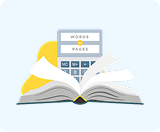
You can also just put in your book’s info in our calculator below, and we’ll tell you the proper word count goal to meet industry standards.
FREE TOOL
Word and Page Count Calculator
Choose your book type, genre, and audience for a word count and page number total.
Enter your details below to get your personalized word and page counts for your book!
Your Book Will Have
words
pages
*These results are based on industry standards. The total word and page count will vary from book to book and is dependent on your writing and overall book formatting*
Average Time to Write This Book: 60 days
Develop lifelike characters
Your characters will carry your story. That’s why developing lifelike characters is essential in learning how to start writing a novel.
You can easily write a bad plot and people will read it if the characters are great. However, even the best plot in the world will not save a book if it has bad, uninteresting, or poorly written characters.
When it comes to creating realistic characters, one of the best things you can do is craft them to either compliment each other or agitate one another. This makes for an interesting, fun, and entertaining story.
Here are a few steps to craft lifelike characters so you know how to writing a novel well:
- Use our character development worksheet
- Build a backstory for each character (the more they appear, the richer their back story needs to be)
- Give each character personality traits (at least 3 per main character)
- Create juxtaposition (characters with conflicting traits to cause conflict)
- Ask yourself: Is this character too perfect? Give them flaws so you don’t fall into the trap of writing a Mary Sue
Build your world
Worldbuilding is all about creating a setting that feels realistic, new, fresh, and intertwines with your plot in an interesting way. Sometimes this means building your plot and characters around your world. This is a key aspect of how to start writing a novel.
If you have a world that goes pitch-black at night because it has no moon, and dark fantasy creatures come out at night, you can create a character who is terrified of the dark. This builds in more natural conflict that can make your story more intriguing to readers.
We have entire blog posts dedicated to helping you world build as you learn how to start writing a novel:
- Worldbuilding (overview and questions)
- Fantasy worldubilding
- Worldbuilding process (detailed)
Book Outline Generator
Choose your Fiction or Nonfiction book type below to get your free chapter by chapter outline!
Book Outline Generator
Enter your details below and get your pre-formatted outline in your inbox and start writing today!
CONGRATULATIONS
Thanks for submitting! Check your email for your book outline template.
In the meantime, check out our Book Outline Challenge.
Craft a plot
When it comes to your plot, it’s all about the structure and your book genre. Ultimately, you need an interesting plot before you can learn how to start writing a novel.
Different genres have different “rules” for plotting. But remember, you only need to know the rules, and you’re always free to break them if it suits you.
As you learn how to start writing a novel, your plot should consist of these 5 milestones:
- The Setup
- The Inciding Incident
- The First Slap
- The Second Slap
- Climax
You can read more about each of these steps in our blog post about how to write a novel if you’re ready to get started.
Start your novel with strength
Learning how to start writing a novel, actually writing the opening scene, can set the tone for your entire book. When learning how to start writing a novel, think about the best order of operations to get someone interested, sucked in, and caring about your character.
We have an entire blog post dedicated to starting a story that we recommend reading for the full-scope of this, but here are some tips to keep in mind:
- Start “in media res”, which means in the middle of action
- Create a scenario that showcases the struggles of your character’s everyday life
- Create sympathy or a situation that encourages readers to root for and care for your character
- Introduce elements of your world without explaining much about them (people need to read more to learn more!)
How to start writing a novel: take your next step
You’ve gone through the Story Foundation Trifecta and figured out your premise, hero, and A-Story. You know how to start writing a novel, even with no experience. You’re ready to guide your readers through a story that feels complete and satisfying.
When they finish reading the last page of your book, they’ll feel like they went on a meaningful journey with your hero…that nothing was missing or incomplete. And this is all because you learned how to start writing a novel. What should you do next?
This is Step 2 of our book writing series. Move on to Step 3 to learn how to edit a book!
Book Outline Generator
Choose your Fiction or Nonfiction book type below to get your free chapter by chapter outline!
Book Outline Generator
Enter your details below and get your pre-formatted outline in your inbox and start writing today!
CONGRATULATIONS
Thanks for submitting! Check your email for your book outline template.
In the meantime, check out our Book Outline Challenge.