




















Self-publishing is becoming more competitive. In order to stand out and have your book seen above others, utilizing some tools becomes necessary, like KDSPY. This KDSPY review will help you decide if this is a tool worth spending your money on.
Because let’s be real here. There are countless tools all claiming to help authors have more success, sell more books, and earn more.
Not all are created equal.
Let’s find out if it’s worth its weight with this KDSPY review.
Here’s what we’ll cover:


Book Outline Generator
Choose your Fiction or Nonfiction book type below to get your free chapter by chapter outline!
Book Outline Generator
Enter your details below and get your pre-formatted outline in your inbox and start writing today!
CONGRATULATIONS
Thanks for submitting! Check your email for your book outline template.
In the meantime, check out our Book Outline Challenge.
What is KDSPY?
KDSPY (Kindle Spy) is a browser extension designed specifically for authors, self-publishers, and indie writers who want to conduct in-depth market research on Amazon’s Kindle marketplace. Basically, by analyzing the performance of books in specific niches, KDSPY provides data to help authors make informed decisions about genres, keywords, and pricing strategies.
It’s really helpful for authors to know where to list their books if they want to compete with other authors who write similar books.
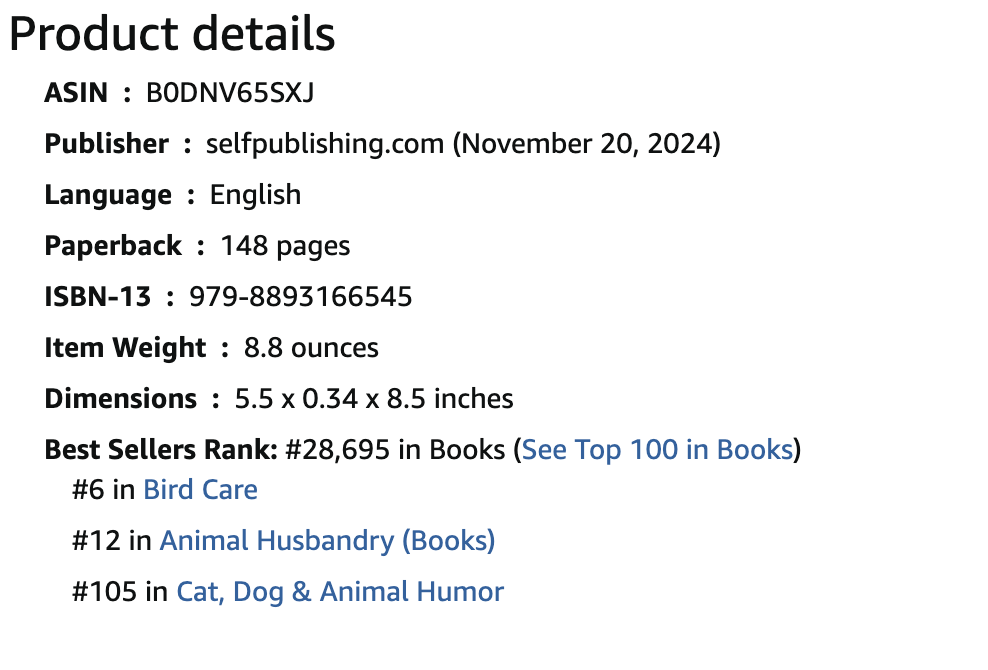
The categories a book is listed in affect visibility, including the ability to get bestseller and new release banners, which further increase sales.
You’ve seen the categories listed on books in the “product description” portion of the sales page, but also when you see new release or bestseller banners, like the one below.

Here are some other key features of KDSPY:
- Sales data analysis: Estimates monthly sales and revenue for individual books.
- Keyword research: Helps find profitable keywords to improve book visibility.
- Category trends: Identifies popular genres and niches with potential for growth for those who want to write to market.
- Competition analysis: Assesses competitors’ performance and strategies to stay competitive.
- Exportable reports: Allows users to save and analyze data offline.
KDSPY Review: is it useful for self-published authors?
The easiest way to look at this KDSPY review is through a pros and cons lens. You’ll be able to decipher for yourself if the features are indeed worth it to you or not.
Here’s what to consider:
Pros of KDSPY
1. Affordable pricing
One of KDSPY’s standout features is its pricing model. Unlike many other tools that require ongoing monthly subscriptions, KDSPY is available for a one-time payment of $79, which includes lifetime updates.
This affordability makes it an attractive option for self-published authors who want access to valuable data without committing to recurring expenses. It’s particularly beneficial for authors working on a tight budget or just starting out in the publishing world.
Compared to similar software like Publisher Rocket, which is a flat fee of $249.

2. User-friendly interface
KDSPY’s design is simple and intuitive, making it easy for even non-tech-savvy authors to navigate. The browser extension integrates seamlessly with Amazon, displaying data directly on the platform. Clear visual graphs and tables make it easy to analyze information at a glance, saving users the hassle of learning complex software or interpreting overwhelming spreadsheets.
You can choose a book, page, or category on Amazon and load KDSPY and you’ll be able to see all sorts of data, like below:

3. Comprehensive data
KDSPY provides detailed insights into book rankings, estimated monthly sales, and revenue for any book in Amazon’s Kindle marketplace. It also highlights factors like review count, pricing trends, and word counts, which are invaluable for determining a niche’s potential.
This comprehensive data allows authors to assess the profitability and competitiveness of their chosen categories and keywords. Again, this is especially important for authors who write to market and want to make sure to stay within reader and genre expectations.
4. Wide applicability
KDSPY is not limited to specific genres or niches. Whether you’re writing fiction, nonfiction, or children’s books, the tool provides insights tailored to your market.
For instance, fiction authors can analyze trends in popular subgenres like paranormal romance, while nonfiction writers can assess niches such as personal development or health.
So no matter what kind of book you want to write, there’s the ability to use KDSPYfor it.
5. Lifetime updates
Once you purchase KDSPY, you get access to all future updates without additional costs. This ensures that the tool remains up-to-date with Amazon’s algorithm changes and any new features introduced over time, giving users consistent value for their initial investment.
Cons of KDSPY
1. Amazon-centric focus
KDSPY is designed exclusively for Amazon’s Kindle marketplace. While this makes it a powerful tool for authors publishing on Amazon, it does not provide insights for other platforms like Apple Books, Kobo, or Barnes & Noble. Authors aiming to diversify their distribution or focus on wide publishing may find this limitation restrictive.
2. Accuracy limitations
The sales and revenue data provided by KDSPY are estimates based on publicly available information and algorithms. While these estimates can be highly useful for market analysis, they are not always 100% accurate.
For instance, an author might see discrepancies between KDSPY’s projections and their actual sales figures, especially in niches with rapid fluctuations or seasonal trends. That said, the data is close enough to make informed decisions.
3. Requires a desktop
Since KDSPY functions as a browser extension, it is not optimized for mobile devices. Authors who prefer working on smartphones or tablets may find this limiting. A computer is necessary to install and use the tool, which may be inconvenient for users who primarily rely on mobile devices for their workflow.
But it does have a wide range of accessibility with different browsers, including these:
4. Limited advanced features
While KDSPY provides robust data analysis for book rankings, sales, and keywords, it lacks some advanced features found in other tools. For example, it doesn’t offer in-depth ad campaign management, reader demographic insights, or predictive analytics for future market trends.
Authors looking for these capabilities might need to supplement KDSPY with additional tools like Publisher Rocket or Helium 10.
5. Steep learning curve
Although the interface is user-friendly, new authors unfamiliar with market analysis might initially find KDSPY overwhelming. Understanding metrics like bestseller rankings, sales estimates, and category trends may require some learning. Without proper guidance, users might misinterpret data or struggle to apply insights effectively.
But thankfully there are several videos available online to learn, including some KDSPY review options that go through the details so you can decide for yourself.
Clearly, this KDSPY review showcases that it is indeed useful, for its price, depending on your author goals. Here are more reasons some authors swear by it.
Why KDSPY is useful for some authors
You’ve already picked up a few details in this KDSPY review as to why it’s useful for some authors, but not all. If you’re looking for more reasons to give it a try because you’re not sure where you fall yet, consider these.
1. Time-saving market analysis
KDSPY dramatically reduces the time it takes to gather market insights. Instead of manually sorting through dozens of pages on Amazon to understand which genres or subcategories perform well, KDSPY aggregates this data in seconds.
For instance, you can quickly identify the average monthly revenue of books in a particular category, the top-performing titles, and their estimated sales figures. By eliminating the guesswork and providing precise metrics, KDSPY empowers you to focus on crafting your books rather than sifting through endless Amazon data.
2. Better niche identification
Selecting the right niche is critical for a self-published author’s success, and KDSPY makes this process more straightforward. For those who want to make a full time living writing books and treat this more as a business than an art form, KDSPY is super helpful.
The tool helps you identify genres and subcategories with:
- High demand (books with strong sales figures).
- Low competition (fewer books available in that niche).
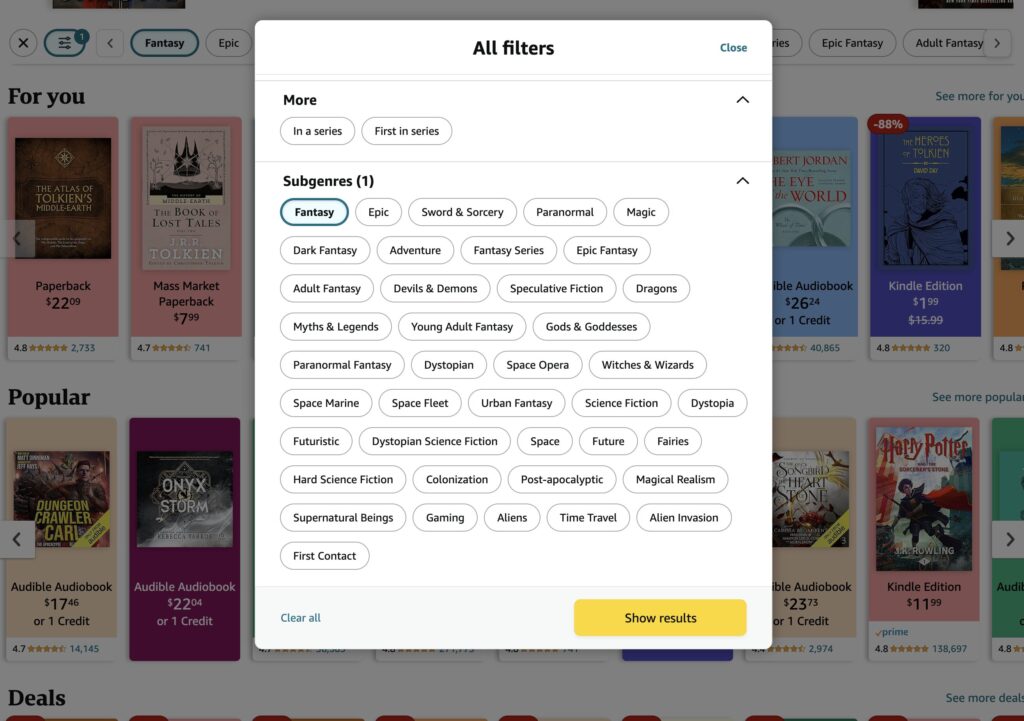
For example, instead of competing in a crowded genre like “Fantasy,” you might discover a profitable niche like “Cozy Witch Mysteries” or “Post-Apocalyptic Teen Fiction.” As you can see below, some of these categories aren’t even visible in search results—the other means you’d have to use if you didn’t have KDSPY—but they do show up as recommended books to readers.
By targeting these smaller, less competitive niches, your book stands a better chance of gaining visibility and ranking higher on Amazon’s bestseller lists.
3. Keyword optimization
Amazon’s search engine heavily relies on keywords to connect readers with books, which I hope you’ve gathered so far in this KDSPY review.
This tool helps authors uncover profitable keywords—those that have a high search volume and are relevant to their books, including a couple options related to it:
- Long-tail keywords: KDSPY excels at finding long-tail keywords like “mystery novels with female detectives” that are more specific and less competitive than single-word keywords like “mystery.”
- Keyword placement: Once you’ve identified strong keywords, you can strategically use them in your book’s title, subtitle, description, and backend metadata to improve discoverability. You can see a couple examples of how authors use this in the images below.



This targeted approach ensures that your book appears in front of readers actively searching for similar titles.
4. Competitor insights
Understanding your competitors is key to positioning your book for success, another tidbit I hope hasn’t been lost in this KDSPY review. This tool provides detailed data about other books in your target niche, including:
- Pricing: Helps you see whether similar books are priced low for mass appeal or higher for a niche audience, which can eliminate the guesswork out of pricing your book.
- Page count: Understanding average page lengths can help you determine if your book fits reader expectations.
- Reviews: Analyzing reviews for top-selling books can reveal what readers love or dislike so you can fill in those gaps with your own story.
For example, if you notice repeated complaints about poor editing or underdeveloped characters in competitor reviews, you can address these issues in your book to stand out.
5. Data-Driven Decisions
KDSPY’s data visualizations and downloadable reports allow you to make informed decisions about your publishing strategy. This includes:
- Choosing the right categories: With insights into category trends and competition, you can select the categories that give your book the best chance of ranking highly.
- Setting realistic goals: By analyzing the average monthly sales in your niche, you can set realistic expectations for your book’s performance and plan marketing campaigns accordingly.
- Monitoring trends: KDSPY helps you spot emerging trends, such as seasonal spikes in certain genres (e.g., holiday romances) or new subcategories gaining traction.
Of course, this is great to do yourself, but there are places like selfpublishing.com where they do this (among many other things) for you.
By relying on data rather than intuition, you can minimize risks and maximize your book’s potential for success.
Tips & tricks for using KDSPY
A good KDSPY review isn’t complete without a list of tips and tricks for making the most out of it if you do decide this software is for you.
Here are a few things to remember once you dive in:
- Drill down into subcategories: instead of focusing on broad categories like “Romance,” explore subcategories like “Paranormal Romance” or “Romantic Comedy” to find niches with less competition.
- Check category trends: Use KDSPY’s trend analysis feature to identify growing niches and seasonal opportunities.
- Target long-tail keywords: Phrases like “fantasy adventure for teens” are more specific and less competitive than single-word keywords.
- Test keywords regularly: Trends change, so revisit your keyword strategy periodically to stay relevant.
- Analyze top sellers: Study the pricing, cover design, and book descriptions of successful competitors in your niche.
- Read reviews: Pay attention to customer reviews of similar books to understand what readers like or dislike.
- Find the sweet spot: Use KDSPY to compare pricing across top-performing books in your niche and adjust your prices accordingly.
- Experiment with promotions: Track how temporary discounts or Kindle Countdown Deals affect rankings and sales.
- Export data: Save reports for later reference, especially when planning future book launches or marketing campaigns.
- Track progress: Use KDSPY to monitor how your book’s rankings and sales compare to competitors over time.
- Use KDSPY alongside tools like Publisher Rocket for broader keyword insights or Canva for designing eye-catching book covers.
And as always, educate yourself on the process of self-publishing! This KDSPY review is only as useful as your actions are after reading it. Whether you use it or not, there’s still a vast world of education when it comes to self-publishing your books.
Book Outline Generator
Choose your Fiction or Nonfiction book type below to get your free chapter by chapter outline!
Book Outline Generator
Enter your details below and get your pre-formatted outline in your inbox and start writing today!
CONGRATULATIONS
Thanks for submitting! Check your email for your book outline template.
In the meantime, check out our Book Outline Challenge.