


















Outlining. That word may conjure images of 7th-grade English, scribbling at your desk in frustration while a stern teacher looks over your shoulder. Many of us learned how to outline a book in middle school, and it’s a skill we haven’t revisited since our braces came off and the acne faded away.
Have no fear!
You’re a grown-up now, and this project isn’t being graded. You have free reign to learn how to outline a book in the way that benefits your writing process most—whether that’s a spaghetti-on-the-wall approach or a color-coded Excel spreadsheet.
Today I’ll teach you how to outline a book in 12 different styles, so you can choose what fits your genre and writing style best. You’re not alone when following this guide—we’ve helped publish over 8,000 books with our authors, and we know yours can be next!
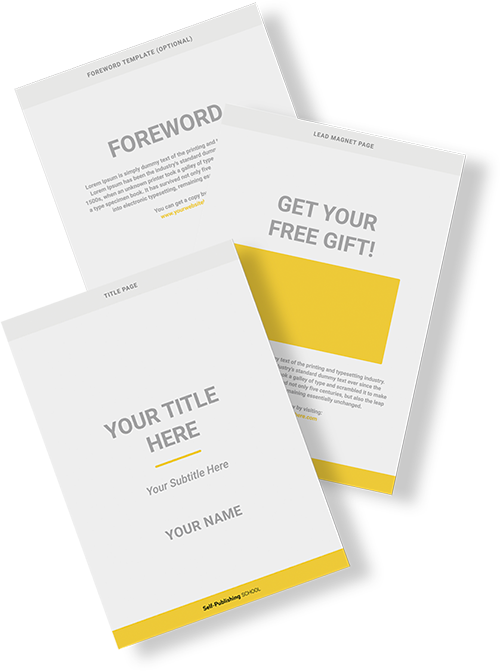
Book Outline Generator
Choose your Fiction or Nonfiction book type below to get your free chapter by chapter outline!
Book Outline Generator
Enter your details below and get your pre-formatted outline in your inbox and start writing today!
CONGRATULATIONS
Thanks for submitting! Check your email for your book outline template.
In the meantime, check out our Book Outline Challenge.
This blog on how to outline a book will cover:
Why should I learn how to outline a book?
No matter which type of book outline you choose, learning how to outline a book has many benefits. Outlining can help you define your goals, stay focused, and finish your manuscript more quickly.
You don’t need to spend huge amounts of time learning how to outline a book, but some (mostly painless!) prep before writing will be time well-spent since you won’t be spinning your wheels while staring at the blank screen of death.
Most nonfiction authors find outlines useful due to the nature of their books. Generally, writing nonfiction requires research and citation of sources (although many novels require their own research!) An outline can help organize your research so it doesn’t overwhelm you, plus your outline will help you create the best structure for your finished book.
For fiction authors, learning how to outline a book can help you to create a flawless story arc with dynamic, round characters.
When you start with a plan, you’ll unconsciously make connections and think about your draft, even when you’re not actively writing. Mentally writing in the shower is one of the perks of outlining, because it will get your thoughts percolating.
Be sure to keep paper and pens scattered about so you can capture your brilliance the minute it bubbles up, rather than letting all those ideas fade away.
Once you have a plan to write a book in outline form, you’ll be better able to put these thoughts to paper and compose your chapters when you do sit down to write. This means a finished book in less time.
So, I have some good news: there’s no “right” way to learn how to outline a book. Each writer will have their own process that’s personal to them. Keep reading for tips on how to outline a book in different ways. If one of these exact methods doesn’t strike a chord with you, you can combine methods to create your own way!
12 Options for How to Outline a Book
When learning how to outline a book, the method you take will probably rely on your genre. And, specifically, whether you are writing a nonfiction or fiction book.
We’re going to start with how to outline a book that is nonfiction. Then, we will move on to our tips for how to outline a book that is fiction. While there are plenty of relevant types you can apply to both types of books, learning how to outline a novel is inherently different from creating a nonfiction outline.
Regardless, we hope you read to whole list so you can determine which method (or mix of methods) is best for your unique book and writing process.
1. Mind Map + Book Outline
This is the main method of outlining that we teach in Self-Publishing School. The mind map method requires you to create a brain dump based on your book’s topic.
Write your topic in the center of a piece of paper, then use lines and words to draw as many connections as you can. It doesn’t need to make perfect sense from the get-go—the goal is free-form thinking to get all of your ideas out of your head and onto the page.
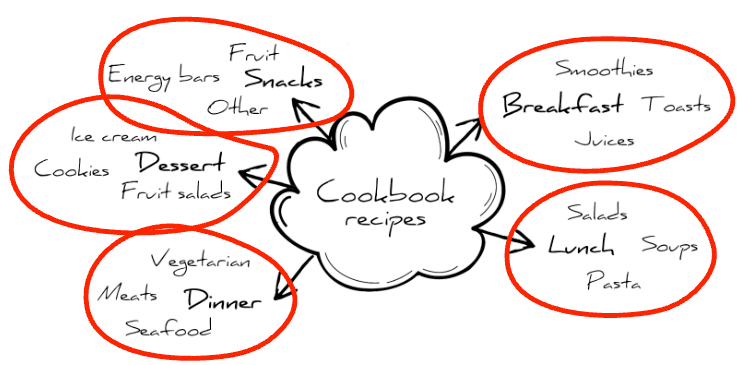
You’ll start to notice connections between different categories of information. This makes it easier to spot the relevant “book-worthy” ideas. Then you can pluck those ideas out of your mind map and put them into a cohesive book outline.
We also recommend creating a mind map for each chapter you select from your original mind map. It will help you structure your entire book chapter by chapter.
At Self-Publishing School, we encourage students to make a mess with their mind map. Regardless of what your mind map looks like in the end, it is an essential element to your book writing process. This mind map will be the jumping-off point for you to begin your outline.
In this brief video, I explain how to easily turn your mind map into an outline:


2. Chapter-by-Chapter Book Outline
Of course, mind maps aren’t the only way to learn how to outline a book. Another tried-and-true method is the chapter-by-chapter outline, which helps you map your book from beginning to end in a clear, linear flow.
To get started, first create a complete chapter list. Think of this as the skeleton of your book. With each chapter listed as a heading, you’ll later add material, reorganize content, or shift chapters around as your draft evolves. This method works especially well for nonfiction authors who need to present information in a logical order, but it’s equally useful for fiction writers who want to track plot progression or character arcs.
Next, create a working title for each chapter. Don’t worry about perfection here. These titles are placeholders to help you understand the purpose of each section. Once you have them in place, list the chapters in a sequence that supports your narrative.
After that, you’ll fill in the key points of each chapter. This might include arguments you want to make, scenes you want to write, research to reference, questions to answer, or emotional beats you want to hit. Think of these bullet points as mini-objectives that guide your writing.
Finally, link your resources as they would appear within each chapter. Include notes about books, interviews, articles, studies, or web links you plan to reference. This not only streamlines the writing process, but also ensures you don’t forget important citations later.
3. Sketch Your Book Outline
Perhaps you find the idea of a written outline confining. That’s OK. There’s another option which might appeal to your artistic side. Dan Roam, author of The Back of the Napkin: Solving Problems and Selling Ideas with Pictures, wrote about how sketching your ideas can simplify complex thoughts.
To learn how to outline a book using this method, hand-draw your book concept in a sequential order. This could be a series of simple doodles, stick figures, thought bubbles, arrows, or storyboards that map out your scenes or messages. You can keep it minimal with a ballpoint pen and notebook, or elevate the process using colored markers and oversized paper.
Many authors enjoy sketching on a whiteboard because it lets them erase and redraw ideas freely. Others prefer the tactile feel of chalk on a blackboard, which can help slow down your thinking and spark new insights. Whether you’re a visual thinker or simply feeling stuck, sketching your outline can unlock surprising clarity and creativity.
4. Book Outline With Scrivener
If you like being uber-organized, then the writing software Scrivener might appeal to you. Their book outline program allows you to upload your research and organize it by moving it around and filing it into folders.
Scrivener is known for its powerful organizational features. Its built-in outlining tools allow you to upload all your research, from PDFs and images to character notes and web clippings, then organize everything into folders that can be rearranged effortlessly. You can structure your chapters as individual “cards,” add summaries to each, and move them around on a virtual corkboard until your outline feels just right.
One downside is the program’s steep learning curve. Scrivener has a lot of features, which can feel overwhelming at first, especially if you tend to procrastinate or are eager to start writing quickly. However, many writers swear that once they understand the system, it completely transforms how they plan and manage longer works.
There are so many perks and uses for Scrivener that most people find the learning curve worth it.
5. Post-It Wall

This is for the creative mind, and another method we teach in Self-Publishing School. All you need is a blank wall and a box of Post-It notes. Carry a pad of Post-Its with you wherever you go, and noodle your book on the fly. Write your ideas and inspiration on your Post-Its when the mood strikes you.
Next, affix the Post-Its containing words, snippets, doodles, and phrases to the wall. After a week of this exercise, organize these words into a book outline form. Voila! A simple, effective, and creative way to learn how to outline a book.
This often helps people who are writing braided essays. It can also work well for storyboarding a novel. For the rest of this list, I will be discussing the best methods for outlining a fictional novel.
Your novel outline will require character development, evolution of plot points, and resolution of conflict. While the methods for how to outline a book that is fiction may be different, the goal is the same—organization and pre-planning so that you can write a novel much faster.
6. Basic Document
The Basic Document method is one of the simplest and most flexible ways to outline a book. If you prefer a clean, straightforward approach without extra apps or complex tools, this method keeps everything organized in a familiar format.
Your goal here is to use a Word document, Google Doc, or even an Excel or Sheets table to give structure to your ideas. Start by creating a table with columns for chapter titles, key points, character involvement, plot progression, or themes (whatever elements matter most to your story).
Within the table, summarize the main events or concepts of each chapter. This becomes a roadmap you can easily expand or rearrange as your book develops. Many writers appreciate how this method keeps the outline visually tidy while still being incredibly easy to adjust.
Then create separate sections specifically for character profiles, themes, and research notes. This helps you keep everything in one place without cluttering your main outline. By the time you’re ready to draft, you’ll have a fully organized reference document that keeps your plot, character arcs, and key ideas aligned.
7. The Hero’s Journey
Oftentimes, the hero’s journey is not viewed as an outlining method; it’s mentioned more often in the context of how a character develops throughout a story. However, when you’re writing a character-driven story, it may be helpful to use this as an outlining method.
This classic structure, popularized by Joseph Campbell and adapted by many writing coaches, breaks a protagonist’s journey into distinct stages: the call to adventure, crossing the threshold, facing trials, meeting mentors, confronting the ultimate ordeal, and finally returning transformed. When you use these stages as guideposts, they naturally form a powerful outline.
Start by mapping out each step of the Hero’s Journey as a separate section of your outline. Then identify the key challenge or turning point the protagonist experiences in each stage.
Ask yourself: What forces push the hero forward? What internal or external conflicts arise? What lesson or transformation occurs? These answers become your plot beats.
When you know the first challenge the protagonist faces, the second, the third, and how everything escalates toward the climax, you’ve already built the backbone of your novel. This method works especially well for fantasy, adventure, YA, and any story centered on growth or change, but it can also bring clarity to memoirs or narrative nonfiction with a personal journey at the core.
8. The Snowflake Method
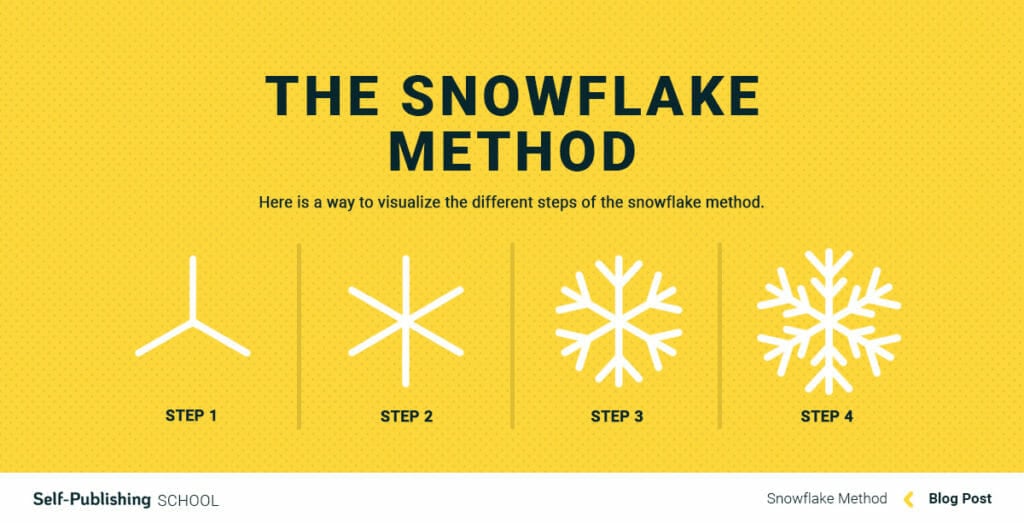
The Snowflake Method was created by fiction writing coach Randy Ingermanson based on the notion, “Good fiction doesn’t just happen. It’s designed.”
The process starts small and grows layer by layer, much like a snowflake forming. You begin with a single-sentence summary of your story. Once that feels solid, you expand it into a paragraph. Then you develop that paragraph into full-page descriptions for your main characters. Next, you expand each plot sentence into its own scene or chapter summary.
By gradually fleshing out the story in increasingly detailed steps, the Snowflake Method helps you develop a deeply cohesive narrative. It forces clarity early on and prevents plot holes later. Because the method is fairly detailed and grounded in logical, step-by-step progression, reading more about Ingermanson’s full process is worthwhile if you want to follow each stage precisely.
9. The Skeletal Outline
If you’ve ever written a term paper, thesis, or long-form report, then the Skeletal Outline will feel familiar. This method gives you a clear, structured view of your story by laying out your main narrative points in the order they’ll appear.
At its core, it mirrors a broad 7-step story arc, usually including elements like the introduction, inciting incident, rising action, midpoint shift, climax, falling action, and conclusion. Mapping your story this way gives you a big-picture snapshot of how your plot unfolds from start to finish.
Once the major bones of your story are in place, you can begin layering in subplots, character arcs, supporting scenes, and twists. This method is ideal for writers who want a classic outline that’s both flexible and easy to adjust as new ideas emerge.
10. Three-Act Structure
The Three-Act Structure has been around since Aristotle and remains one of the most widely used frameworks in storytelling. It’s especially popular in film, theater, and commercial fiction because it’s intuitive and easy to follow.
Act I – Setup: Introduces the world, characters, and central conflict.
Act II – Confrontation: The longest section, where the protagonist faces escalating challenges, learns new information, and encounters turning points.
Act III – Resolution: The climax and aftermath, where loose ends are tied up and the protagonist’s journey concludes.
While the structure seems simple, it’s incredibly effective at maintaining tension and narrative flow. Because Act II typically takes up the majority of the story, many authors use additional tools (like midpoints or pinch points) to keep the middle engaging. If you want a time-tested framework that keeps your story tight and focused, this one is a reliable choice.
11. The Reverse Outline
Sometimes looking at your story from a different angle is exactly what you need, and that’s where the Reverse Outline shines. Instead of building your outline from the beginning forward, you start at the end.
Write down how your novel concludes: the final scene, the solved mystery, the character’s transformation, or the central message reached. Once the ending is clear, you begin outlining backwards, asking: What had to happen right before this? And before that? And before that?
Working in reverse helps you create a plot that feels purposeful and cohesive. It can be especially useful for mystery writers, thriller authors, or anyone struggling with middle sections. If you know where your character must end up, mapping the most logical path backward often reveals plot gaps and opportunities you wouldn’t see otherwise.
12. Novel Outline Template
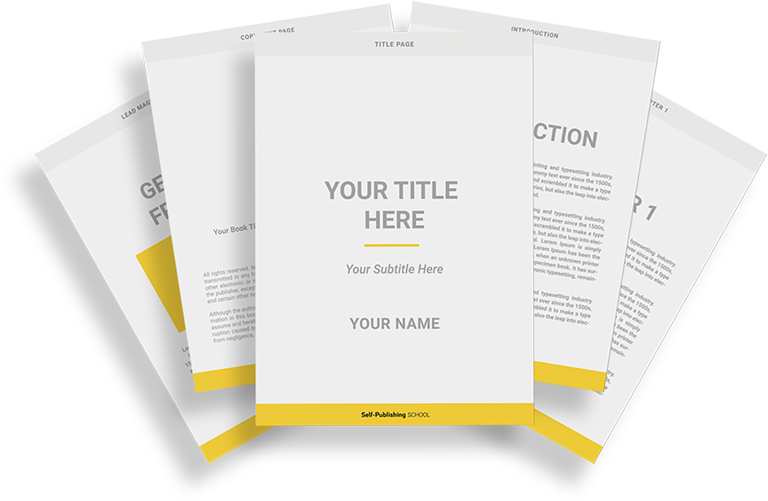
Why reinvent the wheel? If you’re impatient to jump right into the fun part—writing!—or you aren’t sure exactly how to format your novel outline, then a pre-formatted template outline might be your saving grace. A fill-in-the-blank novel outline can help you develop your plot, characters, and ideas without getting bogged down with the notion of striving for “proper” outline form.
We have a free novel outline template for you below, so you can get straight into writing your next bestseller.
Book Outline Generator
Choose your Fiction or Nonfiction book type below to get your free chapter by chapter outline!
Book Outline Generator
Enter your details below and get your pre-formatted outline in your inbox and start writing today!
CONGRATULATIONS
Thanks for submitting! Check your email for your book outline template.
In the meantime, check out our Book Outline Challenge.
Book Outlining FAQ
How do you outline a book for beginners?
Start with a mind map to brainstorm your main ideas. Then, create a chapter-by-chapter outline or use a template to organize your thoughts. Focus on the main points you want to cover in each chapter.
What are the steps to outline a novel?
1. Brainstorm main ideas; 2. Create a mind map; 3. List your chapters; 4. Define key plot points; 5. Develop character arcs; 6. Organize your ideas into a structured outline; and 7. Review and refine your outline for clarity and coherence.
What does a book outline look like?
A book outline can take many forms, such as a mind map, a chapter list, or a detailed spreadsheet. It includes the main points and structure of your book, breaking down each chapter with key themes, plot points, and character development.
Should you outline a book before writing?
Yes, outlining a book before writing helps you stay organized and focused. It provides a roadmap for your writing process, making it easier to track your progress and ensure your story flows logically.
How do you format a book outline?
To format an outline, start with main headings for each chapter or section. Under each heading, list subheadings for key points or scenes. Use bullet points or numbers to organize ideas in a clear, hierarchical structure.
How long should a novel outline be?
A novel outline can vary in length but should be detailed enough to cover all major plot points, character arcs, and settings. It can be as short as a few pages or as long as a detailed document with several sections.