














Allow me to introduce you to onomatopoeia! Are you looking to spice up your writing? Do you have a scene that falls a little flat, or do you find yourself looking to add dimension to your description, settings, or characters?
Maybe you have all the technical details in place, but you’re just looking for that little something to make it pop. You may have heard of these guys before, but I bet you haven’t heard of all the different ways you can incorporate them into your prose.
In this article, we’ll talk about what they are, give you some examples, and discuss different ways to use them to make your writing shine whether you’re writing a short story, a nonfiction book, or even if you’re writing a novel.
Onomatopoeia: what’s covered
- What is the easiest definition of onomatopoeia?
- What is an example of onomatopoeia?
- Soft and hard sounds using onomatopoeia
- When is the best time to use onomatopoeia in writing?
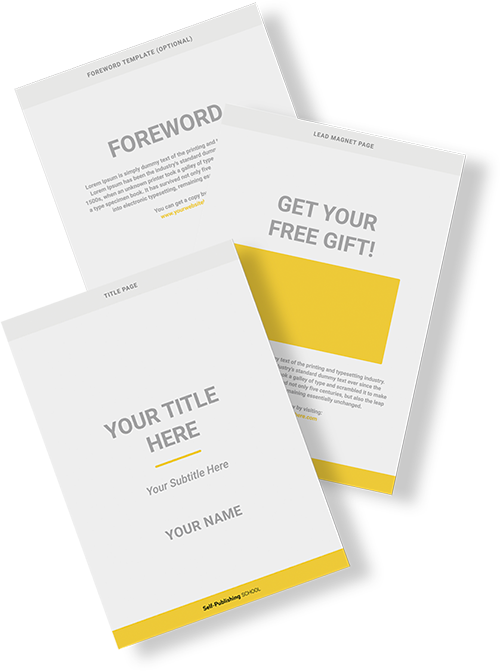
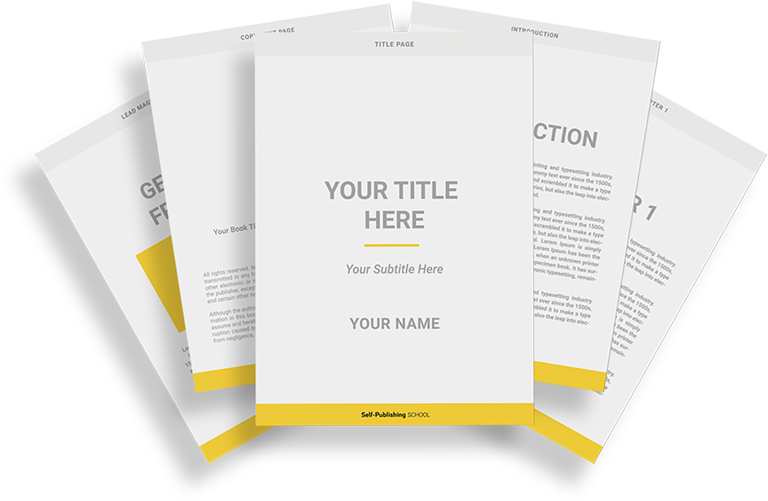
Book Outline Generator
Choose your Fiction or Nonfiction book type below to get your free chapter by chapter outline!
Book Outline Generator
Enter your details below and get your pre-formatted outline in your inbox and start writing today!
CONGRATULATIONS
Thanks for submitting! Check your email for your book outline template.
In the meantime, check out our Book Outline Challenge.
What is the easiest definition of onomatopoeia?
An onomatopoeia, plainly put, is a word that sounds like the thing it’s describing. If you’re like me, you might have learned that onomatopoeia is reserved for writing comic books and writing children’s literature.
They’re fun, but they’re always accompanied by an exclamation point, and they’re not really useful for anything above middle grade fiction. The examples I learned growing up are things like Zap! Bang! Pop!
But as it turns out, onomatopoeia includes a much wider umbrella of words than you may think. Some of them are single word phrases accompanied by an exclamation point. These are your comic book phrases: Bam!, *slurp*, and Pow! are all examples of this.
There might also be more subtle uses of onomatopoeia in writing.
The word pop, for example, sounds like something popping. These words evoke the thing they’re describing, so they’re super useful in making your descriptions and scenes come to life.
Not only do they describe the object to your reader, but they’ll also add a textural element that’s super satisfying when done right.
What is an example of onomatopoeia?
“The onions sizzled on the stove” is an example of onomatopoeia. In the word sizzled, the s and z sounds sort of mimic the way food cooking in a skillet sounds. Sizzled sounds like sizzling, which is how we know this is an onomatopoeia.
This is a lot more lively than saying something like “onions cooked on the stove,” because with the onomatopoeia, we have that textural element from the s and z sounds.
Example: “Popcorn crunched under their feet in the dark theater.”
We actually have two here—pop and crunched. The p sounds, as well as the short percussive structure of the word pop, mimic a popping sound. This is why popcorn is fun to say, and it’s why it’s so evocative! We also have the hard c and the ch in crunch, which sound a bit like something crunching.
This combo of sounds mimics the sound of popcorn crunching underfoot, which is a great sensory experience to put the reader right in the scene!
Example: “I snap my fingers. ‘Get back here!’”
Here, the onomatopoeia is snap. Like with pop, we have a short word, which automatically gives the word a clipped, quick feel. We also have that p sound again. This makes the word snap evoke the sound of a snap.
Example: “‘You’re safe now, she murmured.”
In the word murmured, we have the m sound and the ur sounds doing some heavy sensory work for us. This combination, when spoken aloud, sounds soft and a little blended together, much in the way murmuring does.
You might notice that it’s kind of hard to shout the word murmur. It’s possible, but it feels wrong, because the sounds are so soft.
Example: “When I thought my head couldn’t hurt worse, the city bells started clanging.”
Onomatopoeia is often at its most potent when it comes to impact sounds. Clanging is the perfect storm of syllables. We have the hard c and the tangy sound from ang, which, combined, sound kind of like reverberating metal. Have you ever hit a sheet of metal and heard the sound it makes? It sounds like clang, doesn’t it?
Example: “I still couldn’t hear the movie over the teenagers’ chatter, so I shushed them again.”
Similarly to murmur, the u sound in shushed helps give this a soft feel. But the real impact here comes from the double sh sound on either side of shush. This makes shush sound like you’re actually saying shhh to someone.
What are the 3 types of onomatopoeia?
There are three specific types, including ones that name sounds (groan), name things connected with sounds (the name snake sounds like the slither sound snakes make), and copying something physical, such as the word exhausted (it’s more difficult to say than the word tired).
Side note: You might notice that when someone gets mad and really wants someone to be quiet, they’ll go for a more percussive variant: “Shut up!” Why is that? Keep reading!
Soft and hard sounds using onomatopoeia
Take a look at the examples listed above. Do you notice some common traits or differences? Onomatopoeia relies on the sounds in a word, and to evoke certain sounds, you need to distinguish between hard and soft sounds.
A soft sound will come from soft vowel sounds, like the uh sound in words like chuckle, murmur, or mutter. Soft sounds also come from soft consonant sounds, like those sh sounds in sh, the m sound in murmur, and the s sound in sigh.
A hard sound, on the other hard, will come from harsher vowel and consonant sounds. These words will usually also be shorter, especially if they’re describing an impact. Remember the p on either side of pop? Shorter, more percussive sounds will give a punchier feel.
Punch, too, is an example. Yes, we have the soft u sound, but the hard p offers it some oomph, while the ch does here what it did back in crunch.
This is why our curse words tend to be short and full of those satisfying consonant sounds. They’re fun to say, and they sound exactly as harsh as what we’re searching for when we, say, stub our toe. It’s also why someone yelling hush doesn’t sound nearly as harsh as someone yelling shut up!
When is the best time to use onomatopoeia in writing?
Hopefully now you can see that onomatopoeia is absolutely everywhere, and that they cover a ton of words you may not have even realized it covered. Now that you have this descriptive power, you may be ready to take it to your novel and pop, bang, and sizzle!
But there is a time and place for onomatopoeia, and like any literary device, you want to make sure you’re using it intentionally. So, when’s the best time to use onomatopoeia?
You’re writing a creative piece
First things first, onomatopoeia belongs in creative writing. If you’re writing something technical, like an essay for school or copywriting for a manual, you’ll almost never want to use onomatopoeia.
Let’s take an essay, for example. If you’re describing something that happened in a book, you could say that on page six, the main character murmurs to her lover.
However, this is going to read a little informally, because academic writing generally doesn’t include a lot of descriptive or image-heavy language. Instead, you would say that the main character said something.
This doesn’t mean your technical or academic writing needs to be as bland and robotic as possible. It just means that you’re not trying to evoke imagery here—you’re trying to argue a point or analyze something, which means you need to be simple, clear, and concise.
There are exceptions, of course. In a manual, for example, maybe you need to say that if a customer hears a pop when the product is turned on, they should unplug it immediately.
If there’s a word that best describes what you need to describe, and it happens to be an onomatopoeia, that’s fine. Just don’t go out of your way to get super artsy when you’re doing technical writing.
Your description needs a little pizzazz
Onomatopoeia should be one of the first things you reach for when you want to give your description a little extra something. It adds texture, and therefore, dimension.
Let’s look at this sentence: “Traffic deafened him on his drive home.”
Let’s add in some onomatopoeia: “Car horns blared the whole drive home.”
This first sentence isn’t terrible. Deafened is a pretty strong verb, and we have an active sentence, which puts the reader right alongside the action. But we aren’t really getting what that traffic sound feels like. We could use onomatopoeia to get closer.
The words horn and blare both add some extra description here. This a sound, like the one in clang, gives that loud, aggressive feeling we’re going for. Try to whisper the word blared. Not impossible, but it always sounds just a little bit loud, right?
You’re not ditching “said”
Contemporary literature demands that dialogue tags be as invisible as possible. Occasionally, you may need a whispered or sighed, but you should overwhelmingly stick to said. If the line of dialogue beforehand falls flat without yelled or roared, you probably need to rewrite that line and work on the surrounding action.
Just like you shouldn’t overuse basic verbs, like jump or walk in every sentence when describing your characters actions (you’ll want to swap out these for strong verbs to help keep your audience’s attention and better convey your story points), swapping said for some new onomatopoeia words can be fun!
Let’s look at this infamous snippet from a literary classic called “My Immortal,” published on Fanfiction.net between 2006-2007.
“My name’s Harry Potter, although most people call me Vampire these days.” he grumbled.
“Why?” I exclaimed.
“Because I love the taste of human blood.” he giggled.
“Well, I am a vampire.” I confessed.
“Really?” he whimpered.
“Yeah.” I roared.
This section is packed with onomatopoeia. We have giggled, whimpered, roared, and grumbled. But, as you can probably tell, the writing isn’t better for it. Instead, it feels like way too much.
Leave onomatopoeia out of your dialogue tags, and use it sparingly for maximum effect (plus, learn how to write dialogue well in the first place, and you’ll naturally avoid this).
Using onomatopoeias in children’s books and fiction books
If you’re looking for a way to give your writing more flair, onomatopoeia is the perfect tool. Onomatopoeia are words that imitate sounds and they can add some extra flavor to any creative piece of writing—whether it be fiction or nonfiction.
In fact, nonfiction books can be turned into children’s books for greater reach of your message. You may have noticed this word used in children’s books while reading with them before bedtime. It adds an element of fun while simultaneously teaching kids about different animals and their noises!
Ever wanted to use hissed instead of saying he whispered? Now you can! There are many variations so don’t feel limited by these examples. Find what works best for your project and get started!
Learn more about how to write the perfect children’s book that both kids and parents will love to read by using our free Book Outline Generator below!
Book Outline Generator
Choose your Fiction or Nonfiction book type below to get your free chapter by chapter outline!
Book Outline Generator
Enter your details below and get your pre-formatted outline in your inbox and start writing today!
CONGRATULATIONS
Thanks for submitting! Check your email for your book outline template.
In the meantime, check out our Book Outline Challenge.