






When it comes to self-publishing, knowledge is everything if you want to get it right, so consider this your crash course.
Because of the increasing popularity of self-publishing over the last couple of decades, a lot of people think that publishing your own books is a fairly new concept, but that’s far from true. Self-publishing has been around a l-o-o-o-n-n-n-g time, centuries even.
In this self-publishing guide for total beginners, I’ll share a quick history and some helpful tidbits about publishing on your own terms that may surprise you.
By the end of this essential self-publishing guide for total beginners, you’ll know some history, gain some resource knowledge, and hopefully have a firm grasp on what self-publishing is and if it’s a good fit for you.
Ready? Let’s go!
What you’ll learn
How did self-publishing start?
Many have heard of Johannes Gutenberg and his invention of movable type in 15th-century Europe. Through his invention came the Gutenberg Bible in 1455, which opened the door for other artists to produce works much faster than traditional handcopying. It wasn’t the print-on-demand that we have today, but it was a way for a person who had a work he wanted to publish to get it into the hands of the people. However, Gutenberg was not the first to create a method for mass-producing written information,
China, Japan, and Korea all used woodblock printing centuries before Gutenberg. China used woodblock printing as early as the 7th century during the Tang Dynasty, and Korea improved on moveable type in the 13th century to produce works nearly 80 years before Gutenberg.
Why is this history important to know as a self-publishing author?
It’s all about perspective. Moveable type was groundbreaking in the early centuries because it allowed sacred texts to be reproduced and spread abroad. It was a way for the Tang Dynasty to “mass produce” the oldest known dated book using wooden blocks in A.D. 868. It made it possible for Korea to produce the oldest known book using metal movable type in 1377, and for Japan, it opened the door for Empress Kōken to commission “one million small wooden pagodas, each containing a small woodblock scroll printed.”
The widespread use of movable type throughout history led to increased learning as printing moved from only sacred texts to poetry, literature, guides, and more. But there were limitations. It cost a lot of money, and few people had the resources or connections to get their hands on moveable woodblocks or the Gutenberg Press, or all the other incarnations of moveable type that fell in between.
So what did this mean for authors who wanted to share their work? I imagine lots of hand cramps, ink, and parchment paper. Can you imagine how many would-be authors gave up on their dreams because the barrier to entry was so high?
Throughout early publishing history, this was the norm. Those with money could publish: big dynasties, authors with rich patrons, governmental bodies, and, as recently as the 20th century in the United States, big traditional publishers. The gatekeepers of publishing innovation kept a pretty tight lock on the dissemination of creative works until the perfect storm blew in.
Publishing 2005-2025
In 2005, I got bitten hard by the writing bug and wrote a memoir. I didn’t know anything about publishing. I just had something close to my heart that I wanted to share with others.
Now, remember that in the early 2000s, most of us computer-savvy folk were only a few years out from dial-up internet. YouTube and Reddit were just introducing themselves to the world, and MySpace, the precursor to Facebook, was only two years old. Oh, and flip phones were everything. What is a smartphone?
Imagine the fun I had trying to squeeze information from the internet on book publishing!
What I found was that the Big Six publishers at the time (Random House, Penguin Group, HarperCollins, Simon & Schuster, Hachette Book Group, and Macmillan) owned the block. Getting noticed as an unknown author was nearly impossible, and slush piles were where manuscripts went to die.
I knew I couldn’t compete, so I didn’t try. I started to look for other options. After all, it was a small memoir. I wasn’t trying to be the next bestseller. I just wanted to be able to hold the book in my hands, pat myself on the back for finishing it, and sell some copies.
My exhaustive search (as in, I was exhausted after fighting Google search) led me to a small website by Dan Poynter, who’d been self-publishing his own books since 1979! I didn’t know that publishing your own book was even a thing unless you took it to the local copy store and had it printed and bound.
Dan Poynter was the first of many “mentors” I found online:
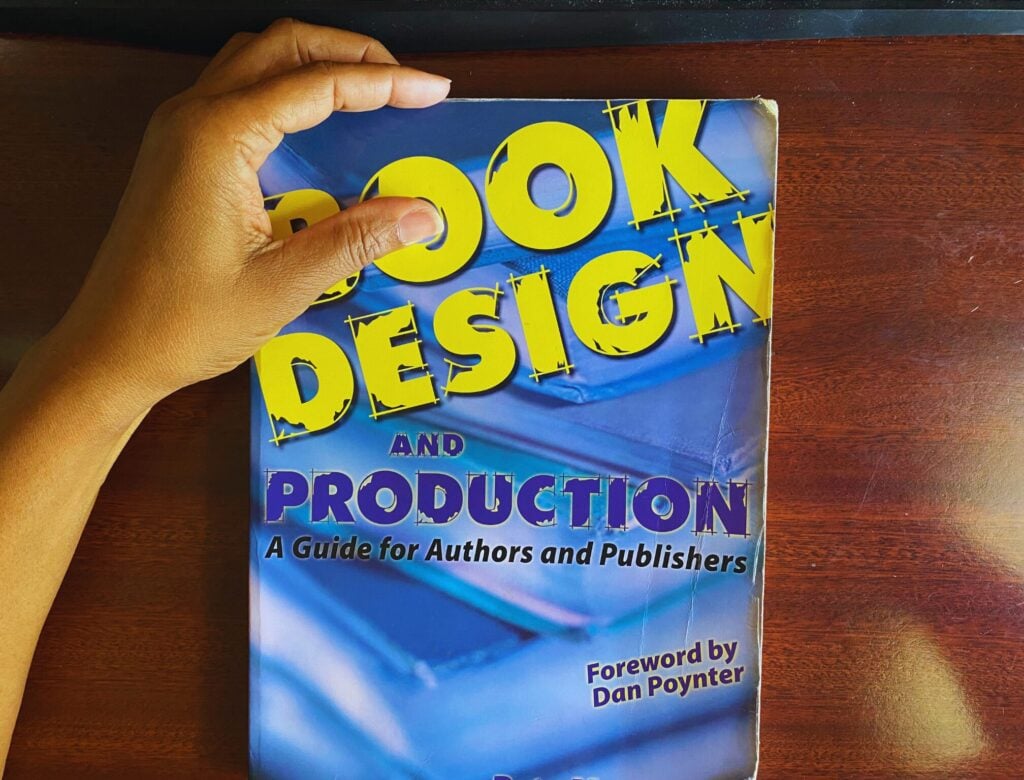
- Peter Pasterson, who shared step-by-step instructions on how to format your book for printing on his website and in his book Book Design and Production: A Guide for Authors and Publishers. My 2005 copy, pictured here, still sits on my bookshelf.
- Marilyn and Tom Ross, who wrote The Complete Guide to Self-Publishing and Jump Start Your Book Sales.
- John Kremer, who wrote 1001 Ways to Market Your Book.
- POD (print-on-demand) gave me the last piece of the puzzle I needed to start self-publishing.
I was amazed at how much information was hiding in the cracks and corners of the internet. It was like pulling a string and watching all of the hidden strings of self-publishing unravel. Of course, I was hooked, and twenty years later, I haven’t looked back.
Not only did I self-publish that memoir, but I also founded an independent publishing company to support first-time authors, which I ran for seven amazing years. For almost two decades, I’ve worked within the publishing industry as a writer, editor, book coach, and book designer.
So, what was the perfect storm that I mentioned earlier?
Technology.
When I entered the self-publishing space, there were already so many who’d come before me, had already done the legwork, paid their dues, and were willing to share the information with others. And, because of the internet and the ability to share information quickly, I was able to find resources that I otherwise wouldn’t have had access to.
For me, the biggest roadblock was the cost of printing. Most printers require an investment of at least 1,000 copies for offset printing. Technology to the rescue! With print-on-demand (POD), I didn’t have to worry about wasting my budget or having to store books in my garage.
Since the early days of print-on-demand, the printing quality, options, and ease of access have continued to improve. It’s easier than ever to self-publish a book because, in many ways, the playing field has finally leveled. The gatekeepers of publishing are no longer the scary giants of old. They are now a part of a publishing tapestry where anyone who wants to publish a book can choose which direction they want to go: traditional, hybrid, or self-publishing.
I am team self-publishing all the way, but it’s not the perfect fit for everyone. Let’s take a more in-depth look at how self-publishing works, so you can decide if it’s the right fit for you.
Self-publishing in a nutshell
Self-publishing your book boils down to the following steps:
- Test your idea
- Write your book
- Get your book edited
- Get your book formatted
- Get your cover designed
- Presale your book
- Publish/launch book
- Market your book
- Build a long-term strategy
Test your idea
Every book idea is not a keeper. If you’re considering the broader market, then you want to make sure that what you write is what others want to read. Now, if you’re publishing something for friends and family, that’s different. In that case, don’t concern yourself with the masses.
On the other hand, if you want to sell lots of books or at least enough for you to say “Wow! I did that!” then you’ll want to figure out who your audience is and what they like.
There are a few ways to test the market:
- Ask. Are you active on social media or in groups with a community that might be interested in the type of book you want to write? If so, ask them about their favorite books in a specific genre. This is just basic research, so I wouldn’t give away your plot or anything. Just be open to hearing the types of books they’re reading and their favorite authors. Then you can weigh their feedback against the book that you’re writing. If you’re book doesn’t seem to fit what they’re looking for, find another audience or change direction.
- Get a book assessment. Book coaches, editors, and other publishing professionals often offer book assessments to test the viability of your book’s message with the current market. It’s a great way to get insight into what’s currently trending in the market and whether your book idea is a good fit. Book assessors often ask to read a few chapters of your manuscript or the whole thing if it is finished.
- Market research. Go to sites like Amazon.com or Goodreads and look for books similar to yours (i.e., genre, plot, etc.). From there, check the feedback to see what others think.
- Test the content. Share a short excerpt and get feedback.
Write your book
It’s no surprise that you have to actually write a book if you want to sell it. Even if you have it ghostwritten, at some point, the words have to hit the page. Assuming you’re writing it yourself, think about your writing time and set a realistic schedule so that you can write your book with focused intention. Even if you have a great idea and amazing characters swimming around in your head, writing a book can be tough. Once the euphoria wears off, it’s important to have a schedule or an incentive to keep writing when characters get stuck, ideas don’t come, or you hate what you’ve written.
Get your book edited
DO NOT SKIP THIS STEP, and I’m not just talking about a Grammarly scan. Editing should rise to the top of any self-publishing list as a priority. Quality editing offers the reader a better reading experience, and a great editor can make a mediocre book sing!
Get your book formatted
Book formatting is similar to cover design, but for the inside of the book. It’s all about making the inside of the book easy to read through the proper use of spacing, typefaces, headers, footers, front matter, back matter, etc. Examples of poor formatting include too many typefaces, inconsistent page numbering, poor book order, and not enough negative space. This can reduce a reader’s enjoyment by sometimes causing eyestrain or other discomfort.
Get your cover designed
Book cover design is one of the parts of publishing that you want to get right. There’s nothing like a poor cover design to cause you to lose sales. That’s because readers see with their eyes first. Before they open your book, your cover has to convince them that it’s worth their time. Even if you can’t afford to hire a professional book cover designer, you want to get the best cover you can afford. If that means using a template, find one that looks great and fits your book’s theme. Ensure it can be customized so it doesn’t look like other books that use the same template. Don’t do it yourself unless you know what you’re doing. This means understanding the market, trends, and genre expectations.
Presale your book
Presales are not absolutely necessary, but it’s a great way to kick-start platform algorithms like Amazon.com, BarnesandNoble, and other online retailers, like Apple Books. Presales indicate that a book is selling and may be of interest to other customers, so by the time your book launches, there’s already a buzz working in your favor.
Publish/launch book
Once you’ve put all the work into ensuring that you’re book looks the best it can on the inside and out and has been edited professionally to reveal all of its amazing goodness, it’s time to publish. There are several online platforms to consider, like Amazon KDP, IngramSpark, Draft2Digital, AppleBooks, Barnes and Noble, and many others. You can also bypass distributors, print the books with a local printer, and distribute them any way you’d like. That’s the gift of self-publishing. You can do it any way you want. 🙂
Market your book
Book marketing begins before you publish and extends throughout the life of your published book. Marketing just means finding ways to get your name and books in front of people. A great place to start is with an author website and a way for visitors to sign up for your email list. This will allow you to market to them directly with information about your book’s release, promotions, and general communication. Marketing also includes pre-launch strategies, reviews, pitching podcasts, blogs, and local media, and more.
Build a long-term strategy
Whether you are considering an author career or just one to sell a single book for as long as possible, having a post-launch strategy is critical. Hitting “publish” and walking away is not an option. To keep the momentum going, you’ll want to track your sales and analytics and make tweaks to your marketing when necessary. Engaging with readers and collecting testimonials is another great way to allow word-of-mouth to do some of the promotion and sales work. Consider other formats like audiobooks, and consider foreign rights and translations if they are a good fit.
Publishing like a professional
As a self-publisher, you are acting as author and publisher, which means that you have to make decisions that benefit you as an author and the success of your book. This means understanding the details that matter, so that you can make the best decisions possible. This starts with understanding the different parts of a book, size and formatting options, the tools available, and what will work best for your book’s genre.
Here are some helpful terms and specs to keep in mind.
Parts of a book
Front Matter
- Half-title page: The first page of the book that shows the title only.
- Title page: Shows the title, subtitle, author name, and publisher.
- Copyright page: Includes the copyright information for the book, including the ISBN, edition information, and publisher imprint.
- Dedication (optional): Personal note to whom the book is dedicated
- Table of contents (especially for nonfiction and ebooks): A list of chapters, sections, and page numbers of the book.
- Foreword or preface (if applicable): Serves as a credibility “chapter”, written by someone other than the author.
- Acknowledgments (can be front or back): Thank you’s to those who helped bring the book together.
Other types of front matter include the frontispiece, epigraph, preface, introduction, and prologue.
Back Matter
- About the author: An author biography (short) that can include an author image.
- Additional works or series info: Information about other published works, including upcoming releases.
- Call to action (newsletter signup, website, social media): Encourages readers to visit the author’s website, social media channel, or leave a review.
- References or bibliography (nonfiction): A list of sources used in the book
- Index (if needed): Alphabetical list of terms with page references for easy searching.
Other types of back matter you might see are epilogue, afterword, postscript, author’s note, endnotes, appendix, and glossary.
Text formatting
The following are basic guidelines for setting up your book’s formatting for a positive reader experience. If you want to adjust these guidelines, consider consulting a professional for other options.
General layout
Typeface: Select a typeface that is easy to read, like Garamond, Open Sans, or Caslon, for the interior.
Font size: Body text should be 11-12 pts for readability.
Line spacing: 1.15-1.5 is a good place to start for spacing between lines
Paragraphs: Indent the first line for fiction and block style for nonfiction
Justification: Print books should be fully justified, and eBooks left justified.
Consistency
Chapter headings: The style should be uniform and placed in the same position for each chapter heading.
Scene breaks: Separate scene breaks with drop caps or (***)
Page numbers: Start after the front matter at the bottom or top (centered or the outside margin of the header area)
Headers/footers: Should include the book title, author name, or chapter title
Digital (EBook) formatting
Hyperlinked table of contents: Hyperlink the table of contents for easier navigation.
Reflowable text: Use reflowable text, which automatically adapts to a screen’s size.
No page numbers: Page numbers should not be used since page sizes will shift based on the device.
Fonts and images: Should be embedded and optimized
Metadata: Include the title, author, genre, keywords, publisher name, and description
Print formatting
Trim size: Trim sizes vary, but the standard sizes are 5″×8″, 6″×9″, or 5.5″×8.5″
Margins: Should be adjusted based on the book’s binding, trim, and font size
Bleed: Include for full-page images
Page breaks: Use clean breaks between chapters
Widows/orphans: Avoid single lines at the top or bottom of pages
ISBN and barcode placement: Include a space on the back cover for the ISBN and barcode.
Stand out in the current market
The great thing about publishing today is that it’s easier than ever because the barrier to entry is low compared to a couple of decades ago. However, the ease of self-publishing can also pose a challenge because there are SO many books being published now that it can be hard to stand out, but not to worry. Knowing what to do so that you don’t waste your time will put you on the right track. Try these seven tips:
- Niche down: Don’t try to please everyone. It’s a waste of time and energy. Plus, it’s impossible. Instead, narrow your niche by focusing on a clear subgenre that readers are excited about. Use tools like Amazon trends, Goodreads, and social media hashtags to find a category that’s not overly saturated, where you’ll have an easier time standing out.
- Invest wisely in visuals: Like editing, book cover design is a critical area to invest in. Get the best cover you can afford so you fit in with the top sellers.
- Become a savvy marketer: It doesn’t matter how good your book is if nobody knows about it. You don’t have to spend a ton of money on marketing if you set up a solid strategy. Use analytics for keyword research, research pricing, and targeted campaigns to get noticed.
- Try short-form video: Talk about your author journey, share tutorials, or create Q&As. You can mention your book, but let the value you provide to viewers be the star of the video.
- Build your platform: Third-party platforms like Facebook, Instagram, and TikTok are great places to get noticed, but ultimately, you want to control the narrative. Build an author website with an email list, and use social media platforms to send traffic your way for email signups. Then, you can market to your audience directly.
- Community collaborations: There’s an entire book adjacent community you can partner with to get noticed. Think of podcasts, bloggers, and other authors as potential partnerships for cross-promotion and other opportunities.
Wherever you are on your self-publishing journey, remember that the tools you need are right at your fingertips. There’s a lot to learn, but you can do it with the right information and a strong publishing strategy in place. Just put one foot in front of the other until you get to where you want to go.