













You already likely know all about traditional publishing, and even self-publishing has become clear to most people. But what is hybrid publishing exactly? And is it the same for all hybrid publishers?
Terms like this can also change meaning over time. What hybrid publishing used to be is a bit different than it is today thanks to the advancement of the publishing industry as a whole.
But if you’re trying to choose which publishing option is right for you, it’s downright confusing.
Allow us to clarify a few things.
Here’s what you’ll learn about hybrid publishing:
What is hybrid publishing?
Hybrid publishing refers to a publishing model that combines aspects of traditional publishing with self-publishing, like the author investing in the production costs of their book—such as editing, design, and printing—while the publisher offers professional services, industry expertise, and distribution while maintaining a lower percentage of royalties than traditional publishers.
There are also more hybrid publishing options arising where the author pays a company a flat fee to do the production of their book—and even the uploading and publishing portion—while the author maintains creative control, royalties, and publishing rights, like with selfpublishing.com.
Unlike traditional publishing, where publishers assume financial risks and retain significant control and rights, hybrid publishers share the risks and rewards with the author. This means authors keep a higher percentage of royalties (or all of them) while benefiting from professional support typically unavailable in self-publishing.
Hybrid publishers operate under clear guidelines that distinguish them from vanity presses (which we’ll discuss later). They typically vet submissions and maintain high editorial and production standards, ensuring quality books make it to market, and can even choose books that fall under specific criteria or niches.
Modern day hybrid publishing VS the past
The concept of hybrid publishing isn’t entirely new. Decades ago, authors seeking alternatives to traditional publishing often turned to “subsidy publishers,” which operated on similar principles but often lacked transparency and professionalism. This is what has given hybrid publishing a less than stellar reputation as of late, though not quite as bad as vanity presses.
Modern hybrid publishers have evolved significantly. Today, many follow standards set by organizations like the Independent Book Publishers Association (IBPA), ensuring credibility and quality.
Instead of just taking an author’s money and royalties on top of it, now they offer:
- Professional editorial services
- Customizable publishing packages
- Marketing and distribution channels similar to traditional publishers (though distribution is still not quite to the traditional publisher level)
Here’s an example of a company that, while marketed as self-publishing services and author coaching, would technically fall under a hybrid publisher:
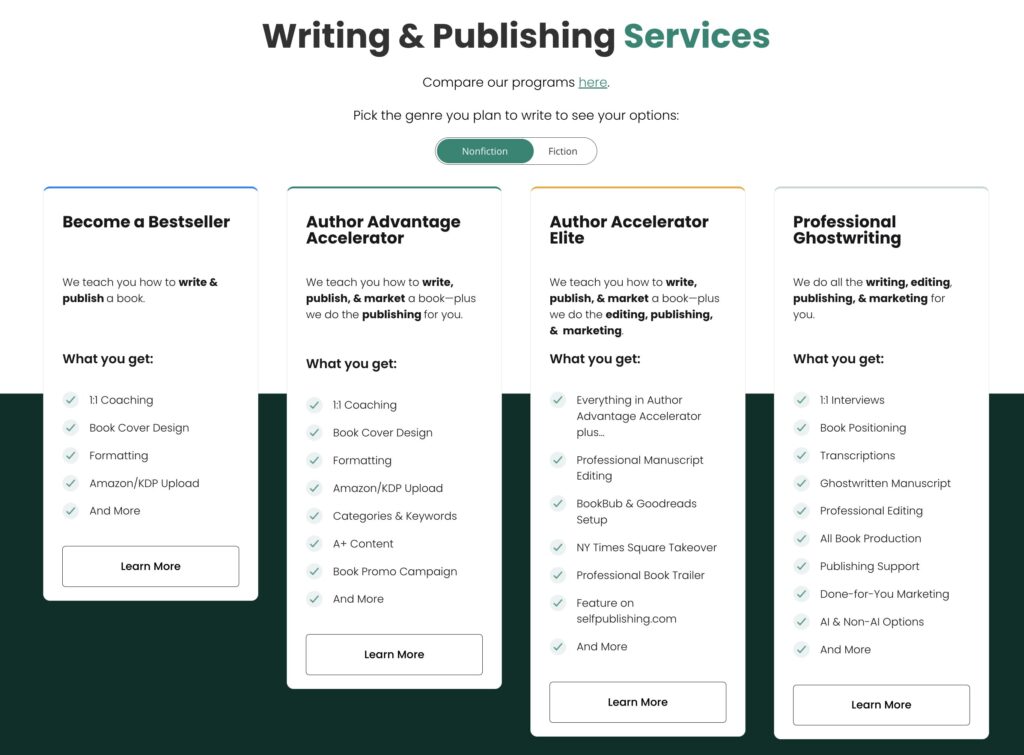
Advancements in technology and the growing acceptance of self-publishing have made hybrid publishing more accessible and respected, but also more nuanced. Meaning you should always do thorough research when thinking of working with a hybrid publisher to ensure you know what they offer specifically and if it’s within your needs.
Hybrid publishing fear mongering explained
You can find information everywhere bashing every type of publishing, but you’ll especially find people up in arms when it comes to things like hybrid publishing (though many mistake it for vanity publishing). The misunderstanding is where most of the fear mongering around hybrid publishing stems from, plus the fact that this has actually changed drastically over the years.
Here are a few examples of folks online afraid of hybrid publishing (as they understand it):


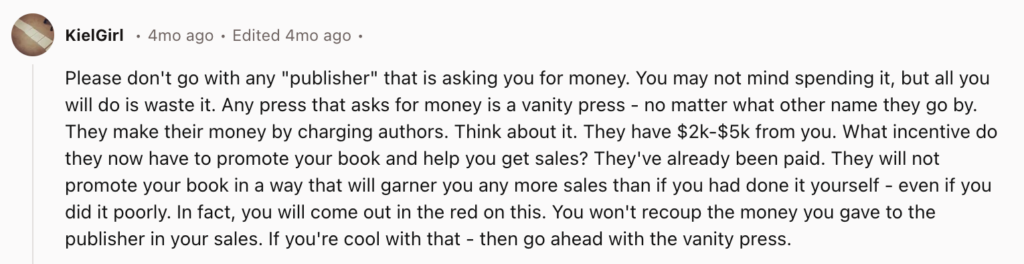
The fear is understandable. Your book is your baby. This is a vulnerable process and a confusing industry. There really are illegitimate companies praying off the dreams of authors.
But real, legitimate hybrid publishers are not the same as vanity presses.
Common fears of people learning about hybrid publishing include:
- High upfront costs: While hybrid publishing does require investment, reputable publishers provide a transparent breakdown of expenses.
- Reputational damage: Some believe hybrid-published books aren’t “real” books, but the stigma around alternative publishing models is fading as many authors achieve success.
- Unethical practices: While scams exist, proper research helps authors identify legitimate hybrid publishers that adhere to ethical standards.
By understanding the nature of hybrid publishing and doing your due diligence, you can avoid falling victim to fear-based misinformation.
Is hybrid publishing the same as vanity publishing?
And here to the topic at hand. No, hybrid publishing and vanity publishing are not the same. The distinction lies in professionalism, intent, and outcomes.
- Hybrid Publishing: Reputable hybrid publishers adhere to industry standards, vet manuscripts in some cases, and share a commitment to creating quality books. They collaborate with authors, offering transparent terms and a legitimate path to market, with many no longer obtaining ownership of the work itself.
- Vanity Publishing: Vanity presses accept all submissions, often regardless of quality. Their primary goal is to profit from authors’ investments, with little regard for the book’s market potential or quality. They can even still take a large amount of royalties, while also “owning” the book (meaning the author can never re-publish it themselves).
When considering a hybrid publisher, look for red flags like vague contracts, lack of editorial support, and excessive fees. You can even interview authors you see they’ve represented to understand how the process went.
Legitimate hybrid publishers prioritize both your book’s success and your professional growth as an author.
But just remember, there is no publishing path that guarantees you success. Even those who get traditionally published—the large majority actually—will never sell more than a couple thousand copies. It’s the bestselling outliers that make us believe otherwise.
Because book marketing, no matter how you publish, is up to the author, a game of luck and chance, and pure market positioning strategy.
How much do you pay for hybrid publishing?
The cost of hybrid publishing varies widely, depending on the publisher and the services provided. On average, authors can expect to pay anywhere between $5,000 and $20,000 for comprehensive packages.
What’s included in these costs?
- Editing and proofreading: Professional editing ensures your book is polished and market-ready.
- Cover design and formatting: Custom designs that align with genre standards.
- Distribution and marketing: Access to sales channels, marketing plans, and promotional support.
- Printing and production: High-quality book production tailored to your preferences.
- Publishing strategy: Book description, categories and keywords, market positioning.
- Author coaching: One on one coaching or support in the ideation, writing, and launching process.
Here’s an example of what’s included in some hybrid models and where the higher pricing comes from:
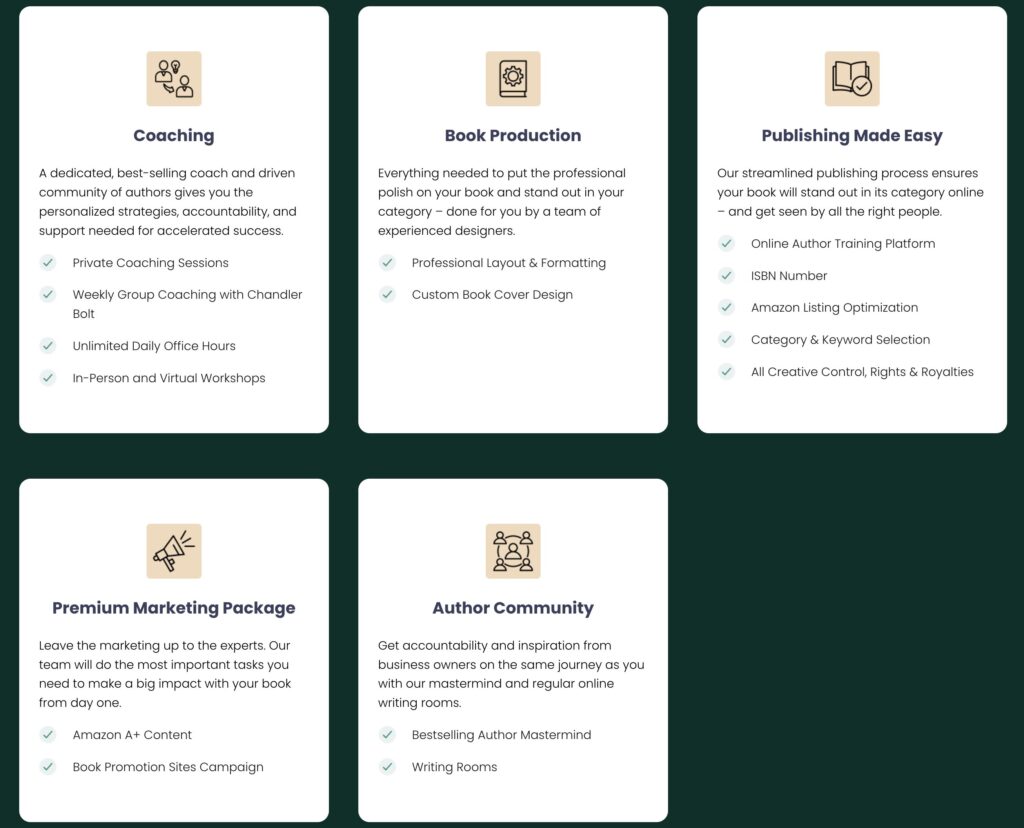
While the upfront investment is significant, hybrid publishing offers higher royalty rates than traditional publishing—often 50% or more, if not 100% of your royalties—making it a worthwhile consideration for authors with a clear vision.
If you were to self-publish on your own, you may pay less, but the quality isn’t guaranteed and you would still have to spend more in time on the research alone. The cost to publish a book can add up quickly.
Plus, if you get a good deal and maintain all the book rights, that opens the doors for more options to monetize later, like with merch.
Is hybrid publishing a good idea?
Whether hybrid publishing is a good idea depends on your goals, budget, and priorities. Overall, those who have a higher budget and want to focus most on writing the book, and less on the production, can benefit greatly.
Here are some factors to consider:
- Advantages:
- Retain creative control over your work.
- Access professional publishing services.
- Receive higher royalties compared to traditional publishing.
- Less time investment on the research (self-publishing) or querying (traditional).
- Challenges:
- Significant upfront costs.
- Responsibility for marketing and promotion, depending on the package.
- Navigating the publishing landscape to find a reputable hybrid publisher.
If you’re an author with a strong manuscript, a clear target audience, and a willingness to invest in your book’s success, hybrid publishing can be an excellent middle ground. It combines the best of traditional and self-publishing, giving you a chance to achieve your publishing dreams on your terms.