














Knowing which Amazon book categories make money and which ones don’t will help you better gauge how your book will do on the platform.
Amazon is currently the largest book retailer in the United States, so it’s a popular distribution choice for many self-publishers.
The challenge, however, is that with so many books for sale on the platform, competition is fierce. The ease of use and low barrier to entry make it a popular choice, but many incorrectly assume that a big marketplace equates to big sales. Not true. It’s not enough to upload a book to their platform and hit “publish.”
Understanding how the platform works and developing a strategy to increase the chances that your book shows up in their search results is critical.
Knowing this information ahead of time can help you narrow down your book’s genre, even before you begin writing the book.
Categories are not the only indicator of a book’s potential success, but they are a great place to start.
In this article, I’ll share an overview of how Amazon categories work, how to find the most profitable ones for your book, and the process for finding what a book is likely making on the platform.
We’ll discuss:


Book Outline Generator
Choose your Fiction or Nonfiction book type below to get your free chapter by chapter outline!
Book Outline Generator
Enter your details below and get your pre-formatted outline in your inbox and start writing today!
CONGRATULATIONS
Thanks for submitting! Check your email for your book outline template.
In the meantime, check out our Book Outline Challenge.
Understanding categories
Currently, it’s estimated that Amazon has tens of thousands of book categories that generate around 28 billion dollars annually for the company. While the company doesn’t publish an exact breakdown of revenue generated, companies like Publishers Weekly, Toner Buzz, The Guardian, and Living Writer offer the following estimates for the top ten Amazon book categories:
- Adult general fiction (umbrella) — $6.01B. (source: PublishersWeekly.com)
- Romance — $3.61B. (source: Toner Buzz)
- Mystery / Thriller / Crime — $2.40B. (source: Toner Buzz)
- Science Fiction & Fantasy — $1.80B. (source: The Guardian )
- Children’s & Young Adult (combined) — $2.70B. (source: PublishersWeekly.com)
- Adult general nonfiction (umbrella) — $4.51B.(source: PublishersWeekly.com )
- Self-help / Personal development — $1.20B. (source: livingwriter.com)
- Religion & Spirituality — $0.90B. (source: PublishersWeekly.com )
- Business & Money — $0.90B. (source: livingwriter.com )
- Health / Fitness / Dieting — $0.60B. (source: Toner Buzz)
These are conservative estimates, likely based on trade-market trend reports that help gauge a book category’s fiscal strength at a high level.
When you set up your book’s product page, you’re only allowed to select three. A few years ago, you could request additional categories once your book was published, but that ended. Without the option of additional categories, you must select your three categories wisely, which starts with understanding Amazon’s algorithm.
Amazon’s algorithm
What is an algorithm? In simple terms, it’s a set of rules that a platform uses to determine which content is seen on the site. Similar to social media feeds, with the enormous amount of content added to the platform daily, algorithms prioritize when and how things show up in search results
Truth be told, algorithms are like some secret society, where only the insiders actually know what’s going on, but there are enough visible puzzle pieces to clue us in on how to make the best use of the platform so our books don’t get pushed to the bottom of the Amazon slush pile.
Categories are an important part of Amazon’s algorithm. The popular company sells tons of products, not just books, so categories and subcategories are a way to manage the enormous amount of inventory they process daily. For Amazon, it’s all about the sales numbers, and certain categories sell more than others, so it comes as no surprise that these are the categories they prioritize. For the savvy self-publisher, understanding how categories work is the key to your success on the platform.
How Amazon categories work
The mistake many new authors make is assuming that if you publish something on Amazon, the customers will automatically come. Getting your book published on the website is a good start, but discoverability is the ultimate goal.
According to Amazon,
Book categories on Amazon are like digital shelves that organize books into specific genres and topics. They serve the same purpose as sections in a physical bookstore, such as “Science Fiction” or “Romance.” These categories help customers find books that match their interests.
Knowing how to categorize your book so that your ideal reader will find it can make a significant impact on sales. For example, romance is a huge fiction category on Amazon and is saturated with top sellers, so using the broad category “romance” for your book is a sure way for it to get lost in the sea of other romance novels. By digging deeper into the subcategories, you can place your book in a smaller niche, with the potential for greater profitability.
So, how do you find which Amazon book categories make money?
There are three ways: Automated, manual, or website lists
Apps/tools
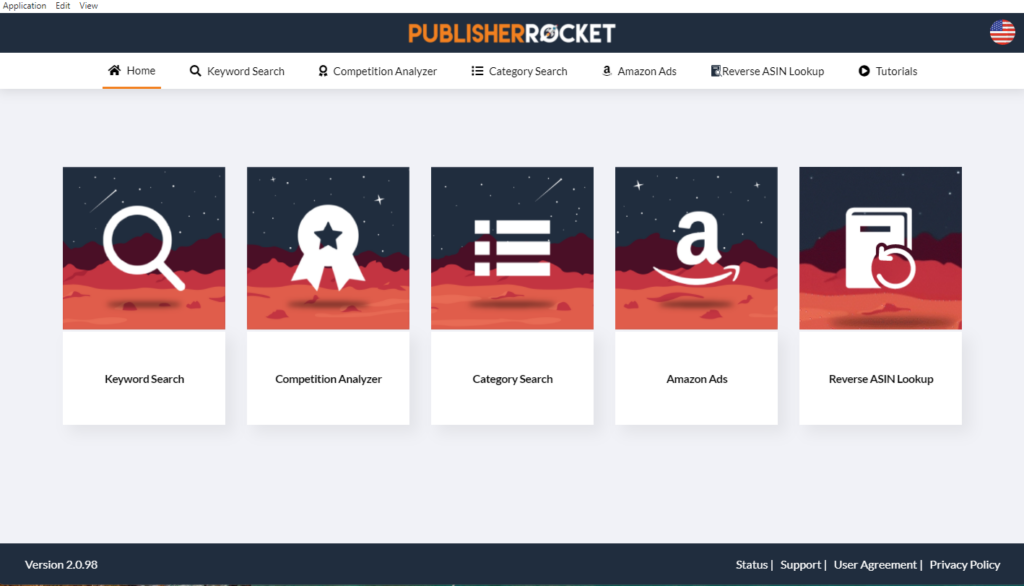
My favorite way to search for profitable categories on Amazon is to use a tool specifically designed for category analysis, like Publisher Rocket. It offers an up-to-date snapshot of the current market so you can select the most relevant and profitable categories for your book.
Publisher Rocket ($299, currently on sale for $199) is user-friendly, has great customer support, and offers direct access to the best-performing categories on Amazon. It also helps with keyword generation and competitor analysis.
Here’s a screenshot from the homepage. As you can see, the setup is simple, but the information provided (once you click on the categories) is super detailed and exhaustive.
Another option for book research is BookBeam, which boasts access to over 45,000 book categories, including sales, royalty information, and other metrics. Their monthly subscriptions start at $29 per month for basic access to data, up to $82/month, which includes 5 seats and less restrictive access to metrics.
Manual
While apps like Publisher Rocket and Book Beam provide the most up-to-date and detailed category information, $199-$299 may not be in your budget, and that’s okay. There are still ways to get a solid handle on which Amazon book categories are profitable. You just have to do a bit of legwork.
Here’s how:
- Create a spreadsheet to document your findings.
- Start by going to Amazon’s 100 Best Sellers page to review which books are at the top of Amazon’s list.
- Using the category list, narrow the results down to your specific category. For example, Science fiction and fantasy>fantasy>short stories>coming of age.
- From here, review the top 100 bestselling books for sales details.
- Start with the #1 seller. On October 27, 20025, the #1 bestseller in the coming-of-age fantasy category is Demon Copperfield by Barbara Kingsolver
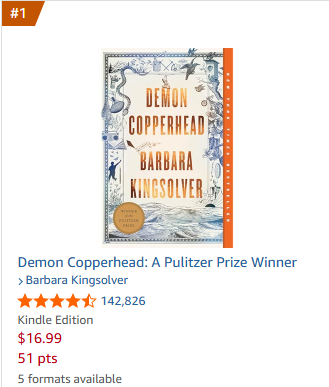
- Next step: Click on the book to go to the product page, and scroll down to the product details.
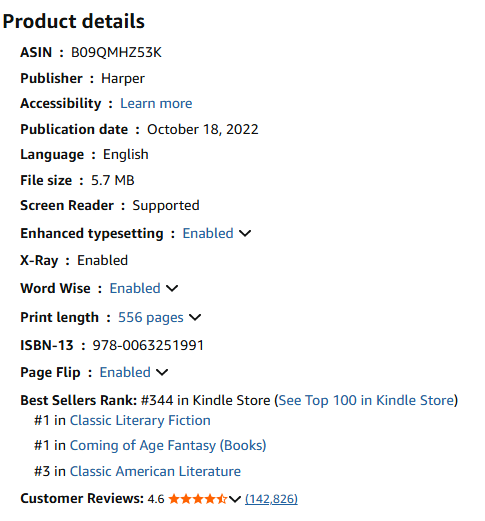
Look for the Best Sellers Rank (BSR) information. In the case of Demon Coperhead, we see that the book ranks #344 in the Kindle Store.
Using a sales-rank calculator like the free version from Kindlepreneur let’s plug in the information to get estimated monthly sales.
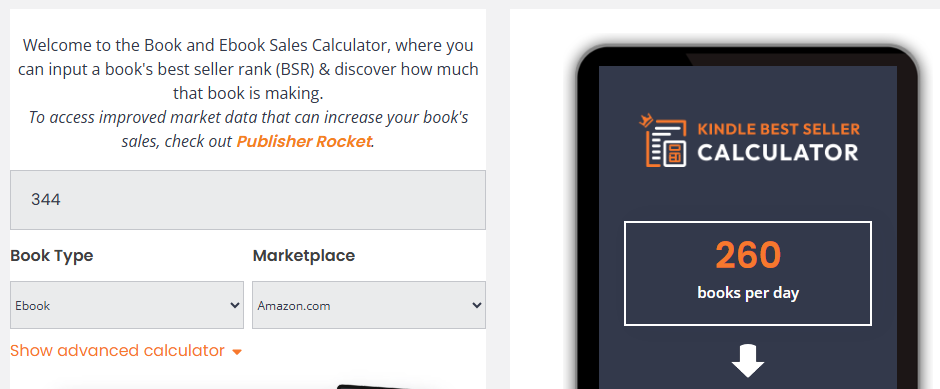
Based on the BSR, it’s estimated that this book sells 260 Kindle copies per day. For paperbacks and hardcover details, scroll back to the top and click on the next format, pull the BSR number again, and plug it into the calculator. This book currently sells 63 hardcovers a day and 385 paperbacks a day.
- Now, pull the same information for #100 in the list, which at the writing of this article is System Awakening by Sean Dunning.
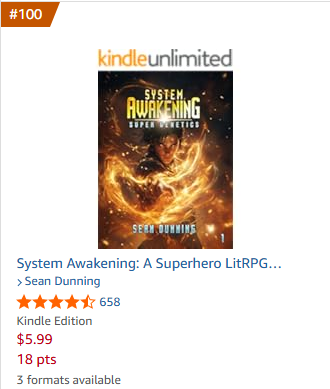
Based on the BSR score, it is currently selling 16 Kindles per day, and less than one paperback a day (Hardback format not available).
As you can see, there’s a huge difference in sales between the #1 book and #100. What does this tell you as a self-publisher?
- With #1 in the category showing significant sales, it shows that the category has potential.
- The big drop off between #1 and #100 shows that the top players make up the bulk of the sales. This can be verified by checking out BSR numbers of other books in the list. Based on the sales for #100, it’s clear that you don’t have to have a ton of daily sales to make the list, but you still want to set a sales goal. For example, sell enough to rank 25th on the list.
- The large variance in sales numbers also indicates that there’s a mix of competition (high performers and low ones). Studying areas like pricing, reviews, cover designs, and keywords will help you devise a strategy for getting your book to rank higher than the competition.
Website lists
For a quick, but not as reliable, look at profitable book categories on Amazon, you can do a browser search for “Profitable Amazon book categories” or something similar. These posts can be a good place to get general information, but unless they update the lists regularly, the information can be outdated. It’s still a good option as a starting point. I recommend you use these lists loosely as a guide, but for more reliable and specific data, invest in an app or do the research yourself.
Better visibility
Optimizing your book for higher discoverability requires more than just publishing on Amazon and hoping for the best. Amazon doesn’t publish category-level gross revenue, so you have to do a bit of digging for category estimates or purchase expensive industry datasets.
With the right strategy, you can increase your book’s visibility, and adding your book to the right categories is the best place to start. Whether you use an app, a website list, or research yourself, understanding which categories perform the best in Amazon’s saturated marketplace will give you the best chance for success.
Writing a book is just the beginning of the book publishing process. If you want to be a successful author, treat your book like a product and your author career like a business; otherwise, you might be sorely disappointed with the results.
Remember, you can have the best book ever written, but if it gets pushed down by other books on Amazon, it may never see the light of day, so choose your categories wisely. Understand the ever-changing market, and be ready to pivot or make small tweaks if the market shifts.
To learn more about Amazon for self-publishers and how to navigate the platform successfully as a self-published author, take a look at these additional resources.
Suggested reading:
Amazon book categories
How to Get Book Reviews on Amazon
The Hidden Challenges of Self-Publishing on Amazon
Book Outline Generator
Choose your Fiction or Nonfiction book type below to get your free chapter by chapter outline!
Book Outline Generator
Enter your details below and get your pre-formatted outline in your inbox and start writing today!
CONGRATULATIONS
Thanks for submitting! Check your email for your book outline template.
In the meantime, check out our Book Outline Challenge.