











Getting those all-important first reviews on Amazon can feel like shouting into the void, especially if you’re a debut author or launching a book without a massive following. Learning how to get your first reviews on your self-published book is essential, as are those early reviews.
Not only do they influence potential buyers, they also trigger Amazon’s recommendation algorithms, making it more likely your book will appear in search results and “also bought” sections, as well as giving you a bestseller banner that boosts your ranking.
So how do you actually get people to read your book and leave a review? Because it’s hard. Getting people to go out of their way, take time, and actually write something nice? Almost unheard of in this day and age.
But we’ve been in this game for over ten years, having helped over 8,000 authors successfully write, market, and self-publish their books. So we’ve picked up a few hacks that work consistently.
The seven best strategies to kick-start your review count:
Book Outline Generator
Choose your Fiction or Nonfiction book type below to get your free chapter by chapter outline!
Book Outline Generator
Enter your details below and get your pre-formatted outline in your inbox and start writing today!
CONGRATULATIONS
Thanks for submitting! Check your email for your book outline template.
In the meantime, check out our Book Outline Challenge.
Amazon algorithm breakdown: understanding the role of reviews
Amazon’s algorithm is famously secretive, but we know a few key things: reviews are one of the most important signals Amazon uses to decide whether to show your book to new readers. When a book has multiple recent reviews—especially from verified purchasers—it tells Amazon that people are reading and engaging with your book, which increases your chances of being featured in keyword searches, “Customers Also Bought” and “Products Related to This Item” carousels, and genre-specific recommendation emails.
These can appear in various places, including the sales page for someone else’s book:
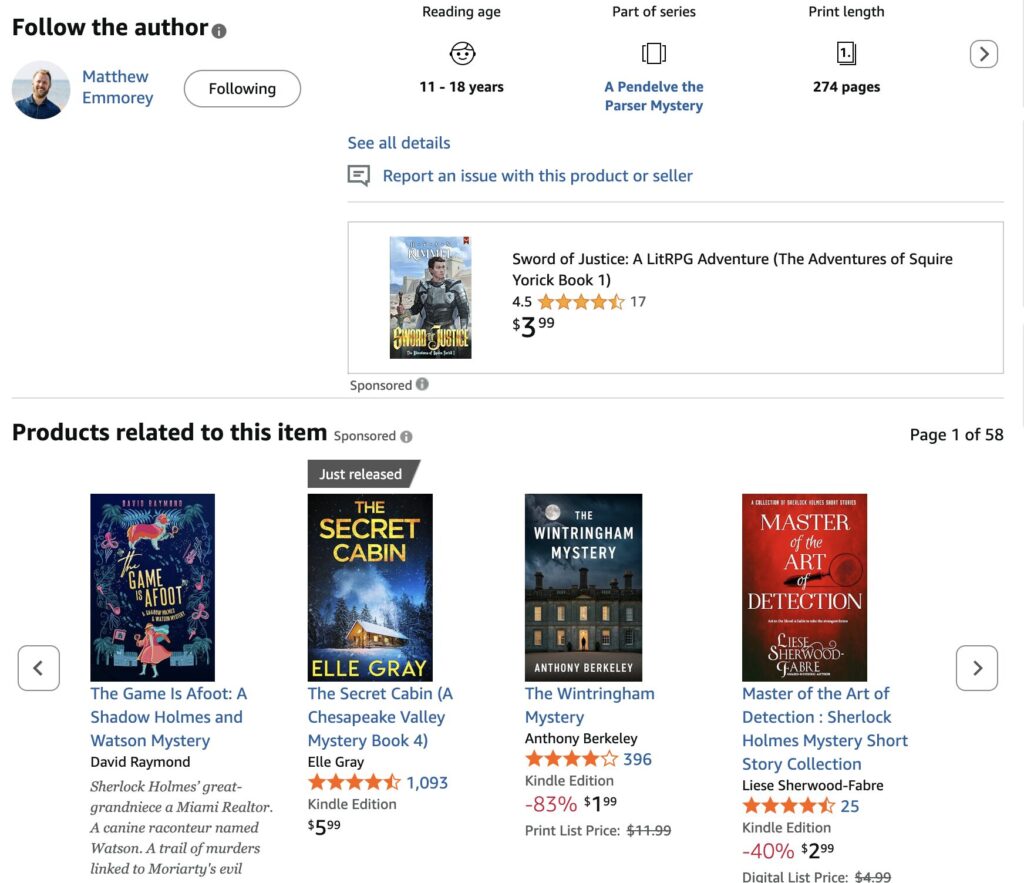
But it’s not just the number of reviews that matters—it’s who leaves them. Amazon weighs reviews more heavily if they come from accounts with a history of buying books in your genre. That’s why having a launch team or ARC readers who are active Amazon customers is so critical. A few well-placed, genre-relevant reviews can do more for your visibility than dozens from inactive accounts.
In short, reviews aren’t just social proof for potential readers—they’re a signal to the algorithm that your book is worth showing to more people. And since Amazon is a business, they want to make money too. If there’s proof a book is making money, with potential to make more, they’ll try to sell it.
How to get your first reviews on your self-published book
If you’re a nobody, getting reviews can be hard. But it should be your primary focus during your launch.
Don’t hit publish and just hope they come in.
That’s how your book disappears into obscurity.
Learn how to get your first reviews on your self-published book and try these tactics.
1. Build a targeted launch team
You’ve probably heard this advice before, and for good reason—it works. A launch team is a group of readers who agree to read your book and leave an honest review when it launches.
But here’s a key detail many authors miss:
Ideally, your launch team should include people who already buy books in your genre on Amazon.
Why? Because Amazon’s algorithm takes reader behavior into account. If your reviews come from people who regularly buy cozy mysteries, and your book is a cozy mystery, Amazon will be more likely to recommend your book to other cozy mystery fans.
To build a strong launch team:
- Start gathering members 4–6 weeks before launch.
- Offer early access to your book (typically via ARC or review copy).
- Give them gentle reminders about review dates—but don’t pressure or bribe.
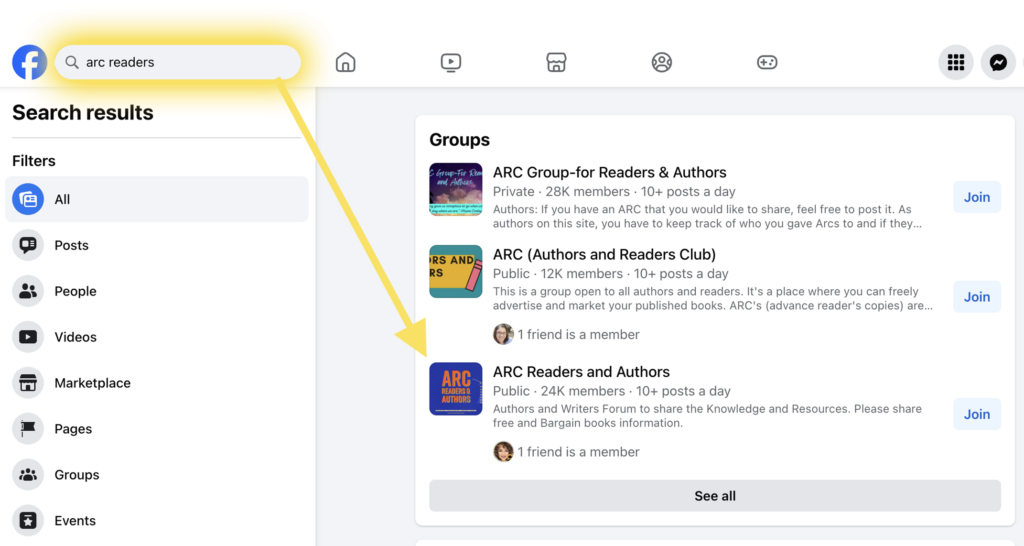
Getting people who read your genre specifically can be tricky if you don’t know many. Facebook groups and Subreddits are great places to check. You can look for groups labeled “ARC readers” so you know recruitment is allowed.
On Facebook, just go to your search bar and type “arc readers” to see the various groups—some genre-specific which is important—of readers who have signed up to get asked to review books! Many are other authors (who are also readers) and will do swaps, especially if it’s a genre they like.
And make sure you’re following Amazon’s review policies—don’t offer payment or incentives in exchange for reviews.
Also notable: someone has to have spent $50 recently on Amazon in order to reviews products. So it can’t be a brand new account and should be regular Amazon users for algorithm authenticity purposes.
2. Submit to EReader news today (ENT)
EReader News Today is a great promo site that caters to Kindle readers and often results in spikes of downloads (and potentially reviews) if you’re running a free or discounted promotion. And the best thing about Kindle readers?
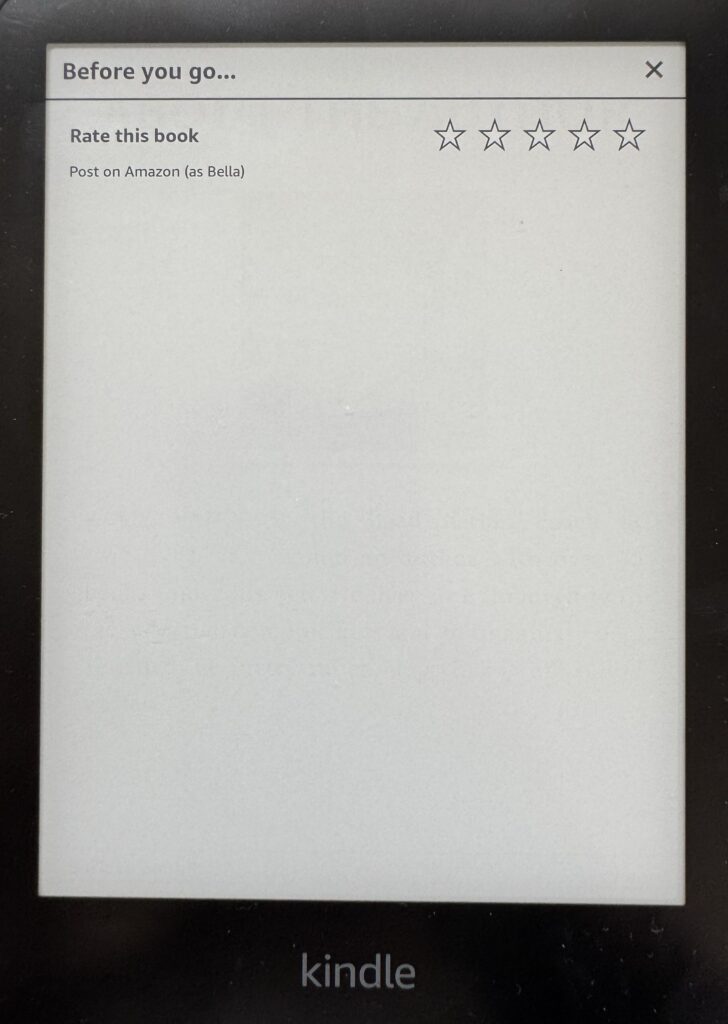
They read on a device that makes it extremely easy to leave a review when they’re done reading.
Which means it’s a powerful method of getting good reviews. Kindle devices prompt you to at least rate the book, and you can fully review it after:
Even if you’re not wide on all retailers, ENT can help:
- Choose the right category that matches your genre.
- Run a discounted promo ($0.99 usually works best) or a free promotion. Remember, this is an investment strategy to help gain more sales in the future.
- Time it with your launch week or shortly after, when your book needs momentum. It’s also a great way too boost a lull of low book sales.
A bump in downloads from ENT can put your book in the hands of enthusiastic readers who already review frequently. These aren’t guaranteed reviews, but they can help increase exposure and visibility.
The key here for optimal benefits is to make sure you’re utilizing tip #5 below.
3. Run Amazon ads (yes, even early)
Amazon Ads (specifically Sponsored Products) can help drive visibility to your book page, especially before you have many (or any) reviews.
While reviews help ads convert better, you can still run profitable or break-even ads early on if:
- Your cover and blurb are compelling. The cover must meet genre expectations or you’ll be targeting the wrong people (aka wasting money).
- You’re targeting relevant keywords (like other books or authors in your genre).
- You start with a small daily budget and test what works.
Even modest ad traffic increases the likelihood that readers will buy and review your book organically—especially if your back matter includes a gentle nudge to review. More on that below.
A quick tip is to ask ChatGPT or another AI what keywords authors like you are using in their ads. It’s a fast way to curate keywords if you don’t want to pay for software like Publisher Rocket.
4. Leverage your existing platforms (even small ones)
Already have an email list or social media following? Use it.
Many authors underestimate the power of even a small list—20–50 people who care about your work are more valuable than 5,000 strangers on a cold ad. These are the people who signed up to hear from you, including any books you put out!
Tips for using your existing audience:
- Ask them directly to review after they’ve read.
- Make it easy by including a link to your Amazon page—a special link to the book review page specifically.
- Don’t forget to follow up post-launch with a thank you and a reminder.
Here is a great video for creating a special link that goes directly to the book review. Because remember, cutting down steps will make it more likely someone will do the action you want them to.
For social media, you can try a few different angles:
- Sharing behind-the-scenes details about your book.
- Posting reader reactions or early feedback.
- Using a call to action (“If you’ve read it, I’d love a quick review!”).
- You can even share book reviews and your reaction to receiving them, and how much they mean to you. People love to make others feel good and this is a great way to show that book reviews matter.
You never know which follower is a regular Amazon reviewer—or who might surprise you by stepping up. But you’ll never find out if you don’t make the ask. As much as it can be uncomfortable to get on social media and ask.
5. Use the back matter of your book wisely
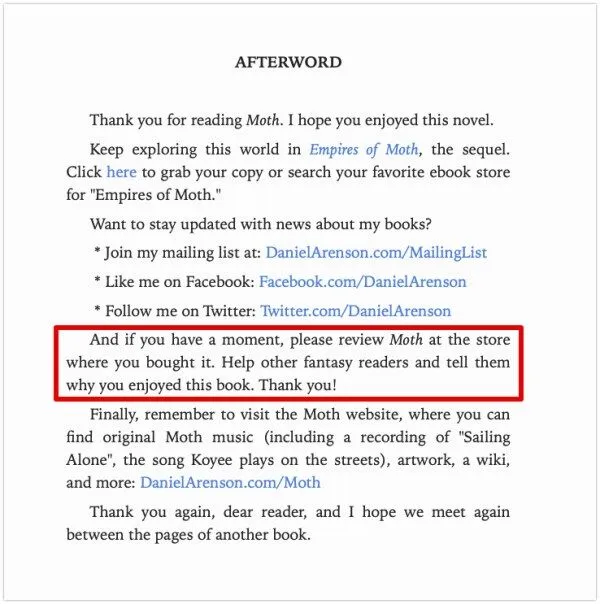
The end of your book is prime real estate for asking readers to leave a review. They’ve just finished your story, they (hopefully) loved it, and they’re most likely to take action right now—so make it easy.
Include a short, sincere note like:
Thank you so much for reading! If you enjoyed this book, would you consider leaving a review on Amazon? Even a sentence or two makes a huge difference. Just click here: [Insert your review link]
Here’s an example:
6. Offer your book on BookFunnel or StoryOrigin for ARC swaps
Platforms like BookFunnel and StoryOrigin allow you to share ARCs (Advance Review Copies) with readers in exchange for honest reviews. Even better, they offer ARC swaps, where you and other authors in your genre read and review each other’s books.
These services help you:
- Reach real readers who are active reviewers.
- Build connections with other indie authors.
- Track who downloaded your ARC and send automated follow-up reminders.
While not all ARC readers will leave reviews, many are used to the rhythm of receiving books and reviewing them regularly. This can jumpstart your review count early.
But keep in mind that these are for honest reviews. These aren’t your friends and family trying to boost your book. If your book is bad, reviewers might be very honest about how they felt. Which is why we always say, one of the best ways to learn how to get your first reviews on your self-published book is to write a quality book in the first place.
7. Join (or start) a niche reader group
There are hundreds of genre-specific Facebook groups, Reddit communities, and Discord servers where readers actively look for new books and leave reviews. Some allow authors to post calls for ARC readers or share new releases.
Look for:
- Groups with active discussion (not just promo dumps)
- Review-oriented communities (e.g., “Clean Romance ARC Readers” or “Cozy Mystery Review Crew”)
- Opportunities to build relationships—not just drop links
If you don’t see a group for your niche? Consider starting one! Even a small, engaged reader community can be a goldmine for early reviews and long-term fans. Facebook groups seem to be pretty reliable when it comes to niche-specific groups whereas Reddit is often broader.
Bonus tip: track your outreach
Whichever methods you use, keep a spreadsheet or tracker of:
- Who you’ve contacted or sent books to
- When you followed up
- Whether they reviewed
This helps you stay organized, avoid over-emailing, and see what’s actually working. Plus, following up is made much easier when you know for sure that person didn’t post a review and you haven’t yet contacted them.
You might feel annoying. But if someone said they’d do something, you’re only holding them accountable and they’ll be grateful you said something—especially if they’re just busy.
Lastly, WRITE A GOOD BOOK!
People will flock to the reviews page to tell others how great a book is when they love it. It’s the single best way to get genuine reviews from people who read books in your genre.
Getting your first reviews takes time, strategy, and a bit of grit. But once you hit around 10–20 reviews, momentum starts to build. Stay focused on connecting with the right readers, not just the most readers, and you’ll build a foundation for long-term success.
Keep writing, keep sharing, and keep showing up. Your readers—and their reviews—are out there.
Book Outline Generator
Choose your Fiction or Nonfiction book type below to get your free chapter by chapter outline!
Book Outline Generator
Enter your details below and get your pre-formatted outline in your inbox and start writing today!
CONGRATULATIONS
Thanks for submitting! Check your email for your book outline template.
In the meantime, check out our Book Outline Challenge.