



















Writing fantasy romance sounds so easy. Plug a love plot into a fantasy setting and BAM! Done. Right?
Eh…not so much. While there are certainly elements of both within this rising subgenre, there’s more to the writing process than that. In fact, this is a genre rife with reader expectations—and highly specific ones at that.
Click here for a quick summary of what you’ll learn:
- Fantasy romance combines elements of romance with fantasy. Unlike “romantasy” which focuses more on the relationship side of the story, the fantasy romance subgenre offers a balance between relationship and world-building. Not only will you find the development of a love story, but you’ll also find epic stakes, a strong focus on character development, and elements of magic showcased through characters and creatures.
- At 90,000 to 120,000 words, fantasy romance is longer than contemporary romance novels which average between 70,000 to 90,000 words.
- Authors who are successful in this subgenre understand that merged genres require strategic positioning in the market. They also focus on character development, plot, and narrative voice to capture and hold the reader’s attention.
- Readers expect a happy ending with fantasy romance just as they would any other romance novel.
If you want to make the most of this lucrative and quickly growing genre, stick around and you’ll learn:
- What it is
- Fantasy romance VS romantasy
- Elements of fantasy romance
- Length
- Writing satisfying fantasy romance
What is fantasy romance?
Fantasy romance is a genre that intertwines romantic relationships with elements of fantasy. Unlike writing romance alone, where the love story is the primary focus, or pure fantasy, where the world-building and plot take center stage, fantasy romance merges these elements to create a story where both the romance and the fantastical elements are integral.
The world of fantasy romance can include magic, mythical creatures, alternative realms, and supernatural beings, all while developing a romantic relationship that is central to the plot. Without the romance, the plot cannot happen.
This subgenre is also one of the fastest-growing of the romance subgenres. As you can see here, it’s listed as the first filter choice on Amazon’s “Romance” genre page.

Fantasy romance vs romantasy
While the terms “fantasy romance” and “romantasy” are often used interchangeably, they cater to slightly different reader expectations. Fantasy romance places equal emphasis on both the romantic relationship and the fantasy setting.
In contrast, romantasy leans more heavily on the romance aspects, with romance playing a significant role. You’ll find a lot of page time dedicated to developing the relationship and uh, other events of a ~spicy~ nature.
A big differentiating factor is that books considered “romantasy” tend to have more explicitly written sex scenes and are catered more to the adult female readership.
Understanding this distinction is crucial when deciding how to balance your narrative—whether your story is driven by the romance or the fantasy elements, or how equally they share the spotlight.
What are the elements of fantasy romance?
If you want a quick checklist for what to include in this fantasy subgenre, you’ll find similar elements across the books.
Here’s what you’ll find in books within this subgenre:
- Magical worlds: The setting often includes otherworldly landscapes, magical systems, and unique societies.
- Mythical creatures: Characters might interact with dragons, fae, or other fantastical beings.
- Romantic plot: The love story is central, with the romance driving the characters’ actions and growth.
- Epic stakes: The romance often ties into a larger plot involving quests, battles, or world-saving missions.
- Character development: The protagonists typically undergo significant personal growth, both in their relationship and as individuals within the fantasy setting.
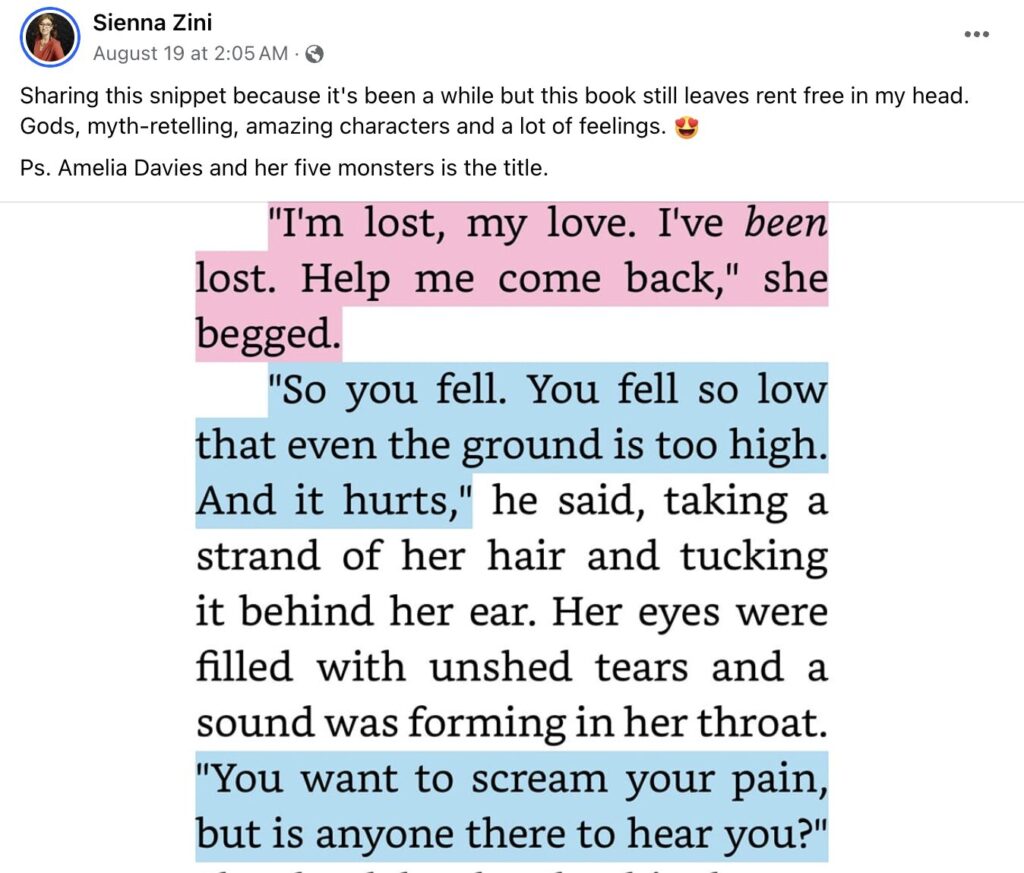
- Great dialogue and banter: These stories are known to have great dialogue that pulls readers in, and even has them sharing snippets of what’s said in online reader groups. Plus, keep in mind that much of a romance buds in the witty banter exchanged, so do it justice!
How long should fantasy romance be?
The length of a fantasy romance novel can vary, but they are typically longer than standard romance novels due to the need for world-building alongside developing the romantic plot.
While a contemporary romance might range from 70,000 to 90,000 words, fantasy romance often falls between 90,000 to 120,000 words or more. This allows the author to fully explore both the fantastical elements and the intricacies of the romantic relationship.
Because when you have to fit a dual plot in, it often requires a lot more words.
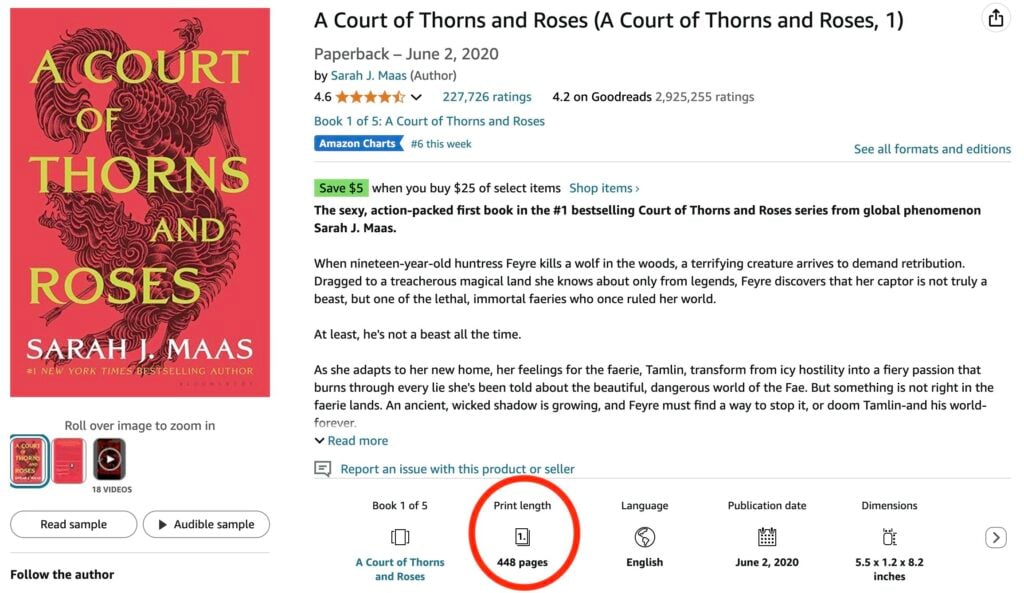
For example, A Court of Thorns and Roses—one of the most popular fantasy romance novels out there—comes in at 448 pages for the first in the series, with other books coming in significantly more (though later in the series, the books take on more of a “romantasy” feel).
How to write fantasy romance that satisfies this subgenre’s specific taste
Now that you understand the core of what makes this subgenre tick, it’s time to actually move into learning how to write fantasy romance. Specifically, we’ll look at a basic structure you can use to develop the plot.
The writing part? Well, that’s up to you!
1. Understand the requirements of a merged genre
We’ve been over this already, but it’s worth repeating because it is very important for how you actually position the book. In fact, it will impact your book marketing plan. If you label it as fantasy, and it has romance…big mistake. If you label it as solely romance and it’s full of fantasy, readers will be upset.
Fantasy romance is a merged genre, meaning that both the fantasy and romance elements must be equally strong and intertwined. It’s not enough to have a romantic subplot in a fantasy series or to set a love story in a magical world—both aspects should be so integral that removing one would unravel the entire narrative. This dual focus requires a unique approach to plotting and character development.
Essentially, the fact that the love interests get together is key to solving the other plot conflict.
And even better, if the romance gets in the way of the main character’s goals outside the relationship, it’ll make for higher stakes and a more interesting read.
2. Start with character
In fantasy romance, characters are the heart of the story. Begin by developing fully fleshed-out protagonists with clear motivations, desires, and fears. Their romantic relationship should be central to their development, influencing their actions and decisions within the fantasy world.
Strong, relatable characters will anchor your story, making the fantastical elements more accessible and the romance more compelling. Plus, nobody likes a romance read with weak characters.
Both should have distinct personalities, interests, and qualities that make for a believable romance between the pair.
You never want a reader asking, “Why are these two even together?”
And because character is so important in a story like this (and all, really), here’s a detailed list of ideas you can use to develop your fantasy romance characters:
- Define their core traits: Determine your characters’ core personality traits, strengths, weaknesses, and motivations. This helps create multidimensional characters who feel real and relatable.
- Establish backstory: Develop detailed backstories that explain their motivations, fears, and desires. Include how they relate to the fantasy elements of the world and their history with magic, mythical creatures, or political conflicts.
- Create unique abilities or traits: Give your characters distinct magical abilities, supernatural traits, or unique skills that tie into the fantasy setting. Ensure these abilities impact their personal journey and their romance.
- Build emotional depth: Flesh out their emotional landscape, including their fears, desires, and vulnerabilities. This depth makes them more relatable and drives their romantic development.
- Develop compelling relationships: Establish the dynamics between your main characters, including their romantic tension, conflicts, and growth. Consider how their relationship evolves in response to both personal and fantasy-related challenges, including how their relationship will affect them.
- Include personal goals: Give each character personal goals or quests that are significant to them. Their goals should intertwine with the romance and the broader fantasy plot.
- Design distinct appearances: Create unique physical descriptions that reflect their roles and backgrounds within the fantasy world. This helps make characters visually memorable and emphasizes their individual traits.
- Craft a voice and dialogue: Develop a distinct voice and style of dialogue for each character, appropriate to their background and personality. This adds authenticity and helps differentiate them from one another.
- Incorporate internal conflict: Include internal conflicts related to their romantic feelings or their place within the fantasy world. These conflicts drive character growth and enhance the emotional stakes of the romance.
- Define relationships and interactions: Outline key relationships with other characters, including allies, rivals, and mentors. Their interactions should reveal more about their personality and advance both the romance and fantasy plot.
- Consider growth and change: Plan how your characters will grow throughout the story. This is their character arc. Their experiences, particularly within the romantic and fantasy elements, should lead to meaningful change and development.
- Balance romantic and fantasy roles: Ensure that the characters’ roles in the romance and fantasy plot are well-integrated. Their personal growth and romantic journey should complement and enhance the fantasy elements of the story.
That should get you started with building your characters.
3. Develop a strong narrative voice
With romance in particular, it’s really important to have a strong narrative voice. Using a first-person perspective makes this a bit easier, but you can still accomplish it in the third person as well.
Regardless, give this thought and don’t just write how you would naturally choose. You want this voice to guide the reader through both the complex world-building and the emotional journey of the characters. Whether you choose a lyrical, poetic style to match a high-fantasy setting or a more grounded, conversational tone, the voice should reflect the story’s atmosphere and enhance the reader’s immersion in the world and the romance.
Fantasy romance specifically tends to take on a more lyrical approach through third-person narration, but romantasy has been more frequently written in the first person.
4. Combine the plots
Yes, there are two. Because this is a merged genre, both the romance plot and the fantasy plot have to be combined into one. These should be seamlessly intertwined so that the progress in one drives the other forward. For instance, the characters’ romantic journey might be influenced by a quest they embark on, or the resolution of a magical conflict could hinge on the strength of their relationship.
Balancing and merging these plots is key to maintaining momentum and keeping the reader engaged in this subgenre. They have to care about both parts. Or else you’ll have readers skipping through a bunch of your hard work!
5. Meet the cute
Even in fantasy romance, the “meet cute” happens. In fact, it’s crucial to set the tone that this story is, in fact, of a romantic nature.
If you’re unfamiliar, the “meet cute” is a pivotal moment in any romance, where the love interests meet in a memorable or unusual way. In fantasy romance, this moment can be even more dramatic or whimsical, perhaps involving a magical mishap, a fateful encounter with a mythical creature, or a battle that throws them together.
If you want to capitalize on popular romance tropes, you might even have them engage in an argument first and set up an enemies-to-lovers plot dynamic.
This initial meeting sets the tone for their relationship and should reflect both the romance and the fantasy elements of your story.
6. Use the romance to cover plot ebbs & vice versa
The great part about this genre is that the romance and the fantasy plots can support each other during slower moments. If the fantasy plot hits a lull, use this time to deepen the romantic relationship, allowing the characters to grow closer or face emotional challenges.
Conversely, if the romance needs to take a backseat (aka, they’re on the “outs”), the fantasy plot can pick up the pace with action, intrigue, or world-building. This interplay keeps the narrative dynamic and prevents either plot from stagnating.
That’s why fantasy romance is also known to be a bit faster paced, with higher stakes involved. There’s more to lose when love and war are on the line.
7. Separate the lovers
This is a part of every good romance novel in general. If the love interests are always together and choose to be with one another right away, then where is the story?
So split them up! We know they want to be together anyway. The anticipation of their connection will also drive readers to keep reading.
This could be due to external forces like a war, a curse, or differing loyalties within a magical conflict. This separation creates tension and stakes, making the eventual reunion more satisfying.
The fantasy elements can add unique twists to this trope, such as time-travel, parallel worlds, or magical barriers.
8. Craft a happy ending
It is still a romance at the end of the day, and these readers expect a satisfying conclusion to both the romantic and fantasy arcs. While the journey may be fraught with challenges, the ending should offer resolution and reward to both parts of the plot.
Whether it’s a traditional “happily ever after” or a more bittersweet conclusion that still affirms the strength of the relationship, ensure that both the romance and the fantasy plot reach a fulfilling conclusion.
And it’s okay to set up the relationship to thrive in later books, too. They don’t need to be fully together by the end of the first book. You do want to establish some sort of ending to their love story that feels conclusive to the first book though. After that, you can write the series as normal.
5 examples of fantasy romance to binge & learn
Study the genre! That’s some of the best time you can spend. Plus, it’s fun!
Here are some popular fantasy romance reads to get through. Bonus points if you check the reviews to discover just what people love—and what they hate—about this subgenre, like in these two examples from the same book:
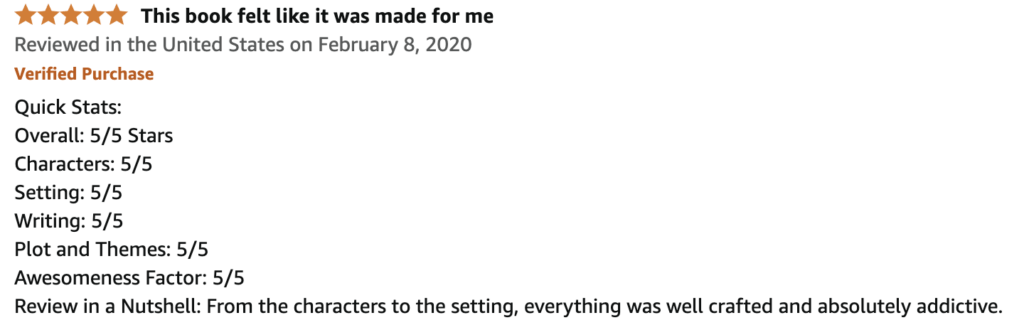

One review highlights the setting and character, and the other also includes character.
1. A Court of Thorns and Roses by Sarah J. Maas
This book follows the story of Feyre, a mortal huntress who is taken captive by a faerie lord after killing a wolf in the woods. As she lives in the faerie world, Feyre discovers that her captor, Tamlin, is hiding a dark secret. As feelings develop between them, Feyre becomes entangled in the dangerous politics and ancient curses of the faerie realm, leading to a high-stakes battle for love and survival.
2. From Blood and Ash by Jennifer L. Armentrout
Poppy is a Maiden, chosen from birth to usher in a new era and to remain untouched and pure. But she longs for freedom and the chance to fight back against the dark forces that threaten her world. When she meets Hawke, a mysterious and handsome guard, her life begins to change. Their growing attraction leads Poppy to question everything she has ever known, setting her on a path of forbidden love and ancient secrets that could destroy them both.
3. Radiance by Grace Draven
Radiance tells the story of Brishen, a prince of the Kai, a race of night-dwelling humanoid creatures, and Ildiko, a human noblewoman. Their marriage is arranged for political alliance, and neither expects to find love with someone so different from themselves. However, as they grow to understand each other, they develop a deep bond that defies the expectations of their cultures. Their love is tested by external threats and the challenges of bridging two very different worlds.
4. Serpent & Dove by Shelby Mahurin
In a world where witches are hunted by the Church, Lou is a witch on the run, hiding in plain sight. Reid is a witch hunter sworn to the Church’s cause. When a series of events forces Lou and Reid into a marriage of convenience, they must learn to navigate their differences and the growing attraction between them. As they uncover dark secrets and confront dangerous enemies, their bond is tested, and they must decide what they are willing to sacrifice for love.
5. The Bird and the Sword by Amy Harmon
Set in a world where magic is forbidden, Lark is a young woman who cannot speak, her voice bound by a curse that could destroy her if she uses it. She lives under the oppressive rule of her father until she crosses paths with Tiras, a warrior king who needs her hidden powers to save his kingdom. As they work together to face a growing threat, Lark and Tiras develop a deep and complicated relationship, balancing love, power, and the dangers of magic in a world where speaking could mean death.
As you can see, fantasy romance has a pretty straightforward set of “rules” to follow in order to give readers what they love. More and more often, we’re also seeing a rise in books more closely in the romantasy subgenre. Keep this in mind when writing yours for market positioning!