











As self-publishers, our two main goals are to create an amazing product and reach our ideal readers. The book creation process is straightforward. From writing and editing to book design and finally publishing, the formula is easy to follow. Marketing, on the other hand, is a different beast altogether.
When it comes to the book industry, customers can be hard to read. Customer demographics, purchase motivations, reading habits, and triggers all play an important role in book sales. If you don’t understand how to market your book to get a customer’s attention, then you might be missing an opportunity to sell more books.
Below, we’ll take a look at some of the best marketing books to help self-publishers become savvy marketers.
Best marketing books list:
1. Amazon Decoded: A Marketing Guide to the Kindle Store by David Gaughran (2020)
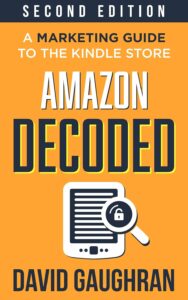
Best fit: For authors who publish on Amazon (exclusively or expanded reach)
Why this author: Gaughran writes books about independent publishing. His area of expertise includes Amazon Kindle, book marketing for indie authors, KDP workflows, and consumer protection.
Book synopsis: A step-by-step guide on how to sell more books on Amazon. In his book, you’ll get a little bit of Kindle store history mixed in with the how-tos of metadata, discoverability, distribution, promotion, and strategy.
Chapter highlight and application: Since this book was written for independent authors and self-publishers, the entire book is filled with key takeaways. A chapter that I found especially helpful was Chapter 4, “Playing the Algorithms.” Gaughran provides valuable insight into how Amazon’s algorithm works and how we can use this knowledge to our advantage. Chapter 7, “Category Metadata,” is especially helpful in understanding what metadata is and how to use it to make your book more visible on the Amazon platform.
Gaughran has an approachable writing style that makes learning the inner workings of publishing successfully on Amazon less intimidating.
2. Building a StoryBrand 2.0 by Donald Miller (2025)
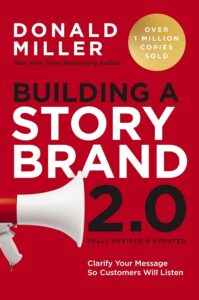
Best fit: For nonfiction authors and self-publishers launching books who want a repeatable, clear structure for marketing their books.
Why this author: Donald Miller, the founder of the StoryBrand company, is an author, speaker, and expert on messaging.
Book synopsis: In his update to the 2017 version, Miller shows readers how to be seen and heard in a saturated market through a clear framework.. Although this book speaks more to business owners, it can help authors craft a hook and messaging for their book brand.
Chapter highlight and application: “…a good story will only support one major plot.” In Chapter 12, “Define Your Controlling Idea,” Miller speaks directly to my author heart. In this section wrap-up on building a storybrand, he talks about the importance of focus, so that your reader doesn’t get lost in your message. Whether you’re writing a book or creating an author brand, you’ll find this chapter particularly useful. While the book is geared more toward businesses, Miller is a great storyteller, which is a great lesson in and of itself.
3. Traction by Gabriel Weinberg and Justin Mares (2012)
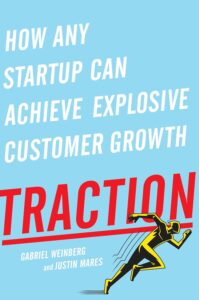
Best fit: For nonfiction authors and self-publishers on a limited budget who want to learn how to test and select the best marketing channels.
Why this author: Gabriel Weinberg is the founder of the popular privacy search engine DuckDuckGo, and Justin Mares is a growth marketer and founder of two startups.
Book synopsis: Introduces the Bullseye Framework for systematically testing marketing channels and focusing on the few that deliver traction, useful for authors prioritizing ad tests, newsletters, or partnerships.
Chapter highlight and application: Right out the gate, in the first chapter, the authors drill down the concept of “traction” in business into one digestible bite, then they give you a list of traction channels that you can start using today. It usually takes most authors a few chapters to get warmed up, but not these two. Don’t discount this book because it says it’s for startups. As a self-publisher, you are a startup, and this book offers a solid framework to build upon.
4. 1-Page Marketing Plan by Allan Dib (2016)
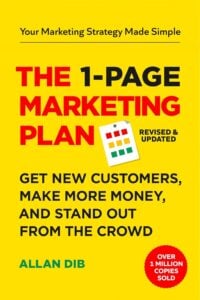
Best fit: Self-publishers of fiction or nonfiction books who want a quick, executable marketing roadmap that’s easy to follow.
Why this author: Allan Dib is a serial entrepreneur and marketing consultant who focuses on simplifying marketing strategies for marketers of all levels, from beginner to advanced.
Book synopsis: Presents a straightforward, one-page template to map target audience, messaging, channels, and funnels—ideal for authors who need an immediate launch plan.
Chapter highlight and application: This book was my first introduction to marketing that didn’t feel icky and self-serving. Because I’m more of an introvert, in-your-face pitching and sales were never a good fit for me. The focus of this entire book is on how to nurture customers and create a brand they can trust. I’ve recommended this book to both authors and business owners looking for a better way to market.
5. Contagious by Jonah Berger (2013)

Best fit: Authors who want to learn how to create viral hooks and word-of-mouth momentum for their books.
Why this author: Berger is an author and marketing professor at the Wharton School of the University of Pennsylvania. According to his LinkedIn profile, he is a “world-renowned expert on change, influence, word of mouth, natural language processing, consumer behavior, and how products, ideas, and behaviors catch on.
Book synopsis: Explains six principles that make content contagious (social currency, triggers, emotions, public, practical value, stories) and how to create messaging that readers want to share.
Chapter highlight and application: Like many of the authors on this list, Berger is also a great storyteller, but not just for entertainment value. He uses story after story to explain how businesses create buzz, essentially making their brand contagious. Throughout the book, he encourages outside-the-box thinking. I think we need more of this in book publishing, so readers don’t get bored with the same ol’ stuff.
6. Influence by Robert Cialdini (2021)
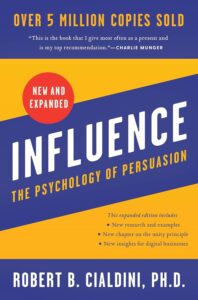
Best fit: Authors writing persuasive copy for blurbs, sales pages, email sequences, and ads.
Why this author: Robert Cialdini is a social psychologist and authority on persuasion and compliance techniques.
Book synopsis: Lays out core persuasion principles (reciprocity, authority, social proof, scarcity, liking, commitment) that help authors craft messages that convert readers into buyers and reviewers.
Chapter highlight and application: I find neuropsychology and the science behind what motivates people to make certain choices interesting. In Influence, Cialdini takes a deep dive into how persuasion works. This book is a weightier read than many of the books on this list, but if you’re interested in the psychology of what makes a customer pick up your book (or any product) and buy, this is an informative read.
7. The Personal MBA by Josh Kaufman (2020)
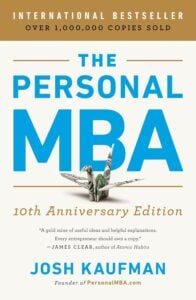
Best fit: Nonfiction authors building a personal brand and business around their books and self-publishers who want a better grasp on how pricing, positioning, and customer psychology work.
Why this author: Josh Kaufman is a business researcher, educator, and bestselling author who distills complex topics into user-friendly frameworks. He created The Personal MBA as an alternative to traditional business school, so self-learners could master business fundamentals on their own terms without a traditional MBA price tag or time commitment.
Book synopsis: The Personal MBA is a comprehensive guide to essential business concepts—sales, marketing, value creation, finance, systems, and productivity—designed for self-learners. Kaufman organizes the book around mental models that help readers understand how businesses work and how to make better decisions.
It covers topics like pricing strategy, customer acquisition, product development, and business systems, with clear explanations and real-world examples. The book is especially useful for authors who treat their writing career as a business and want to build sustainable income streams beyond book royalties.
Chapter highlight and application: The Personal MBA is one of those reference books I keep on my bookshelf within reach. It is truly packed with tons of information. I manually counted 276 covered topics. What I appreciate most about this book is that the book is divided into easily digestible sections on MBA topics that are only 1-2 pages long.
For example, the section on CTAs (calls-to-action) on page 106 is only one page and 8 paragraphs long, but it gives you the definition, enough context to understand how it works, and a practical application, so you can start using it. This book is a straight line to MBA knowledge. No fluff. Just valuable information. (Note: I’m referencing the 2010 edition, but there is also a 10th anniversary edition released in 2020, pictured above)
8. Positioning by Al Reis and Jack Trout (2001)
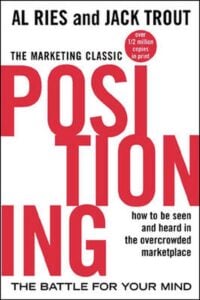
Best fit: Authors launching into a competitive genre or building a series
Why this author: Brendan Kane is a social media specialist with over 15 years of experience. He’s known for generating a million followers on social media in 30 days.
Book synopsis: The book shows how to research existing mental categories, exploit gaps, and craft messaging that leverages what readers already believe. It presents practical rules for naming, messaging hierarchy (title, subtitle, blurbs), and competitive positioning so a book is remembered and chosen amid noise.
Chapter highlight and application: If you’re looking for a more classic business book feel, this is the one. It’s known in many circles as foundational in the marketing and branding space. The thumbnail pictured is the third edition, but the first edition was published in 1981. The style that it’s written in reminds me more of a textbook. Good thing I like textbooks. If you want to dig deeper into marketing and learn how to position your author business for the best results, this one is a great place to start.
9. 80/20 Sales Marketing by Perry Marshall (2013)
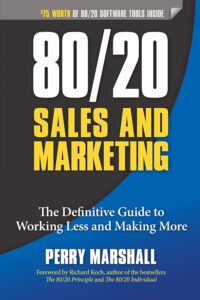
Best fit: Authors who want to maximize results from a limited time or budget
Why this author: Perry Marshall is a marketer and consultant known for applying the Pareto (80/20) Principle to advertising and business systems, with deep practical experience in online advertising, lead generation, and scaling campaigns profitably.
Book synopsis: 80/20 Sales and Marketing teaches how to identify the small percentage of activities, customers, and channels that generate the majority of results.
Chapter highlight and application: I’m a fan of the Pareto Principle, which says that 80% of results come from 20% of causes, so Perry Marshall’s book about the application of this principle is pretty interesting. I think self-publishers will find Chapter 4, “80/20 Traffic,” and Chapter 20 80/20 Hiring and Outsourcing especially useful. Sales and marketing are a long game. If you want to do it more efficiently, read this book.
10. Alien Robot Banker by Cordell Giesen (2024)
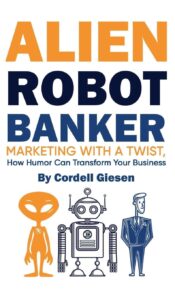
Best fit: Indie authors who want to stand out with personality-driven marketing
Why this author: Giesen is a selfpublishing.com author. He is also a marketer, humorist, and creative consultant. He uses comedy and narrative to make brands more memorable.
Book synopsis: The book teaches how to use humor deliberately to improve brand connection and campaign performance. Framed around three whimsical guides (an alien, a robot, and a banker), the book lays out humor formulas and storytelling techniques—mismatch, misplaced sincerity, exaggeration, surprise—that readers can apply to ads, emails, social posts, and landing pages.
Chapter highlight and application: At the writing of this article, I haven’t read Alien Robot Banker, but since Giesen is a humorist, and I like a good laugh, I’m looking forward to reading it.
Takeaways
Wherever you are in your self-publishing journey, learning marketing skills should be at the top of your list. I often describe our books as beautiful homes in the middle of a huge field. They can look amazing on the outside and be stunning on the inside, but if roads aren’t built that lead to it, you’ll never get any visitors, and no one will ever see it.
Marketing is the framework we need to build the roads that lead to our books.
When should you start thinking about marketing? Today, and even better if you can start building your skills before you finish writing your book.