







So, you’ve taken the big leap and decided to become a published author. Congratulations on taking such a huge step. Now, buckle up and get ready for the ride of a lifetime!
Writing your first book can be scary, exhilarating, and debilitating at the same time. There are so many things to learn, not just about the craft of writing and publishing, but about yourself. Becoming an author will test the deepest parts of you, but also reveal the greatest parts, if you pay close attention.
In this first-time author FAQ, I’ll answer 22 of the most frequently asked questions and hopefully help calm some of your first-time author jitters in the process.
Why am I qualified to give this advice? I’ve been writing, editing (developmental, technical, and copy editing), coaching, and ghostwriting books for 20 years. I also ran an independent book publishing company that specialized in working with first-time authors.
I’ve seen a lot, learned a lot, and heard almost every question about writing and publishing. I want to share what I know because I believe in a level playing field and that every author should have the foundational tools to publish the best book possible.
Let’s get started!
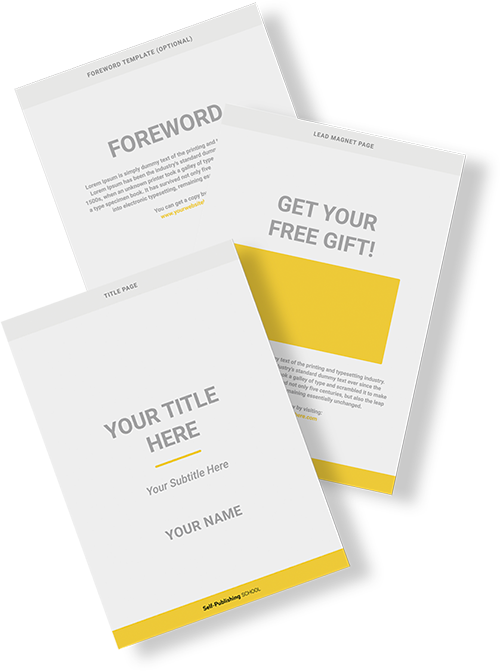
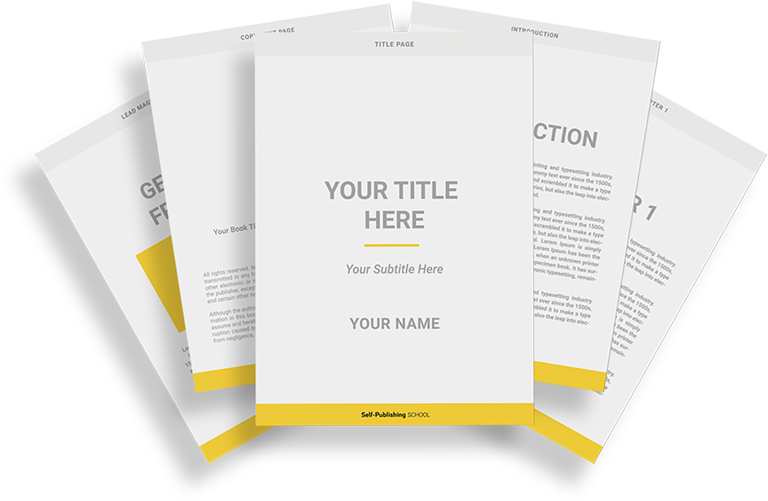
Book Outline Generator
Choose your Fiction or Nonfiction book type below to get your free chapter by chapter outline!
Book Outline Generator
Enter your details below and get your pre-formatted outline in your inbox and start writing today!
CONGRATULATIONS
Thanks for submitting! Check your email for your book outline template.
In the meantime, check out our Book Outline Challenge.
Writing and craft
1. How do I find and refine my book idea?
It depends on whether you’re writing fiction or nonfiction. For fiction, begin with a genre that interests you, then research sites like Goodreads, Amazon, or Bookbub to see what’s trending in that genre. Does anything speak to you? Do you already have an idea, but want to narrow it down a bit? Consider subgenres to see if any spark an idea.
For nonfiction, one of the easiest ways to refine a book idea is to write what you know. What’s your area of expertise? What can you talk about for hours and never tire? Once you pick a subject, narrow it to that area that you’re extra passionate about or one where you’d like to learn more. From there, consider what could solve a specific problem for the reader or a gap in the market you can fill. To help you build on your idea, use mind maps to explore angles, themes, and target audiences. Then:
- Ask your peers or social media followers for their input.
- Check out the books in that category currently on the market. What are their strengths? Where are they lacking? What kind of reviews are they receiving?
- If you’re writing fiction, what is it about your story that will keep readers engaged? Quirky characters? A riveting plot? Emotional investment? A unique setting? Rising tension? If your story idea doesn’t have anything to pull the reader in, tweak your idea until it does.
- For nonfiction, can you offer a solution to a problem that no one is talking about? Maybe a new way of looking at something? Or a reworking of a previous solution? Is there a clear benefit that the reader can take away from your book idea? If not, keep iterating until you find one.
2. What’s the best way to outline my manuscript?
Whether you’re an outliner, pantser (discovery writer), or a bit of both, an outline, whether simple or highly detailed, can keep you on track. There are several methods; here are three popular ones:
- Snowflake method: Six key steps to story building that start with a single sentence, expand to a paragraph, and then to summaries.
- Three‐act structure: There are multiple act story methods for outlining up to 10-act models, and the three-act structure is the simplest: setup, confrontation, and resolution.
- Chapter-by-chapter bullet list: This is a great outlining method for pantsers. It consists of noting the key events, characters’ goals, and scene objectives.
As you build your outline, don’t forget character arcs, emotional beats, your pacing, and desired word count.
Every 5,000 words or so, take another look at your outline to see if it needs to be refined. Sometimes when writing, you’ll find that something doesn’t work, which could impact the rest of the story.
3. How do I build believable characters?
Before a character ever hits the page, consider their backstory and motivations. Where do they come from? What are their beliefs? Considering their whys will help you develop three-dimensional characters that don’t fall flat on the page. Here are some ideas for building strong characters:
- Create a character profile template that includes their fears, desires, and quirks. When I am writing fiction, I keep the character profiles on the first few pages of the manuscript as I’m writing. This allows me to easily add and subtract details as I’m building the story. Once the story gets long enough, it helps having the character reference close by in case I forget something.
- A great exercise is to write journal entries from their perspective. This clues you in to the character’s voice and the whys behind their actions.
- Make sure your characters sound different by reading their dialogue aloud. Each character should have their own cadence when speaking.
Even if a character in your story is a minor one, make their backstory unique, so that even their minor role in the story is memorable.
4. How do I overcome writer’s block and maintain consistency?
Writer’s block is the worst, especially when you’re on a deadline, but the great thing about our brains is that they are resilient. Here are some ways to combat writer’s block when it sneaks up on you:
- Commit to writing something daily, even if it’s just a few hundred words.
- Use a timed writing sprint to keep your mind agile. (e.g., Pomodoro method: 25 minutes on, 5 minutes off).
- Create a writing ritual. I’m a morning person, so I schedule my deep writing for early mornings in my office. I like a quiet space, sans music, but I have my headphones and playlist close by when I’m stuck and need to step away from writing. Find a rhythm that works for you and make it your own. Even when it feels like your creativity is working against you, having a routine in place offers stability until you get back on track.
- Track your progress. A visual chart works for some. I like using Scrivener software or Google Docs, which shows my word count. Sometimes just seeing the word count go up a little bit is enough motivation to push through writer’s block.
- Switch to another part of the story or write a scene from another point of view to get the ideas flowing again.
When trying to overcome writer’s block, the idea is to minimize pressure and rebuild momentum.
Audience building
5. When should I start building my author platform?
Right now! Seriously. There’s no better time than the present to start building your community, even if your book isn’t finished. Setting up your website, social media accounts, and becoming active in the writing community can be a great motivator. The benefits of building your author platform early include:
- Better understanding your ideal audience.
- Building relationships with other writers and readers.
- A chance to slowly put yourself out there by offering valuable insight, free short stories, tidbits about you, and your perspective.
- Start to build your email list. Start marketing today by offering free checklists, chapter samples, or other goodies. Then, when your book is ready to launch, you’ll already have a growing email list for support and potential orders.
6. What content should I share to attract readers?
Whether you’re on social media or your website, it’s a good idea to mix lots of value with a little bit of self-promotion. Overselling and “me, me, me” can be a turn-off to potential buyers, but taking the time to get to know them and provide value in the process can often do more for book sales than anything else. Here are some examples of what you can share:
- Educational posts: Write what you know. If this is your first book, then you may not feel confident enough to give writing tips, but you may know a lot about the subject matter your main character is facing. Write about that. Whether you’re writing fiction or nonfiction, giving readers valuable insight will help to build your reputation as an authority in the space, and that’s a good thing. (or maybe you do ), but there are so many other things you can share.
- Personal stories: If you’re comfortable, peel back the curtain on who you are as an author and the why behind your book. There’s absolutely no pressure to share personal information, because your privacy is yours to protect. Know your audience and share only what you’re comfortable sharing and hold on to the rest.
- Interactive elements: Ask for reader feedback (e.g., selecting their favorite cover design for your book), or have a Q&A session or polls.
- Sneak peeks: This can include chapter excerpts, book covers, character art, etc.
Batching posts is a great idea if you have the time. Don’t forget to check in and respond to comments or questions.
7. How can I engage and grow my email list?
Having your own email list still provides the highest ROI compared to other options. Here are some ideas for growing your email list and nurturing your followers.
- Start with a lead magnet. There’s no room for fluff here. Give your readers something of value that will make them want to keep coming back. Think guides, resource lists, or short stories.)
- Make sure your email sign-ups are easy to find on your website (e.g., headers, sidebars, or footers are a great place. Popups can work, too, but pay close attention to your analytics to make sure.)
- Once a reader signs up, send them their lead magnet, but be sure to include a nice welcome email that tells them a little bit about you, the type of books you write, and what they can expect from you moving forward. Include how often they can expect to hear from you so they can look for your correspondence.
Use email outreach to stay connected to your readers and prime them for upcoming launches.
Publishing options
8. What are the pros and cons of traditional vs. hybrid vs. self-publishing?
Traditional publishers are companies that publish your book and take care of all the core expenses.
- Pros: payment advance (not all publishers), professional editing/design, wider distribution, and industry connections
- Cons: highly competitive, low royalties around 8–12%, little to no creative control, a long wait from signing a contract to publication
Hybrid publishers give you access to their professional team and distribution, but you pay the publishing costs.
- Pros: Professional editing, design on par with traditional publishing houses, higher royalty rates than traditional publishers, less competitive than traditional publishing
- Cons: Upfront investment, some unscrupulous publishers (vanity publishers) lurking in the shadows, complex contracts
Self-publishing refers to publishing a book yourself. You act as author and publisher.
- Pros: Creative control, higher royalties (up to 70%), faster time to market, large community of self-publishers
- Cons: The author bears book production costs, acts as publisher and author, and is responsible for all marketing
Each publishing method has its own benefits and challenges. Take a close look at your budget and goals, and then decide which path is best for you.
9. How do I find and select a literary agent?
Research agents who represent your genre:
- Check out these databases:
- Flip to the acknowledgments section of your favorite book and see if an agent’s name or agency is mentioned.
- Once you create your list, follow the agent’s guidelines and submit your spectacular query letter that includes a pitch, a short book summary, and a short bio
- Track your submissions. Include the agent, agency name, date you sent the query, and their response (and date).
Recommended reading: What are Literary Agents Looking for? 11 Tips to Get Ahead
10. What should I consider if I self-publish?
As a self-publisher, you are filling two roles: author and publisher, so you must treat your book publishing journey as a business. Consider the following tips:
- Create a budget. It’s important to know upfront what you’re working with so you can avoid unnecessary stress during the publishing process. Contractors, printing, software, and marketing all cost money. Do your research and prioritize how you’ll allocate your budget to get the best book possible.
- Select a distribution platform that works for your needs. Although Amazon KDP is currently the most popular platform, it may not be the best fit for you, so do your research and consider other platforms like IngramSpark, Draft2Digital, Lulu, or BookBaby.
- Secure your ISBNs by paying for a single or a block of numbers. Or use the free ISBN offered by your platform of choice. Just be mindful of the platform restrictions that come along with getting the ISBN for free.
- Build a marketing strategy and plan your promotions.
Book Outline Generator
Choose your Fiction or Nonfiction book type below to get your free chapter by chapter outline!
Book Outline Generator
Enter your details below and get your pre-formatted outline in your inbox and start writing today!
CONGRATULATIONS
Thanks for submitting! Check your email for your book outline template.
In the meantime, check out our Book Outline Challenge.
Production and workflow
11. What tools can streamline my workflow?
As an author, there’s no “right way” to write, publish, or promote your book because everyone is different. Suggestions from others are great, but ultimately, it’s what works for you. Test what’s out there and create a workflow that’s best for you.
Consider these essentials:
- For book writing, consider Scrivener, Vellum, or Atticus.
- For outlines and a place to hold your research, consider apps like Google Workspace, Notion, Workflowy, or Roam Research.
- For grammar checks and writing support, consider Grammarly, ProWritingAid, or the Hemingway app.
- For tracking your outreach, word counts, and more, any spreadsheet will do.
- For design options, consider sites like Canva, Adobe Express, Visme, PicMonkey, and Placeit for designing promotional graphics, bookmarks, and social-media assets.
Legal
12. Do I need to register copyrights or trademarks?
In the U.S., once you write a book, it’s automatically protected, but registering your book can help you avoid any unnecessary stress if copyright infringement becomes a thing. Registering provides legal proof that your copyright or trademark belongs to you and enables you to collect statutory damages in an infringement lawsuit. Registration costs: $45-$65 per work
Note: Consider trademarking your author name or series if you plan to add merchandise or other items. It’s always best to consult an attorney for professional insight.
13. How do I handle permissions and rights for quotes, images, or excerpts?
If it’s not in the public domain or under the Creative Commons license, request written permission from the owner of the copyright. Make sure you record EVERYTHING (i.e., emails, receipts, and any agreements). Include attribution in the acknowledgments section or copyright page. Make sure that this is acceptable to the copyright holder.
Marketing and promotion
14. How do I plan a successful book launch?
Start early and plan carefully. A prelaunch campaign typically runs 4-6 weeks before the book’s official launch. A successful launch timeline looks something like this:
- Pre-launch: This is the time to get readers excited about your book. Plan a cover reveal for social media, get your advanced reader copies (ARCs) distributed, and do a podcast and/or blog tour in preparation for your book’s release..
- Launch week: Prepare your street team (book cheerleaders) for launch day, so they can prepare to post their reviews. Prepare an email or newsletter to remind readers that it’s launch day. Share your book’s launch on social media through posts and virtual events like live Q&As.
- Post-launch: After launch day, keep the momentum going by continuing guest posting and podcast rounds. Reader giveaways can also be a great way to keep engagement up.
15. Should I invest in paid advertising?
If you find a platform that’s a good fit for your book and audience, yes. Paid ads are a good way to build your audience if done strategically:
- Select the right platform. Social media platforms, Book promotion sites, and book retailers (e.g., Amazon). Once you know where your ideal reader hangs out, start small. Start small ($5–$10/day) and test, test, test.
- Amazon Ads are good for keyword targeting, and Facebook Ads for interest-based campaigns.
- If something is not working, don’t be afraid to pivot by reallocating your budget to something else, but don’t waste your money. If you don’t know what you’re doing, hire a professional to do it for you or look for something with less risk, like book promotion sites.
16. How can I leverage book reviews effectively?
When it comes to increasing book sales, social proof goes a long way. Use book reviews as part of your marketing strategy.
- Start getting reviews once your manuscript has been edited. Try to get 10-15 early reviews that you can share on social media, in your newsletters, and on your website before your book launches. Reviews can come from ARCs you send out, beta readers, or book review sites.
- In the back of your book, ask readers to give an honest review of your book on their favorite platform.
Never buy reviews or coerce readers into giving a positive review. Always ask for their honest review and thank them personally whenever possible.
Financial and budgeting
17. What’s a realistic budget for a self-published book?
A typical range is $1,500–$5,000, allocated as follows:
- Developmental & copy editing: $800–$2,000
- Proofreading: $200–$400
- Cover design: $300–$800
- Interior formatting: $150–$400
- Marketing (ads, ARCs, tools): $200–$1,000
These are average ranges, but prices can fall well outside of these ranges, so do your research. Read reviews. Look at portfolios and get referrals.
18. How do I price my book competitively?
As a new author, pricing your first book can be tricky. Here are some tips:
- Take a close look at how similar titles in your genre are priced.
- Expect eBooks to fall somewhere between the range of $2.99–$5.99 for new authors.
- Print books between $12.99–$18.99
- Consider offering promotional pricing during launch week and then take it back to regular pricing.
19. How much do authors make?
As with any career (or hobby), what you make can vary depending on the path you choose. Here are some things that could affect how much you make:
- Publishing type: Traditional publishers offer notoriously low royalty rates; however, they are well-connected in the industry and could potentially offer you the exposure needed to sell more books than you might as a hybrid or self-publisher. Self-publishing, especially if you have an established audience (e.g., speakers, social media influencers, etc.), can be quite lucrative. Ultimately, you have to decide which path offers the best ROI.
- Revenue streams: Most successful authors have more than one revenue stream. This could be from multiple books or from complementary products and services, like coaching, workshops, and courses. Other additional revenue could come from subsidiary rights or content licensing.
- Marketing: You can have a great book, but if the right people don’t know, you can miss out on sales. For this reason, effective marketing is critical to your book’s success. Most successful authors have a strong marketing strategy in place to maximize sales. They also stay in front of their ideal audience by using social media, promotional sites, SEO, and metadata to their advantage.
- Genres: All genres aren’t created equal. Some are more lucrative than others. For example, historically, romance, thrillers, and fantasy genres have been the highest earners. On the other hand, niche genres like speculative fiction, thriller subgenres, professional niches, and self-help books may have smaller audiences, but they are often loyal, which can translate into more sales.
- Catalog size: The more books you have available in your catalog, the more money you can potentially make.
- Distribution: A wide, targeted distribution can maximize your chances of reaching the largest number of potential buyers.
Your next steps
20. What resources can help me continue learning?
My best advice to any new author is to continue learning because there will always be something you don’t know. There’s a seemingly never-ending stream of resources to help you expand your knowledge, like:
- Writing craft books (e.g., Save the Cat Writes a Novel by Jessica Brody, Plot and Structure by James Scott Bell ).
- Online courses on platforms like Coursera, Udemy, Selfpublishing.com, or Reedsy Academy.
- Membership in critique groups (Scribophile, Critique Circle) or local writing organizations
22. How do I plan a series to maximize long-term engagement?
If you know you know that your first book is part of a series, plan out the series arc before you write your first book, if possible.
- Write out the characters, plots, backdrops (scenes), and timelines across the series.
- Each book in the series should have its own well-developed story and character arc(s). Ensure each installment resolves a book-specific arc while advancing the overarching plot.
- Use cliffhangers to hint at future stories in the series.
- Try to release a new book in the series every 4-6 months to keep readers engaged.
Being a new author has its challenges, but the journey is worth it! You have something amazing to share with the world, so take the time to enjoy the process. Use this first-time author FAQ as a starting point. Keep asking questions and don’t give up until you find the answer.
Best wishes!
Book Outline Generator
Choose your Fiction or Nonfiction book type below to get your free chapter by chapter outline!
Book Outline Generator
Enter your details below and get your pre-formatted outline in your inbox and start writing today!
CONGRATULATIONS
Thanks for submitting! Check your email for your book outline template.
In the meantime, check out our Book Outline Challenge.