


















“The faster I write, the better my output. If I’m going slow, I’m in trouble. It means I’m pushing the words instead of being pulled by them.” – Raymond Chandler
I’ll share a secret with you: I’m not a natural typist. In fact, I can’t type very well at all. I use two fingers to pound out my stories and create content in the form of blogs and books. My writing speed is slow, about 30 wpm. But writing is important to me, as I’m sure it is for you—so, there are a few things I do to boost my writing speed so I can get more done in the same amount of time. Here are five tips on how to write a book faster.
Actionable Steps to Write a Book Faster


Book Outline Generator
Choose your Fiction or Nonfiction book type below to get your free chapter by chapter outline!
Book Outline Generator
Enter your details below and get your pre-formatted outline in your inbox and start writing today!
CONGRATULATIONS
Thanks for submitting! Check your email for your book outline template.
In the meantime, check out our Book Outline Challenge.
Write Every Day
I know, I know, this is the obvious choice. But seriously, not only will you become a master writer if you pound out words every day, your writing speed will also naturally improve. The more you practice now, the less you have to practice later. And as you get better at your craft, you’ll be creating better quality content in less time. You could blog every day or work on a chapter for your next novel.
Action Plan:
- Make writing a daily habit.
- Set your word count goal for each day.
- Track how many words you are writing per hour/day.
Schedule Brief Typing Practice Sessions
For ten minutes a day I practice typing. This is a separate activity from actually writing content. I’ll use a free typing software program that tests writing speed and provides feedback on how efficient I am as a typist. This is a great way to master the skill of getting your word count up. Check out FASTFINGERS or Keyhero.com.
Use Proper Sitting Posture
The position of your body has a lot to do with typing speed and efficiency. If you slouch in your chair you’ll cramp up and find it hard to concentrate. Here is how you should position yourself:
- Make sure that you are sitting up straight—don’t lean or hunch over towards the desk.
- Position your elbows at right angles to the keyboard—avoid bending your arms upwards or downwards.
- Properly position your fingers on the keyboard.
Buy a Standing Desk
It’s scientifically proven that the standing desk has major benefits for our health. But that’s not all! It also boosts productivity and, you guessed it, makes us more efficient at typing. Primarily, we feel great if we are standing—higher energy levels and better blood flow.
Create a Book Outline
The secret is out: outlines really do work! Being able to crank out three thousand words an hour won’t matter much if your content lacks direction. And a solid outline gives you that direction.
We all know that writing a book is a lot of work. But we can cut out a ton of obstacles with a well-written outline that builds passion and purpose into your writing routine. Here’s how an outline can double or even triple your writing speed:
1. Outlines Eliminate Writer’s Block
Writers experience writer’s block for several reasons—one of which is either not having an outline or having a poorly written outline. If your outline is well-organized and fleshed out with all the ideas, chapters and sections flowing in logical sequence, chances are writer’s block won’t be an issue.
When you have to stop to think about what comes next, you’re no longer in writing mode. Instead we fall into confusion, frustration and then default to research mode. “I know I can get through this if I just look up…” You start doing everything else but writing. The next time you hit a wall, check the flow of your outline. Revise what you need to and keep moving forward. Be sure to do as much research as you can before the initial writing begins.
2. Outlines Provide an Organized Framework for Your Book’s Structure
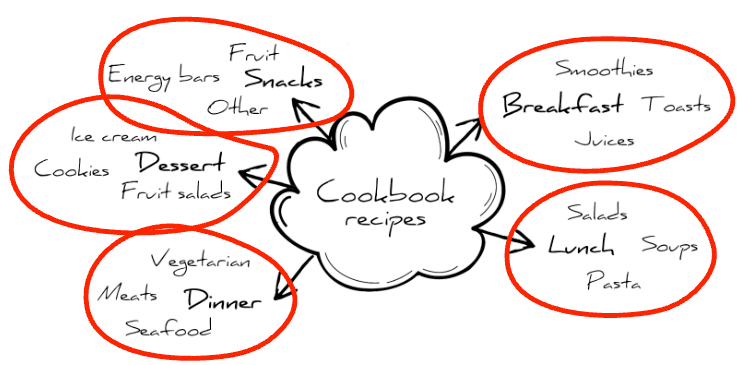
Your outline is the roadmap for your book. Without it, your writing time is slow and grueling, like running up a mountain with a ball and chain. Sounds tough, right? A well-organized outline boosts productivity throughout the writing phase. You’ll write much faster when the chapters flow from one to the next and ideas are combined and clustered. When your outline flows with a well-organized structure you don’t have to stop to think about what to write next. Your fingers can keep moving in flow with the plan you created. We recommend the mind map method to our authors.
3. Outlines Give You A Bird’s Eye View
When you can see your book in its entirety on the page, you feel compelled to write as much as possible. Think of it as a race. You’ll perform much better knowing the exact distance you have to run—especially as you near the finish line and you have the end in sight. Your outline needs to not only flow but, similar to a race, you should know where you’re starting and where you’ll end up.
Now that you know how important it is to have an awesome outline, spend some time today to go back and revise yours. Look at the areas that could be better researched. Review the chapters with ideas that require deeper development. Make your outline the best it can be and revise it as you go, ensuring those words keep hitting the paper.

Challenge Yourself
We encourage you to challenge your writing speed and try to get a little faster each time. Follow the five tips above and see how many words/pages you can crank out in an hour. Time yourself using the Pomodoro Technique. You’ll be amazed at the difference. You never know, you might start pounding out full-length novels on just the weekends!
Need extra help getting your book off the ground? Give our team a call and we’ll show you how we helped over 7,000 other authors successfully publish their books.
Writing a Book Quickly FAQ
What is the fastest way to write a book?
The fastest way to write a book is to write every day, create a solid book outline, and challenge yourself to increase your writing speed. Practicing typing and using a standing desk can also boost productivity.
How long does it realistically take to write a book?
The time it takes to write a book varies, but with consistent effort, it can take anywhere from a few months to a year. Writing daily and following a structured outline can help speed up the process.
How do people write novels so quickly?
People write novels quickly by writing daily, setting word count goals, using detailed outlines, and practicing their typing speed. They also maintain proper sitting posture and sometimes use standing desks to stay energized.
How many pages do authors write a day?
The number of pages authors write a day varies, but many aim for 1,000 to 2,000 words per day. This translates to about 4-8 pages, depending on the font and spacing.