










Did you know there are specific industry standards for your manuscript format? Not taking note of these rules can set you back immeasurably when it comes to becoming a successful author. Speaking from experience as a professional development coach and former literary magazine editor: neatness and precision count.
Just like a hiring manager often throws out resumes that are riddled with typos, an agent or editor can be just as quick to toss a manuscript because the writer failed to comply with basic formatting and submission requests. Then your chances are shot…all because of formatting mistakes.
Learn how to fix your formatting in this blog post so you can give your story the proper chance it deserves! Related: If you’re not looking for manuscript formatting, but rather looking for book formatting, check out this article.
Book Outline Generator
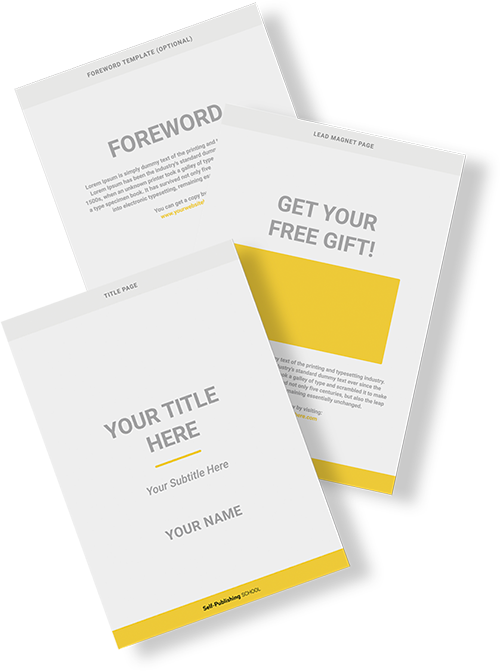
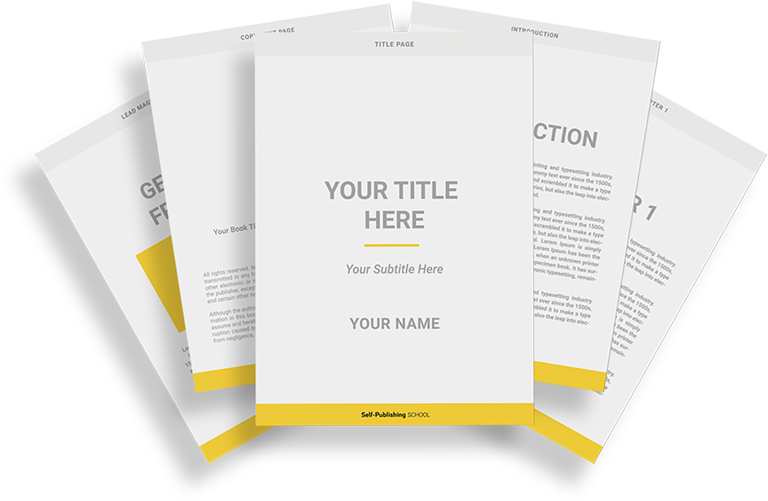
Choose your Fiction or Nonfiction book type below to get your free chapter by chapter outline!
Book Outline Generator
Enter your details below and get your pre-formatted outline in your inbox and start writing today!
CONGRATULATIONS
Thanks for submitting! Check your email for your book outline template.
In the meantime, check out our Book Outline Challenge.
Manuscript format: what’s covered
- What is an example of a manuscript?
- What is the proper manuscript format?
- What is the format of a general manuscript?
What is an example of a manuscript?
The term manuscript describes an early draft of a book, novel, or short story, though the origin of the term comes from “manu scriptus” which means “written by hand” in Latin.
Ultimately, a manuscript is the draft of the book or story you’re writing. While we don’t typically write books by hand anymore, but the full term has stuck around.
You may write fiction or nonfiction, but whatever format your book takes prior to publication, that format is your manuscript. Whether you use Microsoft Word, Pages, or even Google docs, whatever you use to draft your book…that is your manuscript.
What is the proper manuscript format?
The basic method for formatting a manuscript is to use 8.5 by 11-inch paper (A4 paper size), a simple serif font sized between 10-12 with 1-inch margins on all sides.
We go into details for more specifics for formatting a manuscript down below, but why does your manuscript format matter? When a literary professional receives bulk submissions, they need to pare them down. The poorly presented options are often the first to go. Don’t let sloppy work make you lose out on an opportunity.
But don’t worry! Today we’re going to go over every single thing you need to check for in a properly-formatted manuscript. Even if you haven’t finished writing your manuscript yet, you can save a lot of time by formatting it as you write!
[Pssst! If you want to check out some of our Students’ books, check out the SPS Library!]
What is the format of a general manuscript?
The format for a general manuscript should follow the industry-standard guidelines and include a title page before your book begins. Without the right manuscript format, you could miss out on hitting the mark when it comes to industry standards, which can make your book look low-quality.
That’s not to mention a potential agent skipping over yours because it lacks the basics (if you’re choosing traditional publishing over self-publishing).
1. Title page manuscript format
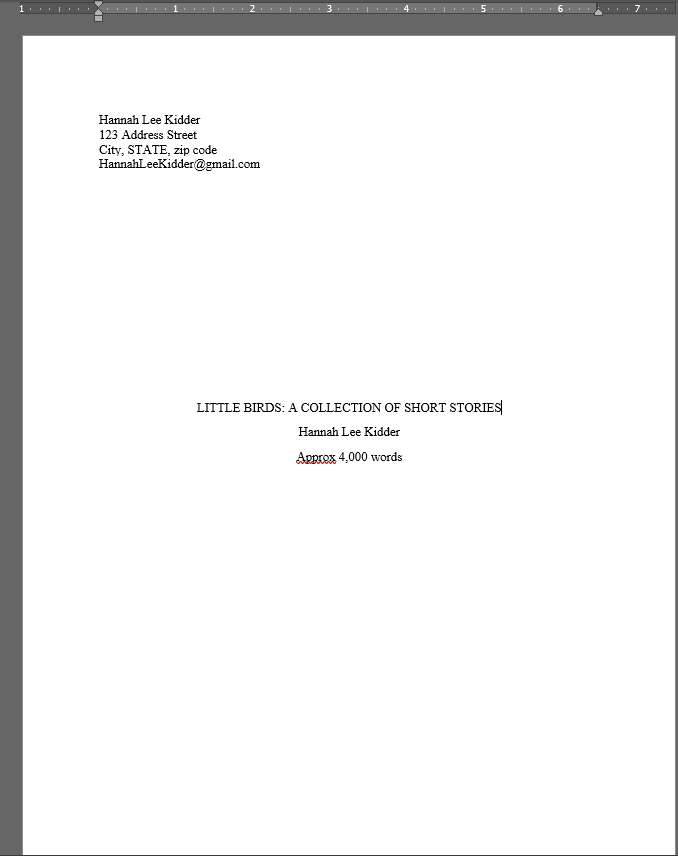
Step out on the right foot by perfecting the very first thing everyone sees in your final manuscript: the title page. Your title page should let the reader know what they’re reading, who wrote it, how to contact the author, and how long the piece is.
- Contact information: your contact information goes on the title page of your manuscript for easy access
– It should include your legal name, address, phone number, and email address
– The contact information should be positioned in the upper lefthand corner of the title page
– Single-spaced
– Left-justified alignment - Title: the title of your manuscript
– Center-justified alignment
– One-third to one-half way down the page
– If you have a subtitle, it should appear on the same line as your title - Author name: this is the name you are publishing the work under
– Center-justified alignment
– One double-spaced line below the title (and subtitle)
– If you have a pen name, it goes here. Make sure you use your real name in the contact information section - Word count
– Rounded to the nearest thousand
– One double-spaced line below the author name - Agent’s information: if you have an agent already, their contact information goes in the upper lefthand corner and the writer’s contact information moves to the lower righthand corner.
Here’s an example for what a title page for my book, without a literary agent, might look like:
2. Single page manuscript formatting
After the title page, there are also specific ways to format each page of your manuscript.
Here are the rules for formatting manuscript pages:
- 8.5 by 11-inch pages
- One-inch margins on each side
- Single space after periods: if you’re trained the old way with double spaces after each period, you can easily search + replace the document to swap double spaces for single spaces
- Use a “#” to denote scene breaks: do not use extra lines or other symbols to indicate a scene break
- Left-justified alignment
- Book genre paragraph indention
- For works of nonfiction: for books such as textbooks and instructional literature, manuscripts should be left-justified alignment with no indentation and a line between each paragraph.
- For works of fiction: use left-justified alignment with half an inch indention and no line between paragraphs.
- To indent paragraphs, don’t use tab or space. In MS Word, “paragraph” > “paragraph settings” > “indentation” > “special” > “first line” > “0.5 inch”
- After you format the paragraph indentation once, it should do it automatically when you start a new line
- For headers at the top right of every page (excluding the title page), you should include the following information:
- Your last name
- The book title (or an abbreviated version of the book title)
- The page number (start page count on the first page of the actual story. Do not include a page number on the title page)
- “THE END”
- “THE END” at the end of your manuscript indicates the end of the manuscript
- Center-justified alignment after the last line of your story
- Important for beta readers, editors, and agents to ensure no part of the story has been lost in transit
3. Formatting chapters
It’s easy to want to throw your chapters together, one right after another, but there’s a more specific means of formatting your manuscript for chapters specifically. New chapters should not run onto the same page as another chapter.
This is how to properly format a chapter change:
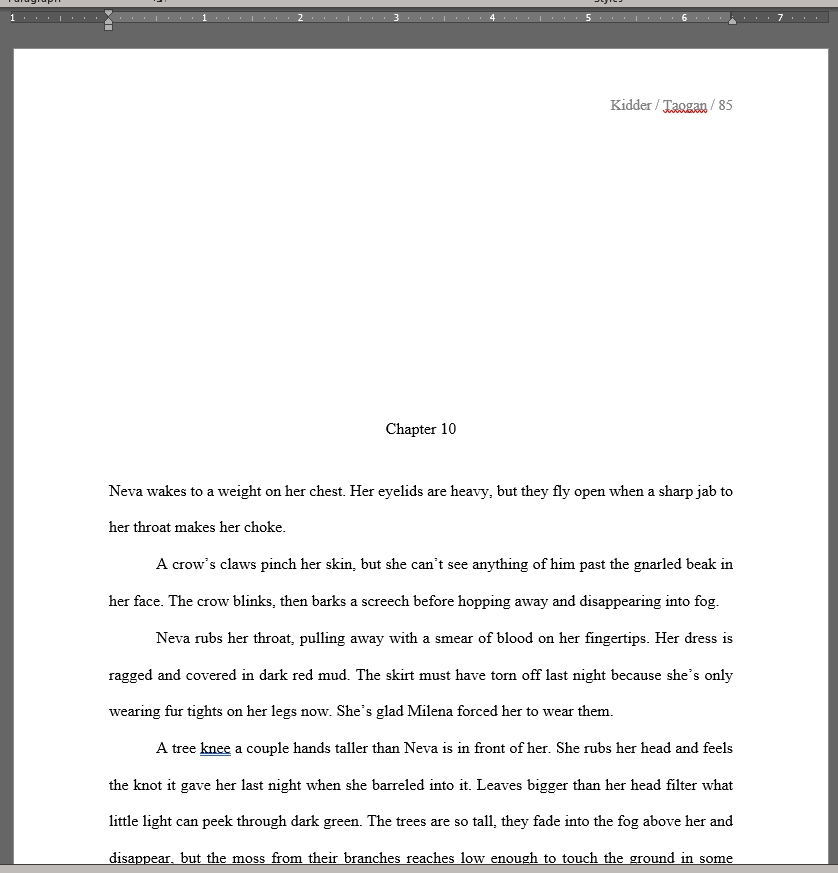
- New chapter page break: always start a new chapter on a new page
- Chapter title page
– Center-align justify the title of the chapter, even if it’s just a chapter number
– One-third to one-half way down the page
– Start the chapter one double-spaced down from the title
Following that format makes a manuscript much more palatable, just like having your text double-spaced. Any technicality that makes your manuscript easier to read is something you want to take advantage of. Here’s an example new chapter page from my work-in-progress, Taogan:
4. Proper letter design
The words themselves should also be as simple and readable as possible. Your typeface is not where you express your creativity. Maybe further down the line, your interior formatting can take some more stylistic routes, but for your manuscript, you want it plain and simple.
Here are the industry standards for letter design:
- Size: 12 point
- Typeface: Times New Roman (Sometimes other basic typefaces like Arial are also acceptable. Always check the submission guidelines for your particular case.)
- Color: Black
- Line: Double-spaced
5. Submitting your manuscript to editors, agents, and publishers
If you’re traditionally publishing, you’ll send your manuscript to literary agents. If you can’t follow their submission rules, you won’t get an agent. If you’re acting as your own agent, you’ll send your manuscript to editors and publishers.
If you haven’t followed industry standards and their specific submission rules, you’re shooting yourself in the foot before they even have a chance to read your manuscript.
If you’re sending your manuscript to a professional editor you’ve hired yourself, you still want to follow these manuscript formatting tips, as well as the tips below for a digital submission.
The standard manuscript format is organized, readable, and professional, even if you find a situation where it isn’t a requirement.
Check the particular agent, editor, or publisher requirements, as each might have their own specifications for what to include and how to format.
Digital manuscript format submissions:
If you’re submitting a digital file of your manuscript, it should be a .doc or .docx, unless otherwise specified. This is the most popular file type for submissions, and Microsoft Word’s Track Changes feature makes it a favorite among editors and reviewers.
For an initial submission, an agent typically asks for you to paste the first pages or chapter of your manuscript into the body of an email. Past this stage, they typically request a .doc or .docx of the full work. You may also be asked for a cover letter, author bio, or query letter with your submission.
Mail-in manuscript format submission
Some submissions are still open for mail-in options. If you take a mail-in route, you’ll have to print your manuscript.
If you need to print a physical copy of your manuscript for a submission, be sure to follow these printing guidelines!
- Single-side
- High quality, bright paper
- High quality, dark ink
There are many technicalities involved with producing a clean and professional manuscript, but you can use the rules above to make your own checklist. Go item by item to format your story properly.
Or, if you’d like to bypass the submission process, consider self-publishing your book!
Manuscript format: take your next step today
Creating a fantastic manuscript format only happens when you have text on the page! It’s time to start your publishing process. Use our free Book Outline Generator to help you start writing!
Book Outline Generator
Choose your Fiction or Nonfiction book type below to get your free chapter by chapter outline!
Book Outline Generator
Enter your details below and get your pre-formatted outline in your inbox and start writing today!
CONGRATULATIONS
Thanks for submitting! Check your email for your book outline template.
In the meantime, check out our Book Outline Challenge.