
















If you’re wondering how to write a book when you’re not good at writing you’re not alone. I wrote my first book before I knew how to write.
You read that correctly. Of course, I knew how to put sentences together, but I didn’t know there was something called the hook of a story and I had no clue that the show, don’t tell writing rule even existed.
Despite my lack of knowledge, I learned how to plot a novel and create compelling characters that manifested in multiple literary agents asking for my full manuscript, praise from editors at the Big 5, and readers emailing notes like: “Debating going to bed or staying up to read. You have me hooked!”
Add to this the fact that we’ve taught over 8,000 authors how to write, publish, and market their books over the last 10 years. This has culminated in thousands of hours of teaching students how to write a book, even if they feel they’re not good at writing.
Today, we turn all of our expertise to focus on your and your book goals. Ready to learn how to write? Let’s get straight into it.
Book Outline Generator
Choose your Fiction or Nonfiction book type below to get your free chapter by chapter outline!
Book Outline Generator
Enter your details below and get your pre-formatted outline in your inbox and start writing today!
CONGRATULATIONS
Thanks for submitting! Check your email for your book outline template.
In the meantime, check out our Book Outline Challenge.
How to write a book when you’re not good at writing
- Why do I struggle to write a book?
- Can I write a book if I’m not a writer?
- What are the 3 C’s of writing?
Why do I struggle to write a book?
Writers often struggle to write because they combat the worry that they’ll never make it as a writer because they simply don’t have what it takes.
I’ll let you in on a little secret: writers write. If you are trying, you’re a writer. If you keep trying, you have persistence. Persistence in the right direction, over time, yields results.
Even if you dictate your book, you’re a writer because you’re putting words on the page. Let go of Imposter Syndrome, embrace the fact that most writers receive loads of rejections before they make it big, and commit to the process.
With this in mind, let’s learn how to write a book even if you don’t think you’re a good writer.
Can I write a book if I’m not a writer?
Yes, you can, and I’m going to teach you how. First of all, remember that you are a writer even if you’re not yet a published author. You don’t have to be good at writing to write a book. You just need to be persistent. Here are some steps to help you do so.
Choose your genre
Before you settle in to write a book, it’s vital to articulate to yourself what you’re writing. Do you want to write a book about your life, share your expertise (nonfiction), or create characters and worlds (fiction)?
Next, choose your sub-genre. Do you want to write fiction about dragons and magic (sci-fi, fantasy) or nonfiction that helps individuals overcome (self help, personal development)?
There are countless genres to choose from and articulating the one you want to write will help you focus the topic and theme of your book.
Commit to a deadline
Next, you need to commit to a specific month and day when you will finish writing. This might feel like jumping ahead, but hang with me for a moment.
Based on your genre, you should have a specific word count you’re shooting for. Let’s say you’re writing nonfiction and trying to write 50,000 words. You start June 1 and want to be done September 1. This means you need to write about 800 words every weekday to complete your book by your deadline.
The key to committing to your deadline is committing to write. Maybe you choose to write from six to eight every morning or nine to eleven at night. Whatever it is, turn off your notifications and write.
Plan your acts
Some people plan or plot their books before writing, while others write by the seat of their pants. I used to be what my writing mentor calls a pantser, or as I believe Stephen King calls it, someone who writes to find out what happens.
When I write for television, I plot. Part of this is because novels typically have three episodes while television has five acts per episode. It’s a lot to keep track of.
Regardless, planning the following will help you succeed:
- Where does your book start?
- What is the climax of your book?
- Where does your book end?
From here, you can plan each chapter or write to find out what happens. This way though, you know the ending you’re writing to (something Shonda Rhimes emphasizes).
Study the craft
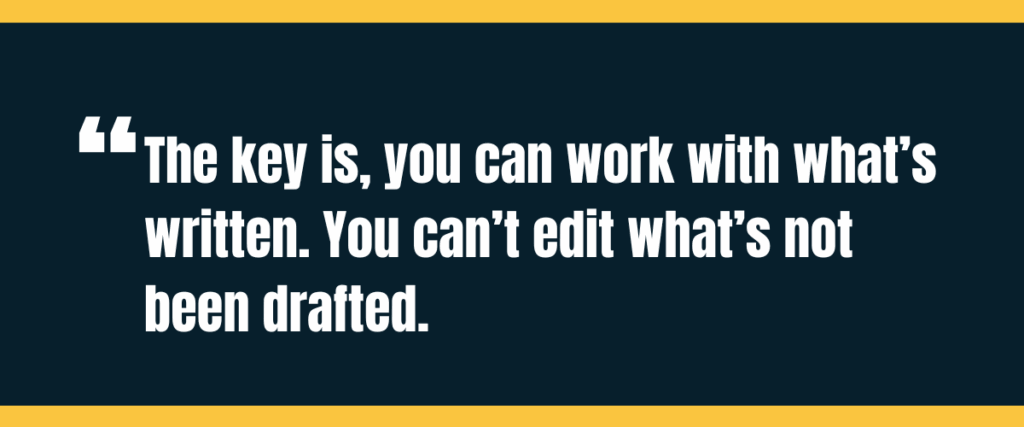
I know I just said to write your book. It may feel backwards to now tell you to study the craft. The key is, you can work with what’s written. You can’t edit what’s not been drafted.
If you want to learn how to write a book, even when you don’t think you’re good at writing, the journey necessitates having something to work with. Once you have a partial draft or full manuscript, you can edit. In fact, you can even edit as you go: edit yesterday’s work before writing today’s.
Either way, you can work with a book coach as you craft your rough draft, sign up for writing classes at your community college or online, or study books on the craft of writing.
Ask for feedback
The benefits of constructive criticism can’t be overstated. The more feedback you receive, the more data you have to assess what’s working and what’s not working in your manuscript. This is key for growth. Back when my agent shopped my manuscript to publishers, we received a lot of helpful feedback.
I color-coded this feedback into different categories:
- Positive feedback
- Feedback for growth
If several editors mentioned the same areas for growth, I knew I should consider making a change. If just one editor mentioned a comment that no one else touched on, I knew it was likely just an outlier and I could move on.
You can seek out feedback from beta readers, book coaches, and online writing communities. This will set you on a fast-track to growth.
Rewrite your draft
If I told how many times I have rewritten my draft you would likely raise your eyebrows and ask either:
- Are you really that bad?
- Or, Are you really that dedicated?
I’d answer that it’s a mix of both. No first draft embodies the quality a final draft can reach. As my writing mentor says, all writing is rewriting. The joy of being an artist in the creative writing niche is that the first draft is never the final. In fact, the final is never really the “final” either.
Writers can always improve, and art is subjective, so no revision needs to be the final version. My point is, rewrite your draft until you can’t rewrite it any more.
How do you know when you’ve reached this point? To borrow my writing mentor’s advice yet again, you’ll know you’ve reached your finish line when edits are no longer making your book but, but just changing it.
If you really want to learn how to write a book when you’re not good at writing, just commit to edits. It’s that simple, and that hard!
What are the 3 C’s of writing?
When writing, it’s important to focus on being concise, credible, and confident.
Concise
![Text “When [Something Happens], Protagonist [Action They Take] To [Result You Want]&Quot; On Darker Background](https://self-publishingschool.com/wp-content/uploads/2025/10/formula-1024x427.png "Formula")
The more time you spend on your elevator pitch, whether you write fiction or nonfiction, the more concise your chapters will be.
Here is a simple formula to follow: “When [something happens], protagonist [action they take] to [result you want].”
For nonfiction, simply replace the inciting incident of fiction with your audience’s pain point. For example, “My book teaches [target audience] how to overcome [pain point] by [your solution].”
Credible
For nonfiction, credibility matters quite a bit. I don’t want to read a book on how to launch a successful business from someone who has never launched a successful business. For fiction, you can simply ask yourself, “Why am I the one writer who should craft this story?”
Don’t overthink, just answer honestly:
- “I’m the one to write this romantic suspense because my husband is a firefighter and we have a healthy, romantic marriage.”
- “I write middle grade science fiction because I teach 5th grade science and draw inspiration from my students.”
Confident
Once you choose your genre, write with confidence. You’ve done your research, have your deadline, and are studying the craft. Now just focus on doing your best. Don’t write apologetically. Don’t hedge. Say what you mean and mean what you say. Your readers will admire you for it.
This matters even in fiction. If you’re writing a western, include your research as it helps the story. Don’t hold back from layering in fun facts that push your plot forward.
Write confidently. You’re a writer and you’re doing what you love. Your readers will pick up on your tone and gravitate to stories told in confidence.
How to write a book when you’re not good at writing
Now that you know how to write a book, even when you’re not good at writing, take the next step in your journey today. Use our free Book Outline Generator below! Remember, we’re ready to help you every step of the way.
Book Outline Generator
Choose your Fiction or Nonfiction book type below to get your free chapter by chapter outline!
Book Outline Generator
Enter your details below and get your pre-formatted outline in your inbox and start writing today!
CONGRATULATIONS
Thanks for submitting! Check your email for your book outline template.
In the meantime, check out our Book Outline Challenge.