

















When it comes to publishing a book on Amazon, keyword research is essential. The right keywords help readers find your book, which is where knowing the best Amazon keyword tool comes in.
Strong keyword research increases your chances of ranking in relevant categories and ultimately boosts your book’s visibility and sales potential.
While some of the best Amazon keyword tools on the market are paid, there are also powerful free options that new authors can start using right away.
You don’t need a big budget to begin gathering smart, data-backed keywords, but the right paid tools can take your research much deeper, much faster.
At Self-Publishing School, our coaches use both BookBeam and Publisher Rocket as part of our in-house keyword research process. These tools help us guide authors toward keywords that are competitive and aligned with what real Amazon shoppers are searching for.
In this guide, we’ll cover both the paid tools we trust as professionals and the best free alternatives you can use to build a winning keyword strategy for your book.

This guide to the best Amazon keyword tools will cover:
The best Amazon keyword tools for authors (paid and free)
Here are the best Amazon keyword tools that you should be considering as an author.
1. BookBeam
BookBeam is a keyword and market research tool built specifically for authors. Its keyword engine pulls data directly from Amazon, giving you clear insight into real search demand and how readers are actually browsing the marketplace.
Beyond keyword research, BookBeam offers tools for niche validation and competition analysis, helping you understand whether your book idea has strong potential before you even publish.
One of our favorite features is the Reverse Keyword Tool, which allows you to plug in any competitor’s ASIN and instantly see which keywords they’re ranking for. This is a massive shortcut when analyzing your niche.
BookBeam also includes a Keyword Filler that helps you optimize the seven backend keyword boxes in your KDP dashboard. Instead of guessing what to include or wasting precious space, you can strategically fill every character with targeted search terms.
Additionally, the Category Explorer makes it easy to find profitable, low-competition categories that can boost your chances of hitting bestseller ranks.
Cost
BookBeam offers a 7-day free trial so authors can test out all its core features without any commitment. After the trial, they offer several paid plans depending on how deep you want to go with market and keyword data.

Pros and cons
| Pros | Cons |
| Very author-focused (keywords, categories, ads) | May not fit every beginner’s budget |
| Data from multiple Amazon marketplaces | Slight learning curve compared to simpler tools |
| Reverse ASIN + competitor insights | Only as effective as the seed keywords or ASINs you provide |
2. Publisher Rocket
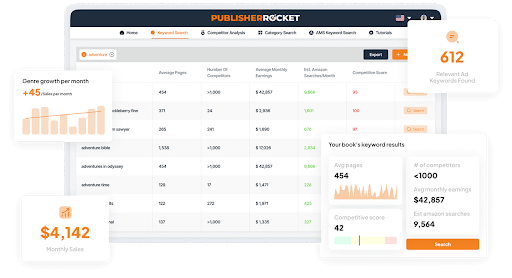
Publisher Rocket is one of the best Amazon keyword tools for self-published authors. Designed specifically for Amazon KDP, it helps you quickly uncover high-traffic keywords and category opportunities without needing to dig manually through Amazon’s search results.
One standout feature is its Keyword Search tool, which shows estimated search volume, competition levels, and how profitable a keyword might be based on real market data. This makes it easier to choose keywords that readers are actually searching for (and that you can realistically rank for).
Publisher Rocket also includes a powerful Category Research tool, helping you identify categories with high demand and lower competition, which makes it easier to land on bestseller lists.
The Amazon Ads Keyword Generator is another major benefit, allowing you to pull hundreds of targeted keywords for your ads in seconds, instead of spending hours copy-pasting.
And like BookBeam, Rocket offers Reverse ASIN Lookup, so you can analyze a competitor’s book and see exactly which keywords help them get discovered.
Cost
Publisher Rocket is appealing because it’s a one-time payment of $199 rather than a subscription. You pay once and get lifetime access, including all future updates. This makes it a great long-term value for authors who plan to publish multiple books or consistently run Amazon Ads.
They also provide a 30-day money-back guarantee, which gives new users peace of mind when trying it out.
Pros and cons
| Pros | Cons |
| One-time payment for lifetime access | Up-front cost may feel high for brand-new authors |
| Strong keyword, category, and ads tools | Data is estimated, not 100% precise |
| Reverse ASIN & competitor analysis | Interface can feel a bit dated or clunky to some users |
| Very beginner-friendly overall | Limited outside of Amazon-specific research |
3. Helium 10

Helium 10 is an all-in-one Amazon seller toolkit, but some of its tools (especially Cerebro and Magnet) can be very powerful for authors doing keyword research.
With Cerebro, you can do reverse-ASIN lookup to see which keywords competing products (or books) rank for.
Magnet acts like a keyword planner. You can enter a seed term and get a huge swath of related keywords, with estimated search volume, competition, and historical trends.
While Helium 10 isn’t built exclusively for books, its keyword data is robust and it’s useful if you’re using Amazon Ads or optimizing listing content.
Cost
Helium 10 operates on a subscription model. Their plans (at least for the keyword tools) go from Starter ($29/mo) up to Platinum ($79/mo) and higher, depending on what suite of tools you need.
Pros and cons
| Pros | Cons |
| Very powerful keyword discovery via Cerebro + Magnet | Not built just for books: some metrics are more tailored to physical products / sellers |
| Trend data + historical search volume | Monthly cost can add up (subscription) |
| Advanced filtering (competition, search volume, word count, etc.) | Learning curve: many tools and filters can overwhelm new users |
| Tools for listing optimization, tracking, and PPC (if you use ads) | Overkill if you’re just publishing a few books and don’t need full seller suite |
4. KDSPY Pro
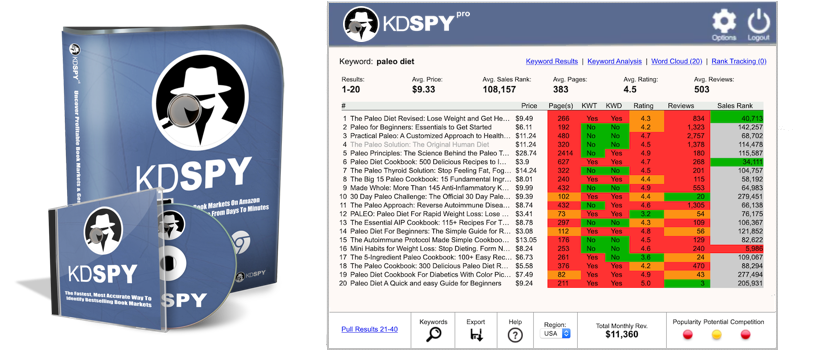
KDSPY is made specifically for authors. It’s a browser extension that lets you quickly do research while browsing Amazon. With KDSPY Pro, you can analyze competitors’ sales, estimated revenue, BSR (Best Seller Rank), and identify profitable niches.
It also gives you keyword suggestions, competitor counts, and even a “word cloud” to help brainstorm titles or subtitles.
Because it’s author-focused, KDSPY is very aligned with what self-publishers care about such as niche demand and keyword potential.
Cost
KDSPY Pro is a one-time payment (no recurring fee). Currently, it’s offered at $79 for lifetime access.
They also offer a 60-day money-back guarantee, which lets you take a good look before deciding.
Pros and cons
| Pros | Cons |
| Lightweight and very author-centric | Only works via browser extension (Chrome, Firefox) |
| One-time payment (no subscription) | Limited to the data KDSPY can pull; not as expansive as full seller tools |
| Good for competitor research + category / niche discovery | Less robust keyword filtering / trend data compared to Helium 10 or BookBeam |
| Exportable data for keywords, sales, and niches | UI / data may feel more “basic” compared to more full-featured tools |
5. Book Bolt

Book Bolt is primarily known for low-content book creators, but its Book Scout module is actually quite useful for keyword research. You can input a competitor’s ASIN, and Scout will pull the keywords that book ranks for, alongside Amazon search volume.
They also have a KDP Spy extension that shows BSR, estimated sales, and profitability metrics right while you’re browsing Amazon.
If you’re already using Book Bolt for interiors or design, adding Scout makes keyword research very integrated.
Cost
Book Bolt is subscription-based. Pricing depends on the plan and whether you want Scout or other modules. Their keyword research tool starts from $9.99 a month and goes up from there.
Pros / Cons
| Pros | Cons |
| Specific to KDP / book publishing | Subscription could be costly depending on plan |
| Reverse-ASIN (Book Scout) gives real competitor keyword insights | Scouting data limited to what ASINs you analyze |
| Browser extension (KDP Spy) helps you do research in real time | Less comprehensive keyword volumes / trend data than advanced tools |
| Good for authors doing low-content or niche publishing | May not give as much “big picture” market data compared to Helium 10 |
6. Self-Publishing Titans

Self-Publishing Titans offers a free Chrome extension that is one of the best Amazon keyword tools for KDP authors on a budget. When you browse Amazon (for books), the extension surfaces BSR (Best Seller Rank) and suggested keywords right in the search results.
Beyond the extension, Titans also provides free downloadable keyword lists on their Free Resources page. These lists are based on real Amazon search suggestions, giving you insight into what actual readers are typing.
Because it’s created by KDP-focused authors, the tool is very much tuned for publishing, not just selling general Amazon products. This makes it a practical choice for authors trying to find discoverable, niche-optimized keywords.
Cost
The Chrome extension is free. They also offer downloadable keyword suggestion resources for free on their site.
Pros and cons
| Pros | Cons |
| Totally free | Doesn’t provide search volume data or competition scores |
| Real-time keyword ideas while browsing Amazon | Limited to the data Amazon shows in its UI + their pre-built niche lists |
| Specifically designed for KDP authors, not generic Amazon sellers | No reverse-ASIN functionality or deep analytics |
7. Sonar by Perpetua
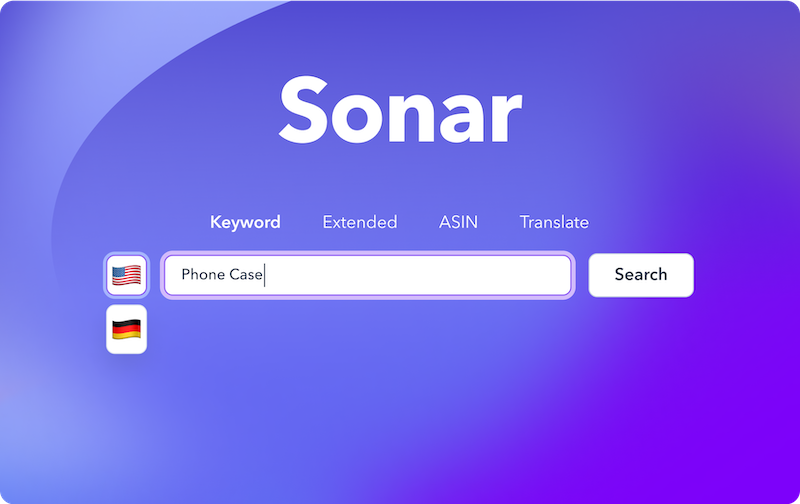
Sonar is Perpetua’s free Amazon keyword research tool, and it’s often regarded as one of the best Amazon keyword tool options for authors who care about real search demand. It taps into a massive database of millions of actual Amazon search queries, which means the keywords you find reflect genuine shopper behavior.
With Sonar, you can type in a seed keyword to discover related terms, but also run a reverse-ASIN search. That way, you can input a competitor’s ASIN and see which keywords they rank for, giving you a powerful, data-driven peek into your niche.
Plus, Sonar includes estimated search volume data for each keyword, so you’re not just grabbing random suggestions.
Cost
Sonar is explicitly offered as a free tool by Perpetua. You may pay if you want more advanced features from Perpetua’s broader platform, but basic keyword discovery with Sonar is free.
Pros and cons
| Pros | Cons |
| Real Amazon search query data that is very reliable | Primarily built for PPC / sellers, so some features may feel less “book-specific” |
| Reverse-ASIN lookup to analyze competitor books | No direct KDP category explorer (less tailored for book categories) |
| Estimated volume for keywords | Advanced analytics / rank tracking may require a paid Perpetua plan |
8. Keyword Tool Dominator (Amazon Tool)
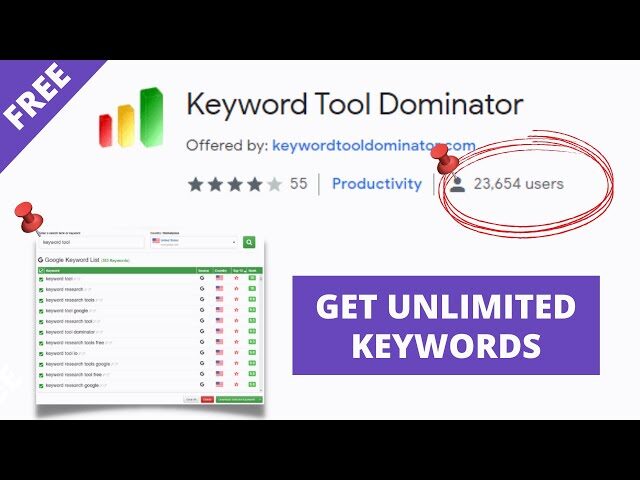
Keyword Tool Dominator (KTD) is a versatile keyword research tool designed to pull real-time autocomplete, or “suggest,” data from major platforms.
Unlike full Amazon seller suites that offer deep analytics, KTD focuses on generating authentic search-term ideas by simulating how a real shopper types into the search bar, varying your seed keyword to uncover long-tail keyword opportunities.
In addition to Amazon, it supports many other marketplaces such as Bing, eBay, Etsy, Walmart, YouTube, Google, and more, making it useful for multichannel creators.
One of its biggest strengths is its ability to surface long-tail keywords, which are often more specific and lower competition. KTD also makes it easy to export your keyword lists in CSV or Excel format so you can plug them directly into your listing workflows or other tools.
Cost
KTD is free but they also offer paid versions for different time frames so you can save money by paying as you go.
Pros and cons
| Pros | Cons |
| Uses Amazon autocomplete for real, user-typed phrases | Limited unless you pay for access |
| Popularity score helps you gauge keyword demand | Doesn’t offer deep insights like volume trends or reverse-ASIN data |
| Flexible access (time-limited plans) gives authors control | May feel limited for advanced or competitive keyword research |
9. BookBiz Academy

This free tool from BookBiz Academy was built specifically for KDP authors, making it one of the best Amazon keyword tools for people who want real-time book-search data. According to their site, it pulls suggestions directly from Amazon’s search API so you’re seeing live, relevant search phrases.
In addition to keyword suggestions, the tool provides competition analysis, which gives you a sense of how hard it will be to rank for certain terms.
It also includes an export feature, so you can download your keyword list (CSV), which is very handy for planning your KDP backend keywords or ad campaigns.
Cost
Completely free, with no sign-in required.
Pros and cons
| Pros | Cons |
| Specifically made for KDP / authors | Volume estimates come via Google API (not Amazon-native data) |
| Live data from Amazon’s search API | Might lack as much depth or niche-analysis power as paid tools |
| Easy export | Interface is quite basic |
10. Soovle
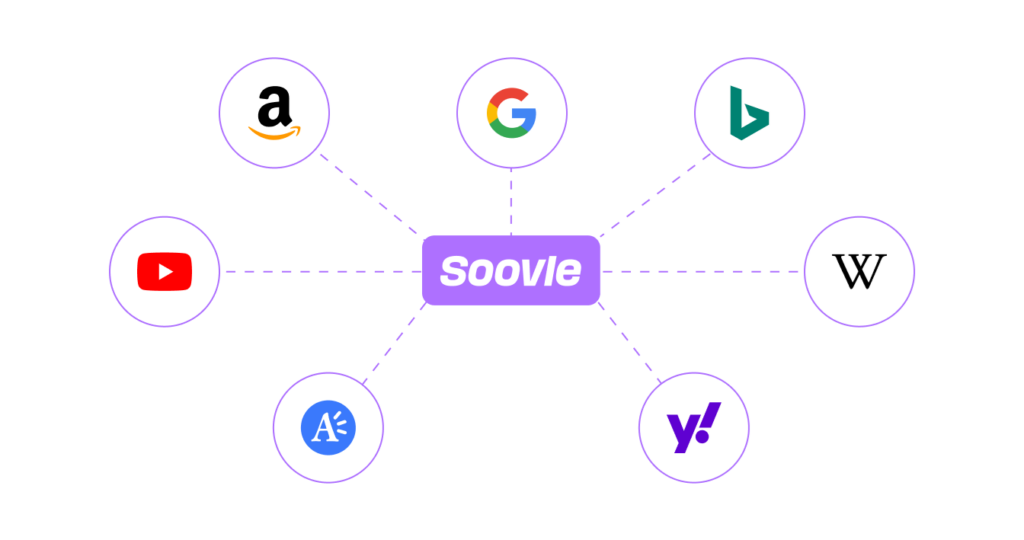
Soovle is a free, general-purpose keyword research tool that aggregates autocomplete suggestions from a variety of search engines, including Amazon.
It’s simple but very effective. Just type in your seed keyword, and Soovle shows suggestions from Amazon, Google, Bing, YouTube, and more.
For authors looking for the best Amazon keyword tool that’s free and very flexible, Soovle is great for brainstorming. Because it draws from Amazon’s autocomplete, many of the phrases it suggests are real, user-typed search terms.
Cost
Totally free.
Pros and cons
| Pros | Cons |
| Free and super easy to use | Doesn’t provide search volume or competition data |
| Aggregates suggestions from multiple platforms (Amazon, Google, etc.) | Less tailored to books / KDP specifically |
| Excellent for brainstorming long-tail and cross-platform keywords | Needs to be supplemented with another tool for depth (volume, trends) |
How to use Amazon Search Bar Autocomplete
Even without paid tools, Amazon’s own search bar is one of the best Amazon keyword tool methods available (and it’s completely free).
Amazon autocomplete gives you real-time insight into what shoppers are currently typing into the site. For authors, this is a goldmine. These phrases often become your backend keywords, title/subtitle ideas, and even Amazon Ads seed keywords.
Go to Amazon.com
If you’re publishing for readers in the US, use Amazon.com. If most of your audience is in the UK, Canada, or Australia, use those marketplaces instead. Autocomplete suggestions vary by country, so choose the one most relevant to your ideal readers.
Type a seed phrase related to your book

This should be the broadest description of your topic or genre. For example:
- “self help”
- “marriage advice”
- “historical romance”
- “fantasy novel”
- “productivity journal”
As soon as you begin typing, Amazon will show a dropdown of suggested search terms.
Watch the autocomplete suggestions carefully
Every phrase Amazon shows in the dropdown is something real shoppers have typed. You’re getting authentic, high-intent keyword ideas straight from the source.
For example, typing “self help” might show:
- self help books for women
- self help books for anxiety
- self help motivation
- self help books best sellers
These are all potential keywords you can use, and they give you insight into what readers are struggling with, curious about, or actively looking to buy.
Play with different letters
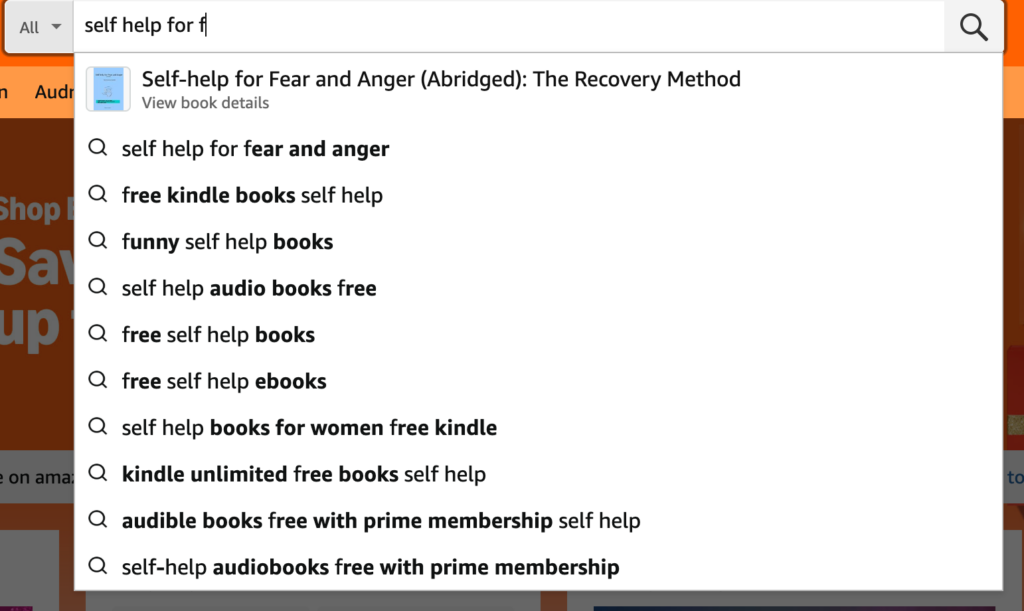
You can find long tail keyword by typing in “self help for a…” or “self help for f…” and seeing what results you get.

Document everything
As you explore, take screenshots and copy keywords into a spreadsheet. Group them into categories such as:
- Emotions (e.g., “self help for anxiety”)
- Audience (e.g., “self help for teens”)
- Outcome (e.g., “self help motivation”)
- Format (e.g., “self help workbook”)
This makes it easier to decide which keywords belong in your KDP backend slots, your title/subtitle, and your Amazon Ads campaigns.
Cross-check with a keyword tool
Now take your list and plug it into one of the tools on our list above to see which keywords have higher search volume or lower competition.
Autocomplete gives you the ideas, and the tools help validate them.
Amazon autocomplete is powerful because it reflects real, current user intent. These are the phrases shoppers are actively typing today, which means the keywords you discover represent live demand.
How to choose the right tool for you
With so many options available, choosing the best Amazon keyword tool ultimately comes down to your goals, budget, and publishing approach. Here are a few guiding questions to help you decide what makes the most sense for your book and your workflow:
Budget:
Ask yourself whether you’re ready to invest in a paid tool or prefer to start with something free. Many new authors begin with free tools like Sonar, Keyword Tool Dominator, or Amazon autocomplete, then upgrade to tools like BookBeam or Publisher Rocket once they understand the process and see the value.
Publishing frequency:
If you’re planning to publish multiple books, paid tools can quickly pay for themselves. If you’re only publishing one book, free tools may offer everything you need.
Ads vs. organic discovery:
If you plan to run Amazon Ads (PPC), tools with ad-focused features can save you hours. Publisher Rocket and Sonar both excel at generating ad-ready keyword lists. If you’re more focused on organic ranking, tools like BookBeam or KDSPY can help you uncover high-demand, low-competition keywords.
Niche vs. broad market:
Books in competitive categories (self-help, romance, business, fantasy) benefit from deeper insights offered by paid tools. If you’re writing in a micro-niche with limited competition, free keyword tools and Amazon autocomplete may be more than enough.
Time & expertise:
Are you comfortable manually exploring autocomplete, organizing keywords in spreadsheets, and validating them across multiple tools? If so, free methods work great. If you want fast, data-rich suggestions without the manual work, a paid keyword tool will streamline the process dramatically.
Final thoughts on the best Amazon keyword tool
Paid tools like BookBeam and Publisher Rocket are incredibly powerful for serious authors, especially those running ads or publishing multiple books. They offer rich data on demand, competition, categories, and keywords, all of which help you make smarter publishing decisions from day one.
Free tools like Sonar, Keyword Tool Dominator, and Self-Publishing Titans are excellent for brainstorming and validating your early ideas without spending money. They’re ideal for beginners or authors who want to test the waters before committing to a paid tool.
No matter which tools you choose, combining them with Amazon’s autocomplete method will give you a deep, well-rounded list of high-potential keywords. This hybrid approach is one of the most effective ways to set your book up for success.
And remember: keyword research isn’t a one-time task. Revisit your keywords regularly. Staying current with reader behavior and market trends is one of the best ways to keep your book discoverable and competitive on Amazon.