




















Author networking is a phenomenal way to grow as a writer, meet other authors, and embrace the power that comes from a like-minded community. Over the years, I have worked hard at author networking: going to conferences, signing up for one-on-one meetings with agents, talking with other authors, etc.
When this type of author networking transitioned into me speaking at conferences and leading those one-on-one meetings, guess what? The networking didn’t stop. No matter what stage you find yourself in the process of publishing your book, author networking in crucial.
In fact, at once conference I went to an editor reached out and asked if we could meet in a city midway between my town and hers, just to provide constructive criticism for each other. Our meetings were incredibly beneficial to me, and I hope to her as well.
You never know what connections may arise from author networking. It’s just that crucial.
Add to this the fact that we’ve taught over 8,000 authors how to write, publish, and market their books in the last 10 years. Networking is vital for authors. Let’s get into how to use networking to help you achieve your goals.
Author networking: what you learn
How to network as an author?
Author networking is very similar to other forms of networking, except that you have a shared love for a very specific form of entertainment. Because of this, author networking can be a bit subjective.
I’ve taught an entire writing conference workshop on networking, what it is, what it’s not, and how to do it well. Why? Networking is that crucial to authors.
Here’s the golden nugget: the best way to engage in author networking is to make a friend, share the knowledge you have to share, and encourage other writers.
Networking can feel uncomfortable when it becomes all about ourselves. When we put others first, helping them network, everything seems to fall into place.
Just be a normal human, share what you can, ask for specific insights, and let the magic that is networking take it from there. Now let’s look at the two main ways to network.
In-person author networking
Networking in-person brings many pros and is a powerful form of meeting like-minded individuals who may offer help you can’t obtain on your own. If you are a more introverted writer and prefer staying behind the keyboard, consider starting at smaller in-person events, such as a book club or library meet-and-greet.
Book clubs
Whether you are an established author or an aspiring writer who wants to connect with other creatives, joining a book club is a great way to take advantage of author networking in a lowkey environment. You can start your own book club, research book clubs in your area, or join an online book club.
A book club is a unique way to network due to the nature of the club: Writers are focused on discussing a particular book or author, their work, and engaging with those around them.
Without needing to ask any particular questions, you can discover a great deal about the writers in the group, how you can help them, and how they could potentially help you.
Writer groups
A writing group can be compared to a more formal book club. In a writing group, members show up in order to discuss their own work, gain insight from other writers, and offer constructive feedback.
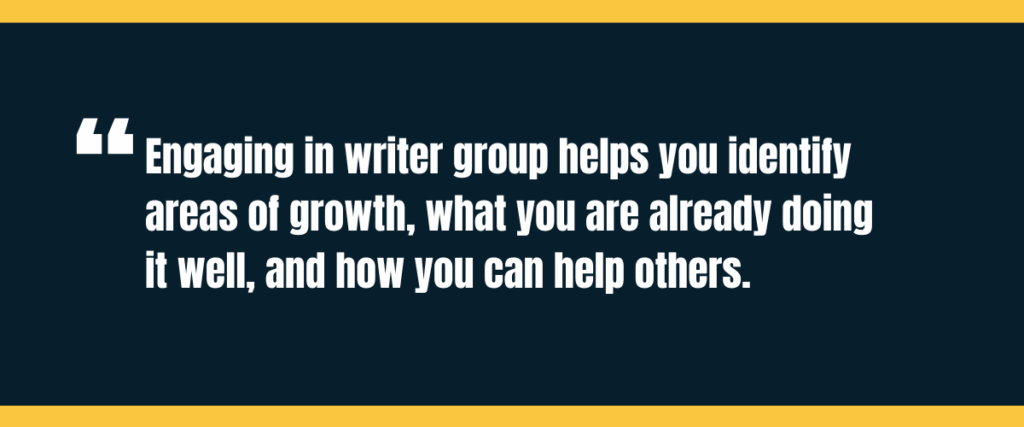
Engaging in writer group helps you identify areas of growth in your writing, what you are already doing it well, and how you can help others.
You may discover you have a proclivity for identifying how to better others’ writing. Joining a writer group could be the nudge you need to jump into professional editing or even coaching. Regardless, writing groups are crucial for a writer’s growth in both writing and networking.`
Faith communities
Particularly if you write nonfiction or religious fiction, a faith community could be a potential place for effective networking. For instance, if you wrote a religious book and attend a large church, your community may be open to hosting a summer book club and using your book.
If you write fiction, you could research how other religious authors have impacted their faith communities through their writing. Francine Rivers and her novel, Redeeming Love, is a classic example of how inspirational, romantic fiction can create a positive impact.
If you belong to a faith community, take advantage of how you can impact those in your sphere of influence with your creative talent.
Library events
Attending a library event in your town can be a great way to push yourself out of your comfort zone without feeling too nervous. Library events are more relaxed and much smaller than a conference or convention.
If you feel the need to network in person, conduct research and discover what local events are scheduled in the next few weeks or months. Mark those dates on your calendar and go prepared to meet other writers, authors, and creatives.
Events like these are a great place to find beta readers too, so keep your eye out!
Conferences and conventions
In-person conferences and conventions (and online conferences) are perhaps one of the most efficient ways to network. Whether you attend a small conference or large convention, attendees come from all over to engage, network, and share knowledge.
Conferences offer a myriad of ways to network with those around you. Workshops, one-on-one meetings, keynote sessions, and breakout sessions are some of the ways to engage with other attendees, speakers, and faculty.
Whether I go as faculty or as an attendee, I love attending writing conferences and meeting writers from all over. Conferences are a great place to be encouraged and remember that while writing often takes place alone, there are countless writers all over the world facing the same challenges you are.
Online author networking
Online networking is a fantastic way to network from the comfort of your home, save time, and invest in your platform without paying to travel. While in-person networking allows the power of inflection and other types of nonverbal communication, sometimes online is the best way to go.
Communities
There are countless online communities where you can meet other writers from around the world. Whether you choose to join an online community such as The Write Life, Realm Makers or the Freelance Writers Den, you are sure to engage in networking.
‘You could even join our own author community here. With over 120 thousand members, you’re sure to find other writers in your genre. Or, if you’re one of our current students, be sure to join our Private Mastermind Community here.
Both communities are full of thriving authors eager to help each other. Remember, whether you want to network to further your writing career or to help other writers further theirs, online communities give the added benefit of both.
Forums
Online forums provide a plethora of opportunities for writers in various stages to interact with like-minded creatives. In a forum, the writing craft can be a focal point of discussion, plus, opportunities such as writing contests or even work can also be discussed.
If you have a specific question or writing tip to contribute, consider taking it to an online forum. I love participating in forums, particularly because writing is so subjective.
It’s helpful to hear many angles of answers to a plot point or character arc question, then decide which one is best for my story. Uncovering new perspectives is just one benefit of author networking.

Social media
Social media, with all its pros and cons, is a necessity for today’s writers.
Whether you choose to:
- Connect with other writers on X/Twitter via the hashtag #WritingCommunity or #amwriting
- Create a TikTok account to build your network
- Spend time on Instagram posting about your writing journey
…social media is a hot spot for various forms of networking. Use it with discretion, and make use of what it offers you. Social media has allowed me to connect with authors in ways I never could’ve otherwise.
This social platform is a more professional way to share your expertise via your personal profile, connect with others in your industry, and network with individuals you may not be able to on platforms such as X/Twitter.
Using LinkedIn allows you to send personal requests to connect and include a note of introduction. Since LinkedIn is a more professional platform it can be a helpful way to more directly connect with those in the industry.
You can get more freelance writing jobs, connect with editors of your favorite magazines and online publications, and even spruce up your profile and use their tools to attract more clients and ultimately more income.
For more information on this topic of social networking through LinkedIn, see:
- Related: Use LinkedIn to Attract New Clients
- Related: 7 Ways Writers Can Find Freelance Writing Jobs
- Related: How to Succeed as a Freelance Writer on LinkedIn
LinkedIn has been incredibly valuable for me, and it can be for you too.
Author networking: take your next step
Author networking is crucial to your success as a writer. Not only can meeting the right people open doors you never dreamed of, but it can speed up a journey that would take much longer to go alone.
As you network in-person and online, keep in mind that the writer, marketer, designer, or editor you speak with is a real person with feelings and goals. Help them pursue their dreams as well.
You will grow in your career, and your reputation will grow too. The writing industry is a team effort after all. Get started on your author journey today by using our free resource below!