















In the 1998 film The Truman Show, the main character played by actor Jim Carrey doesn’t realize that his whole life has been orchestrated as a television show that others have been watching like a soap opera since his birth. It’s only when the main character begins to question his reality that the facade crumbles.
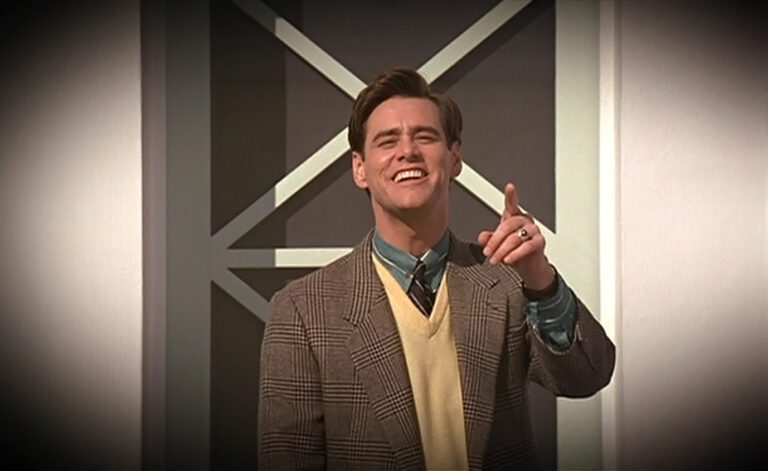
This is a great example of dramatic irony where others watching know more than the main character. The “others” can be characters in the story like in The Truman Show, but more often, it’s the person watching the movie, or reading the book.
In this article, we’ll share dramatic irony examples from literature as well as explore how the device can be an effective tool in storytelling to keep your plot interesting and readers engaged.
Table of Contents


Book Outline Generator
Choose your Fiction or Nonfiction book type below to get your free chapter by chapter outline!
Book Outline Generator
Enter your details below and get your pre-formatted outline in your inbox and start writing today!
CONGRATULATIONS
Thanks for submitting! Check your email for your book outline template.
In the meantime, check out our Book Outline Challenge.
We see examples of dramatic irony in movies, TV shows, and books like Shakespeare’s Romeo and Juliet where we know the actions of the characters and see the impending danger approaching but are helpless to warn them as they fall into the hands of tragedy.
Dramatic irony examples
- “A Doll’s House” by Henrik Ibsen
- “Oedipus Rex” by Sophocles
- “The Odyssey” by Homer
- “Othello” by William Shakespeare
- “Crime and Punishment” by Fyodor Dostoevsky
- “All the Light We Cannot See” by Anthony Doerr
- “Macbeth” by William Shakespeare
- “Snow White and the Seven Dwarves” by The Brothers Grimm
- “Beauty and the Beast” by Jeanne-Marie Leprince de Beaumont
- “Sick Puck” by Julie Thorn
- “The First to Die at the End” by Adam Silvera
- “An Ideal Husband” by Oscar Wilde
- “The Catcher in the Rye” by J.D. Salinger
- “The Glass Castle” by Jeannette Walls
- “A Midsummer Night’s Dream” by William Shakespeare
- “The Great Gatsby” by F. Scott Fitzgerald
- “To Kill a Mockingbird” by Harper Lee
- “Animal Farm” by George Orwell
- “The Hunger Games” by Suzanne Collins
- “Harry Potter” series by J.K. Rowling
- “1984” by George Orwell
- “Pride and Prejudice” by Jane Austen
- “Lord of the Flies” by William Golding
- “The Gift of the Magi” by O. Henry
Why dramatic irony?
Dramatic irony in a story keeps things interesting. It engages the reader by pulling them into the action, yet not giving them the ability to do anything about what’s unfolding. It’s like someone giving you a sneak peek of your friend’s birthday gift, but you can’t say anything because you’ll spoil the surprise. It’s exciting but also frustrating, which creates tension. Dramatic irony has the same effect on a reader. Beyond tension, it can also create intense suspense or even humor.

There are three main types of irony — verbal, situational, and dramatic. These different types of irony are similar but used in different ways. Unlike verbal or word irony when you say something but mean something else, or situational irony when you expect one thing from a situation, but something else happens; dramatic irony is used specifically in literature to impact pacing, character development, narrative depth, tone, and the emotional engagement of the reader.
Pacing: Dramatic irony can affect pacing because as new information is revealed, the characters react to the new information which often speeds up the pace. The opposite can occur when information is being held back. The pace can slow down, but this can also increase tension.
Character development: When we have access to the deeper details of a story, we have a front-row seat to witness how characters develop without knowing the information and then how their development changes when (and if) the information is revealed. Characters can be complex. Dramatic irony adds to their complexity.
Narrative depth: Dramatic irony adds layers to a story because additional information is being presented to the reader but being kept from the characters (except for the previous example of The Truman Story where only the main character didn’t know what was happening.) This allows a storyline to fracture into other pieces which keeps things interesting.
Tone: You can use dramatic irony to change the tone of the story and the characters’ interactions. When information is being withheld from characters, it often leads to confusion and misunderstandings because they don’t have the full picture. They are only responding to what they know, which can create conflict or suspense. Revealing hidden information can also change the tone by leading to greater suspense or resolution.
Emotional engagement: Dramatic irony pulls readers closer to the story by revealing information before other characters know it. It’s a direct invitation to engage in the story as an active participant. You know more, so you can root for your favorite characters more or yell at the bad ones. As the audience waits for the characters to figure it out, it elicits a deeper connection with the characters, which is why dramatic irony works so well.
Creating dramatic irony in storytelling
When using dramatic irony as a literary technique, you have to consider the whole story. For outliners, employing dramatic irony may be easier for you since you like to plan things out. For pantser (like me) who “write from the seat of their pants,” using dramatic irony will take more care and many revisions as the story progresses.
Here’s why. Since dramatic irony can affect so many aspects of your story like pacing, characters, tone, narrative, and reader engagement, you don’t want to overdo it where the story becomes predictable or time it poorly which can negatively impact the story’s tension.
Outlining a story gives you a bird’s-eye view of where everything takes place, so you can infuse dramatic irony strategically. Otherwise, you’ll have to wait until everything is written and hope you used it correctly. I love being a pantser, but when using dramatic irony, I have to stay five steps ahead of my characters when writing which can be tough.
Try these steps when using dramatic irony in your own writing:
- Create a strategy: As mentioned above, as a pantser, I have a visceral reaction to making outlines, and not in a good way; however, when using a literary device like dramatic irony, outlining or thinking ahead is important. You want to develop your story in a way that carefully balances what your reader knows and how much you want to reveal to your characters, when, and where.
- Give the reader a heads-up: Make it clear in your story that the reader has access to information that the characters do not. You can do this through foreshadowing, using multiple perspectives, dropping hints early, or subtext.
- Tension: Find ways to build and release tension by carefully handling key pieces of information that the characters can respond to.
To balance dramatic irony keep the following tips in mind:
- Use it sparingly and strategically for the best effect.
- Consider using it with other literary elements like foreshadowing, visual symbols, dialogue, a plot twist, and multiple viewpoints.
- Don’t use irony for irony’s sake. Ensure that it fits the narrative arc.
- Use it to support character development.
Book Outline Generator
Choose your Fiction or Nonfiction book type below to get your free chapter by chapter outline!
Book Outline Generator
Enter your details below and get your pre-formatted outline in your inbox and start writing today!
CONGRATULATIONS
Thanks for submitting! Check your email for your book outline template.
In the meantime, check out our Book Outline Challenge.
How to use dramatic irony examples in different genres
The great thing about dramatic irony is that it works well across many different genres. Here’s how to use it effectively in your book:
Science Fiction
Use technology to your advantage by giving readers insight into how advanced technology could positively or negatively impact the lives of the characters, but let the characters find out gradually as the story progresses. For example, “Fahrenheit 451” by Ray Bradbury
Mystery
Dramatic irony works well in mysteries because it’s all about the clues and expecting the unexpected. One popular method of mystery storytelling is giving the reader the answer to the mystery at the beginning of the story and then allowing the detective to figure it out as the pieces are being dropped like bread crumbs along the way. For example, “The Naturals” by Jennifer Lynn Barnes
Comedy
Dramatic irony in comedy highlights misunderstandings that often confuse the characters, generating humorous moments. This can include ironic statements, unexpected abilities or outcomes (e.g., Forest Gump by Windston Groom), or contradicting character traits. For example, “The Hitchhiker’s Guide to the Galaxy” by Douglas Adams
Psychological thrillers
Psychological thrillers are all about mind games. Dramatic irony lends itself well to this form of storytelling because the reader is given access to information that heightens tension like character motivations or their psychological state of mind. For example, “Jaws” by Peter Benchley.
Romance
Like comedy, romance tropes work well when the reader knows more about the story (e.g. the character’s thoughts or true feelings) than the characters do. This not only creates tension for the characters in the romance novel but also creates anticipation in the readers as they wait for the tension between the characters to be resolved. For example, “Pride and Prejudice” by Jane Austen
Coming-of-age stories
In coming-of-age stories, the protagonists are not only facing the challenges of growing up and real life but they may or may not be facing unusual circumstances in the process. Dramatic irony adds layers to the narrative where we’re able to watch the character go from a limited perspective of the world to one based on experience and knowledge. For example, “To Kill a Mockingbird” by Harper Lee
Using dramatic irony in your book
When your reader gets to the end of the story, they should feel like they’ve been somewhere. Of all the literary techniques, dramatic irony is a powerful tool that can impact the atmosphere of your novel and what readers take away. If used strategically, it can add depth and richness to your characters as they navigate the known and the unknown. Readers have more of a stake in the outcome because they’ve been invited to experience the action as it unfolds.
The dramatic literary examples shared in this article show the popularity of using this literary device in storytelling across multiple genres. No matter what type of book you’re writing, consider using dramatic irony to create a better reader experience for your audience.
Book Outline Generator
Choose your Fiction or Nonfiction book type below to get your free chapter by chapter outline!
Book Outline Generator
Enter your details below and get your pre-formatted outline in your inbox and start writing today!
CONGRATULATIONS
Thanks for submitting! Check your email for your book outline template.
In the meantime, check out our Book Outline Challenge.