

















Commercial fiction and upmarket fiction can feel like confusing genres to differentiate, but they each have unique aspects that resonate with their intended audiences.
Learn more about upmarket fiction here, as today we’re focusing on the commercial genre! I remember trying to pitch my manuscript to agents and being unsure which category it fell into.
Commercial sounds like a great category, and one I wanted my book to fall into as far as its appeal. Who doesn’t want their book to resonate with a broad audience? But did my book fall into this category? It can be difficult to know what market segment your book falls into, but it’s crucial if you are to market it well.
The commercial genre is a huge fiction genre. If you write for a wide audience, your book may fall into this category. Today, we discuss how to find out and how to write in this genre, too. Knowing where your book falls is the first in your steps to success.
We spend a lot of time helping our students find the best category for their books. Now we get to help you! In fact, we’ve taught over 8,000 authors how to write, publish, and market their books over the last 10 years. We’re thrilled to help you pinpoint where your book belongs so you can have your own journey to sucess.
Commercial fiction: what you learn
- Is Harry Potter commercial fiction?
- What distinguishes commercial fiction from literary fiction?
- How to write commercial fiction?
- Why write in this genre?
- FAQs
Is Harry Potter commercial fiction?
Let’s get the big question out of the way and say yes, the Harry Potter series is commercial fiction. While not every series you write will turn your idea into a multi-billion-dollar franchise, writing in this genre can bring in more sales.
What is this genre, exactly? This type of fiction is constructed to appeal to a broad audience. Because of this, it targets the themes, fears, and dreams that are true of the masses.
Why did Harry Potter do so well? Think of the themes it covered: coming-of-age, young love, good versus evil, and a plethora of others.
This type of fiction is not just about sales figures, but it often results in larger numbers because these books hit home with readers. They deliver an experience, a journey that readers want to embark upon.
If your book is “commercial,” it means your book is marketable to the masses. It’s the type of book that bookstores want to display in their front windows, that book clubs want to talk about, and that readers can’t resist. Do you see why I wanted my manuscript to fall into this category?
What distinguishes commercial fiction from literary fiction?
Literary fiction focuses more on how the story is written, while commercial focuses on plot and broad appeal. If you write commercial, you need to find the middle ground between being a creative writer and writing to your audience’s felt needs.
If you read literary fiction, you likely find yourself enjoying the uniques turns of phrase the author uses, how they incorporate description, and wonder at their power to push the creative boundaries.
If you read commercial, you probably find yourself eager for an engaging plot, characters that ring true to your own experiences, and sentences that propel the story forward rather than slow you to acknowledge the artful way in which they were written.
Of course, neither is better than the other. Engaging plots can have just as much impact as beautiful writing. All you have to do is articulate how you write and then study your genre to grow in the skill.
Characteristics of commercial fiction
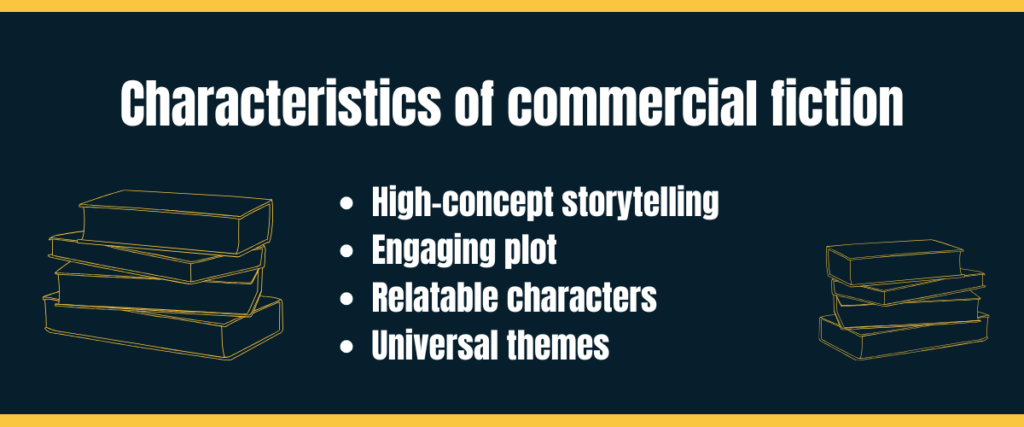
Let’s take a quick look at some of the characteristics that define this genre so you can understand whether or not you should market your book to this audience.
High-concept storytelling
This type of fiction heavily relies on high-concept storytelling. Think of the story world of Harry Potter. This is a high-concept idea (an entire wizarding world) but also has broad appeal to readers of all ages.
Readers of this genre want to feel immersed in the concept yet relate to what is happening in the world. Harry’s world is far-reaching (wizards, muggles, etc.) but easy to understand (a boy who goes to school). This is key.
Engaging plot
While prose does matter, your plot is what readers rely on to carry them through the story. What is an exciting journey, full of twists and turns, and maybe some surprises, that will keep your reader engaged until the last page?
Don’t worry too much about your artistic use of language (one use of the tool that is language), but how you employ language to propel your reader forward (a second use of the tool of language).
Your plot doesn’t have to be a thriller (although it can be), but it should engage.
Relatable characters
Your commercial characters should be fully fleshed out, authentic, capable of growth, and relatable. There is an entire generation of readers who felt like they grew up with Harry Potter.
While none of them owned an Invisibility Cloak or went to wizarding school, they connected with Harry at a human level: he had losses, wins, hopes, dreams, setbacks, fears, and more…just like his readers.
Universal themes
Universal themes resonate with a wide audience because they are…universal. Harry’s story included themes of love, revenge, justice, survival, and identity.
These are themes that individuals relate to and connect with at a myriad of levels. If you choose to simply incorporate the human experience with an engaging plot, you’re well on your way to commercial fiction.
How to write commercial fiction?
Learning what all is involved in this type of fiction is an important foundation. But how do you actually write for a commercial audience? Let’s take a look.
Know your readers
My writing mentor always says to put the reader first. For commercial fiction, this is undoubtedly true as well. While literary fiction targets a specific group of readers, commercial targets a wide group.
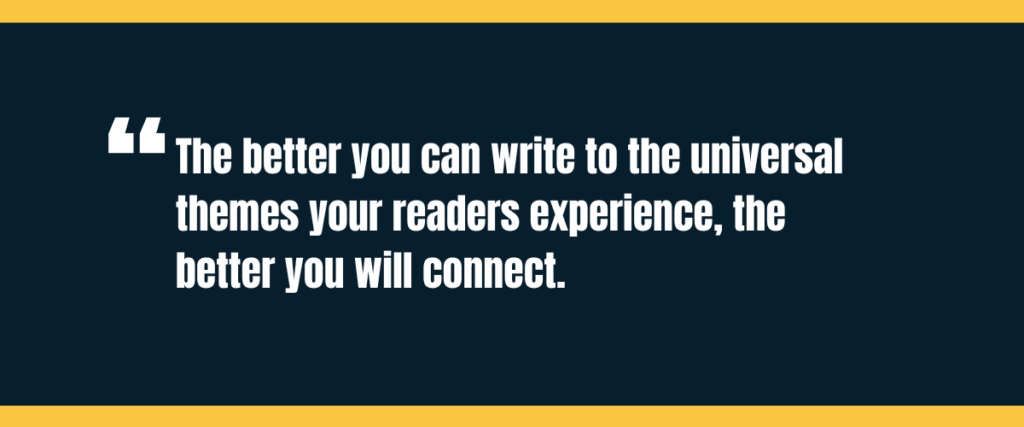
Understand what the individuals in these groups like, dislike, desire, hope for, dream of, and fear. The better you can write to the universal themes your readers experience, the better you will connect.
Plot your story
In commercial fiction, a strong, well-paced plot is what keeps readers reading. This is a great time to turn into a plotter if you don’t usually plot. You want to include enough subplots to keep your readers engaged!
You also want to ensure your main plot is strong enough to hold your readers’ attention until the very end.
Create your characters
Draco Malfoy is not super likable, but I do keep coming back to find out what he’s up to and why. I’m curious about him. He feels like a real human with flaws and fears.
Harry, on the other hand, is likable, and easy to come back to. But do you see how both types of characters are relatable? We may not be the school bully (I hope!), but because Draco feels well-rounded, I keep reading.
Create characters with ongoing development, whether they drift away from the best person they could become or take solid steps toward it.
Select your writing style
Commercial fiction writing needs to be accessible and engaging. You write to communicate your plot, and little else. In literary fiction, prose is an element unto itself. In commercial, your writing style needs to get the plot across and take a backseat.
Determine your theme
Your themes can enrich your narrative, deepen your characters, and add layers to your plot. To help you settle on a great theme, look up popular book genres and their key themes. Choose one or two that best serve your plot and run with it.
Why write in this genre?
This specific type of fiction can open doors for new authors. Traditional publishers want to know they’ll make a positive return on investment (ROI), and commercial books usually fly of the shelves.
But what if you want to self-publish? This genre can help you reach a wider audience and even provide a relatively stable income. If you want to make money publishing books, why not do so with a genre that’s known to sell well?
Publishing books that readers will actually buy is key to how to make it as a writer, but you don’t need to just focus on on sales. Writing for a commercial audience can strengthen your writing skills.
To write well in this genre, you have to understand plot, story structure, and characters, as well as how to resonate with your audience. Why not give writing in this genre a try? It could change your life for the better.
FAQs
Let’s take a quick look at a few frequently asked questions surrounding this genre.
What is the opposite of commercial fiction?
Literary fiction is the opposite of commercial, not because it is better or worse, but because it takes a different focus.
Commercial focuses on a wide appeal to a broad audience with an engaging plot. Literary focuses on a smaller audiences with a more specific appeal and focuses on the writing style itself.
Does commercial fiction include fantasy?
Yes, this type of fiction can most definitely include fantasy, as well as many other genres. Thrillers can be commercial, as can romance, coming-of-age, and more. Plot drives this type of fiction, and plot is fundamental to the various genres.
Why is commercial fiction important to the industry?
Commercial fiction has been defined as the lifeblood of the publishing industry because it drives sales, lands on bestseller lists, keeps the publishing machine running…and reaches readers.
But more than just revenue, it showcases trends in the publishing industry. It allows publishers to keep an eye on what genres, themes, and narrative styles are performing well and make predictions.
This genre also serves the reader. It engages, transports, and creates a sense of commonality all in one genre.
Commercial fiction: take your next step
Now that you know all about this high-selling genre, take your next step by using our free resource below. Today is the day to get started on your author goals!
Book Outline Generator
Choose your Fiction or Nonfiction book type below to get your free chapter by chapter outline!
Book Outline Generator
Enter your details below and get your pre-formatted outline in your inbox and start writing today!
CONGRATULATIONS
Thanks for submitting! Check your email for your book outline template.
In the meantime, check out our Book Outline Challenge.